
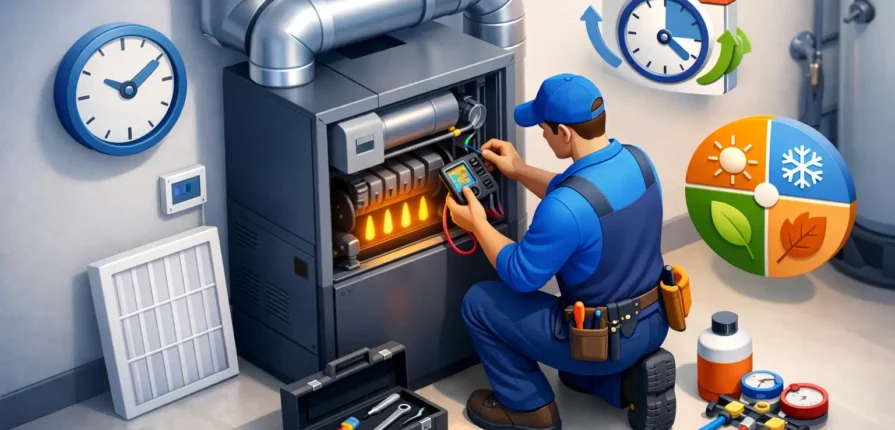
If your furnace only gets attention when the house turns cold and the heat will not kick on, you are not alone. A lot of homeowners ask how often should furnace be serviced only after they smell something odd, hear a new noise, or see their utility bill jump. By that point, what could have been a simple tune-up can turn into a repair call.
The short answer is once a year for most homes. A yearly furnace tune-up gives a technician the chance to catch worn parts, airflow problems, ignition issues, and safety concerns before they turn into a breakdown in the middle of winter. For homeowners in Ohio, the best time is usually early fall, before the first real cold snap puts your system to work every day.
How often should furnace be serviced in a typical home?
For most gas and electric furnaces, annual service is the standard. That timing lines up with how these systems actually wear down. Your furnace may sit quietly for months, but once heating season starts, it can run hard for long stretches. Dust builds up, filters get ignored, burners can get dirty, and moving parts start showing their age.
Once-a-year service is enough for many households, especially if the system is newer, the filter is changed regularly, and there have not been any recent performance issues. But yearly maintenance is the minimum, not a guarantee that every furnace has the same needs.
Some systems should be checked more often. If you have an older furnace, a large household, pets, recent remodeling dust, or a commercial property with heavier runtime, an extra inspection can make sense. The same goes for rental properties or homes where comfort complaints keep coming up from room to room.
Why annual furnace service matters
A furnace does not have to fail completely to cost you money. Small problems usually show up first as reduced efficiency, uneven heating, short cycling, or longer run times. You still have heat, but the system is working harder than it should.
A proper service visit is not just a quick look. A technician checks the burner assembly, heat exchanger condition, ignition system, blower components, electrical connections, airflow, thermostat operation, drain lines if applicable, and filter condition. On gas systems, safety checks matter just as much as performance checks.
That is the real value of maintenance. You are not just paying to clean a unit. You are paying to find the problems that usually show up before a no-heat call on a freezing night.
When once a year may not be enough
There are situations where a furnace should be looked at more often than every 12 months. That does not mean the system is bad. It means the conditions around it are tougher.
Older furnaces
If your furnace is 12 to 15 years old or more, annual service becomes even more important, and some homeowners benefit from a midseason check if the unit has had recent repairs. Older components can still run well, but they usually do not give as much warning before something fails.
Homes with pets or indoor air issues
Pet hair, dander, and extra household dust affect airflow faster than many people realize. If filters clog quickly, your furnace has to work harder to move air. That can lead to overheating, poor comfort, and unnecessary wear.
Heavy winter usage
In Ohio, furnaces do not get a light workload. Long heating seasons and wide temperature swings mean your system may run often for months at a time. If your house has cold spots, poor insulation, or high energy bills, maintenance may need to be paired with a deeper system inspection.
Commercial and rental properties
Property managers and small business owners usually have different maintenance demands than a single-family home. Higher occupancy, longer hours of operation, and more wear on equipment can justify more frequent inspections to avoid surprise downtime.
Signs your furnace needs service sooner
Even if you had maintenance done last fall, there are times to call before the next scheduled visit. Furnaces tend to give clues when something is off.
If you notice banging, rattling, squealing, or rumbling noises, it is worth getting checked. The same goes for burners that seem inconsistent, a blower that runs nonstop, weak airflow from vents, or rooms that never quite warm up.
A sudden rise in your heating bill is another common warning sign. So are short cycles, frequent thermostat adjustments, and a furnace that starts and stops more than usual. If you smell gas, shut the system down and address it right away. That is not a wait-and-see situation.
Dry indoor air, extra dust, and worsening allergy symptoms can also point to airflow or filtration issues. Those symptoms do not always mean the furnace itself is failing, but they often show the system is not operating as cleanly or efficiently as it should.
What happens during a furnace tune-up?
A real maintenance appointment should be more than a filter change and a quick reset. Homeowners are often surprised by how many small checks go into keeping a heating system reliable.
A technician typically inspects and cleans key components, tests system controls, checks temperature rise, evaluates blower performance, tightens electrical connections, and looks for signs of wear. On gas furnaces, the burner and ignition system are inspected closely, and safety checks are a major part of the visit.
This is also the time to spot the difference between a unit that needs a minor repair and one that may be nearing replacement. Honest service matters here. A good technician should be able to tell you whether the issue is routine, urgent, or something to budget for down the road.
Can you service a furnace yourself?
There are a few things homeowners can and should do between professional visits. Changing the filter on time is the big one. Keeping vents open and unobstructed helps too. You can also keep the area around the furnace clean and pay attention to new sounds or smells.
But full furnace service is not really a do-it-yourself job. Safety checks, combustion analysis, electrical testing, and internal inspection require the right tools and training. A missed issue inside a gas furnace is not the kind of gamble most homeowners want to take.
Think of it this way. Basic upkeep is your job. Deep inspection, testing, and tune-up work belong to a qualified HVAC technician.
The best time of year to schedule service
Early fall is usually the best time to book furnace maintenance. You want the system checked before cold weather hits and appointment calendars fill up. Waiting until the first freezing week of the season is risky because that is when emergency calls spike and small issues become urgent.
Scheduling ahead also gives you options. If a minor repair is needed, you can usually handle it on your timeline instead of during a no-heat emergency. For busy homeowners and property managers, that alone is a good reason to stay ahead of the season.
How maintenance helps you avoid bigger costs
No contractor can promise that maintenance will prevent every repair. Parts can still fail. Systems still age. But regular service lowers the odds of avoidable breakdowns and helps your furnace run the way it was built to run.
That matters for comfort, but it also matters for your budget. A neglected furnace often burns more energy, struggles to heat evenly, and puts more stress on major components. Over time, those small inefficiencies add up.
Maintenance also gives you better information. If your furnace is getting older, yearly service records and technician feedback can help you decide whether to repair it again or start planning for replacement. That is a lot better than making a rushed decision during a winter outage.
For homeowners in central Ohio, where winter performance is not optional, staying on top of service is one of the simplest ways to protect your system. Companies like Professional Trade Service see this every season – furnaces that were maintained tend to have fewer surprises than the ones that were ignored until the heat stopped working.
So, how often should furnace be serviced?
For most homes, once a year is the right answer. If your system is older, works harder than average, or has started showing warning signs, more frequent attention may be smart. The goal is not to over-service the equipment. The goal is to catch problems early, keep the system safe, and avoid paying more later because a small issue was left alone.
If you cannot remember the last time your furnace was checked, that is usually your answer. Get it looked at before the next cold stretch, and give yourself one less thing to worry about when winter settles in.
Recent Comments