
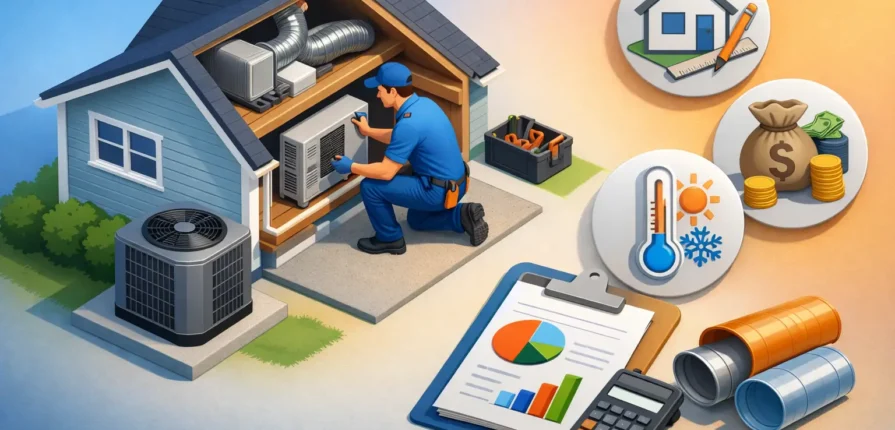
Sticker shock usually hits when a homeowner gets two quotes for the same job and the numbers are nowhere close. That is why understanding central air installation cost before you schedule an estimate matters. The price is not just about the outdoor unit. It is about your home, your ductwork, your electrical setup, and whether the job is a straightforward swap or a full system upgrade.
If you are trying to budget for a new cooling system, the honest answer is this: it depends. Most central air installations fall into a wide price range because no two homes are exactly alike. A smaller home with solid existing ductwork and an easy equipment changeout will cost less than an older home that needs duct modifications, electrical updates, or a larger system. The right number comes from an in-person evaluation, but it helps to know what drives the quote before you talk to a contractor.
What affects central air installation cost?
The biggest factor is system size. HVAC equipment is sized by cooling capacity, not by guesswork. If your home needs a larger unit, you will usually pay more for the equipment and sometimes more for installation labor. That said, bigger is not automatically better. An oversized system can short cycle, waste energy, and leave humidity problems behind.
Efficiency rating also changes the price. Higher-efficiency systems generally cost more up front, but they can reduce monthly utility bills. For some homeowners, that trade-off makes sense. For others, especially if they plan to move in a few years, a mid-range efficiency system may be the better value.
Existing ductwork is another major piece of the puzzle. If your ducts are in good shape, properly sized, and sealed well, installation is simpler. If the duct system leaks, is poorly designed, or does not match the new equipment, the project can quickly move beyond a basic install. In some homes, duct repairs are enough. In others, sections need to be replaced to get proper airflow.
Labor and job complexity matter too. A clean replacement where the old unit comes out and the new one goes in with minimal changes is one thing. A cramped attic, tight crawlspace, older electrical panel, or poor access to the equipment adds time and work. That affects the final cost.
Average central air installation cost for homeowners
When people search for average central air installation cost, they usually want one number. Realistically, it is smarter to think in ranges. For many homeowners, a central air installation may land somewhere between a few thousand dollars and well into five figures depending on system size, efficiency, ductwork needs, and home conditions.
A basic replacement in a home that already has compatible ductwork and electrical service will usually sit on the lower end of the range. A full installation in an older property without proper cooling infrastructure will be higher. If the job includes a new indoor coil, thermostat, refrigerant line updates, pad, disconnect, permits, and duct changes, the quote goes up because the scope is larger.
This is why two neighbors with similar square footage can get very different prices. One house may have newer ducts and better insulation. The other may have airflow issues that have been there for years. The equipment alone does not tell the whole story.
Replacement vs. first-time installation
If your home already has central air and you are replacing a worn-out system, the cost is usually more predictable. The contractor can inspect the existing setup, confirm sizing, and determine whether the new system can use parts of the current infrastructure. Even then, some older systems need code-related updates or refrigerant line changes.
First-time installation is a different job. If a house was never built for central air, there may be no ductwork, no proper electrical capacity, and no clear path for routing lines or placing equipment. That adds material and labor. In those cases, homeowners sometimes compare central air to ductless mini-splits because the installation approach is very different.
For property managers and owners of older homes, this is where a site visit matters most. A quick online estimate will not tell you what has to happen behind walls, above ceilings, or inside mechanical spaces.
Ductwork can make or break the budget
A lot of homeowners focus on the condenser outside and forget that airflow is what makes the system work. If ducts are undersized, disconnected, crushed, or leaking, a brand-new air conditioner will still struggle. You might pay for new equipment and still deal with hot rooms, high humidity, and long run times.
That is why duct inspection is not an upsell when it is done honestly. It is part of figuring out whether your system can deliver the air your home needs. Sometimes the fix is simple sealing and minor modification. Sometimes the return air is inadequate and needs to be corrected before installation. Those changes add cost, but they also prevent comfort problems later.
In central Ohio, older homes and additions are common problem areas. A house may have had changes over the years that left the cooling system working harder than it should. Catching that before installation is better than finding out after the first heat wave.
Other costs homeowners often miss
The base quote may or may not include every item tied to the project, so ask what is covered. A complete installation can involve permits, disposal of old equipment, thermostat replacement, electrical upgrades, drain line work, pad replacement, and startup testing.
Indoor air quality upgrades can also affect the final number. Some homeowners choose to add better filtration, a whole-home dehumidifier, or UV treatment when a new system goes in. Those are optional in many cases, but they can make sense if you have allergy concerns, moisture issues, or uneven comfort.
Warranty coverage is worth discussing too. A lower price is not always the better deal if the labor warranty is weak or the installer is cutting corners. The goal is not to find the cheapest number. It is to get a system that is installed correctly and supported after the job is done.
How to compare installation quotes without getting burned
The first thing to look for is whether the contractor actually evaluated your home. If someone throws out a number without checking ductwork, measuring the space, or asking about comfort issues, be careful. Proper sizing and installation planning matter.
Next, compare what is included. One quote may look cheaper because it leaves out items another contractor already accounted for. Look at equipment efficiency, scope of ductwork, thermostat details, warranty terms, permits, and cleanup. Cheap quotes often get expensive once the add-ons show up.
Pay attention to how the company explains the job. Clear answers usually tell you a lot about how the work will go. If the explanation is rushed or vague, that is a red flag. Good contractors do not need to pressure you. They should be able to explain what your home needs and why.
For homeowners who want a second opinion, this is often where value shows up. An experienced HVAC company will tell you when a full replacement makes sense and when a repair might still be worth considering.
When paying more up front can save money later
Not every upgrade is worth the extra cost, but some are. A properly matched system with the right efficiency level, airflow setup, and controls can run better, last longer, and cost less to operate. Poor installation can do the opposite, even if the equipment is top quality.
This is especially true if your current system has had chronic issues like weak airflow, uneven cooling, or high summer electric bills. Replacing equipment without addressing the cause of those problems can leave you in the same spot. Spending more to fix the system correctly may save money on repairs, energy use, and frustration.
A local contractor with real field experience should be able to walk you through those trade-offs in plain language. That is what homeowners need most – not a sales pitch, but straight answers.
What to do before you schedule an estimate
It helps to know the age of your current system, whether certain rooms stay hotter than others, and if you have had repeated repair issues. Write those down before the appointment. If you have noticed high humidity, noisy operation, or weak airflow, mention it. Those details help shape the recommendation.
You should also ask whether the estimate includes load calculations, duct inspection, and any likely electrical concerns. A good quote is not just a price. It is a plan for how the installation will solve the problem.
Professional Trade Service works with homeowners who want that kind of clear answer – especially when summer is close and there is no time to waste. If you are comparing options, the best next step is to get the system looked at by someone who knows what to check and is willing to explain it clearly.
A new air conditioner is a big investment, but it should buy more than cold air. It should buy reliable comfort, fewer surprises, and the confidence that the job was done right the first time.
Recent Comments