
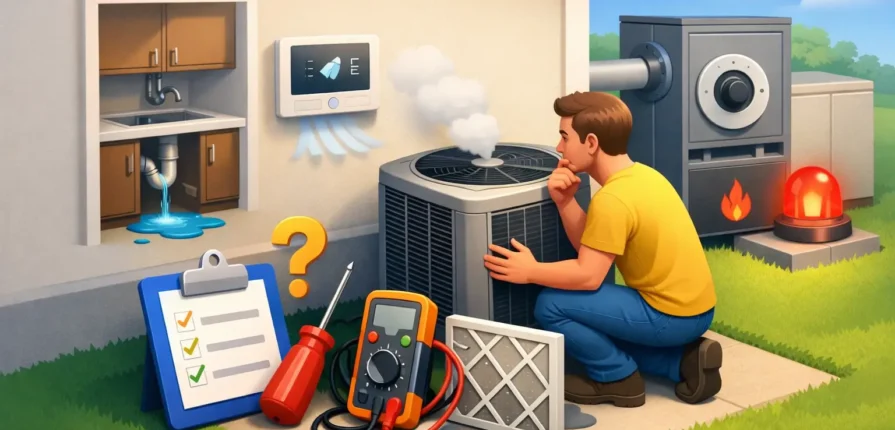
Your house feels stuffy, the thermostat says one thing, and the air coming out of the vents says another. Before you schedule a service call, it helps to know what to check before calling HVAC repair. A few simple checks can save you time, rule out an easy fix, and help a technician diagnose the problem faster if you do need professional service.
That does not mean every issue is a do-it-yourself job. If you smell gas, see smoke, hear loud electrical buzzing, or your system will not turn on after basic checks, stop there and call for help. Safety comes first. But for many common comfort problems, a quick walkthrough is worth doing.
What to check before calling HVAC repair first
Start with the thermostat. It sounds obvious, but it is one of the most common reasons a system seems to fail. Make sure it is set to the correct mode – heat in winter, cool in summer – and that the temperature setting is actually below or above the current room temperature, depending on what you need.
If your thermostat uses batteries, replace them. Weak batteries can cause blank screens, delayed responses, or odd cycling. If you have a programmable or smart thermostat, check whether a schedule was changed by mistake. Homeowners are often surprised to find the system is following a setback program they forgot was active.
Next, check the power. A furnace, air handler, or outdoor AC unit may have lost power at the breaker or at a nearby disconnect switch. Look at your electrical panel for a tripped breaker. If one is tripped, reset it once. If it trips again, stop there. Repeated tripping usually points to an electrical or equipment issue that needs a trained technician.
Also check the service switch near the indoor unit. It can look like a standard light switch and may have been bumped accidentally during storage, cleaning, or other work in the area.
Check the air filter before assuming the system is broken
A dirty air filter causes more trouble than most people realize. Restricted airflow can make your furnace run hotter than it should, cause an AC coil to freeze, reduce comfort in certain rooms, and drive up energy use. In some cases, the system may shut itself down to protect major components.
Pull the filter out and look at it in good light. If it is packed with dust and pet hair, replace it. Make sure the new filter is installed facing the correct direction. There is usually an arrow on the frame showing airflow direction.
This is one of those areas where it depends on the system and the home. A one-inch filter in a house with pets may need to be changed more often than a deeper media filter in a smaller household. If you cannot remember the last time it was replaced, that is a good sign it is time.
After changing the filter, give the system a little time. If airflow improves and the temperature begins to recover, you may have solved the problem. If not, you have still eliminated one major cause before calling for repair.
Look at the vents, registers, and returns
Sometimes the HVAC equipment is working, but the air is not moving properly through the house. Walk room to room and make sure supply vents are open and not blocked by furniture, rugs, or curtains. Closed registers can throw off airflow and comfort, especially in homes that already have uneven heating or cooling.
Check return vents too. If a return is covered by a couch, box, or pile of storage items, the system can struggle to circulate air. That can make the equipment work harder without delivering the comfort you expect.
If one room is uncomfortable while the rest of the house feels fine, the issue may be airflow balance, duct leakage, insulation, or sun exposure rather than a total equipment failure. That still may require service, but it is useful information to share when you call.
If your AC is not cooling, inspect the outdoor unit
When the air conditioner is running but not cooling well, step outside and look at the condenser. Leaves, grass clippings, cottonwood, and dirt can build up on the coil and reduce performance. If the unit is visibly packed with debris, clear away vegetation and gently remove loose buildup around the cabinet.
Do not take the unit apart or spray it aggressively if you are not sure what you are doing. The goal is to check for obvious blockage, not perform a full cleaning without the right tools.
Listen for normal operation. The outdoor fan should run when the system is calling for cooling. If the indoor blower runs but the outdoor unit is silent, or if it hums without starting, that is useful information for the service technician.
Also look for ice. If you see ice on the refrigerant line or around the indoor coil area, turn the cooling system off and switch the fan to on if possible. Frozen coils can happen because of low airflow, a dirty filter, or refrigerant issues. Running the system while frozen can make things worse.
If your furnace is not heating, check the obvious fuel and ignition issues
For a gas furnace, make sure the gas supply valve is on. If you recently had work done in the area or moved items around, it is possible the valve was shut off. If you smell gas, do not keep checking things. Leave the area and call for professional help right away.
Look at the furnace access panel. If it is not seated properly after a filter change, the safety switch may prevent the unit from running. This is a simple issue that gets missed more often than you would think.
If your furnace starts and stops quickly, or blows cool air before shutting down, a dirty filter, flame sensor issue, or overheating problem may be involved. That is not usually something to ignore. Modern furnaces have safety controls for a reason, and repeated shutdowns are a sign the system needs attention.
Check for drain and moisture problems
High-efficiency furnaces and air conditioners produce condensate, and that water has to drain properly. If a condensate line is clogged, some systems will shut down to prevent water damage. You may notice standing water near the indoor unit, a full drain pan, or dampness around the equipment.
This is especially common during heavy AC use in summer. If the unit suddenly stops cooling and you see water around it, a clogged drain line could be part of the problem. You can note what you see, but if there is active leaking or water near electrical components, it is best to shut the system down and call.
Pay attention to sounds and smells
Good information helps speed up repair. Before you call, think about what the system is actually doing. Is it making a banging noise at startup, a squealing noise during operation, or a clicking sound without turning on? Does it smell musty, burnt, or like something electrical is overheating?
Not every smell means the same thing. A dusty smell at the start of heating season can be normal. A burning plastic or electrical smell is not. A musty odor might point to moisture or biological growth in the system or ductwork. These details matter because they help narrow down the cause.
The same goes for timing. Did the system fail all at once, or has performance been getting worse over a few weeks? Did the breaker trip during a storm? Did the problem start right after you changed the thermostat or filter? Context helps.
When to stop checking and call HVAC repair
Knowing what to check before calling HVAC repair is helpful, but there is a point where more poking around is not useful. If the system has no power after breaker and thermostat checks, if the outdoor AC unit will not start, if the furnace keeps shutting off, or if you see ice, water leaks, sparks, or signs of overheating, it is time to bring in a professional.
The same goes for recurring problems. If your system cools during the morning but cannot keep up in the afternoon, if one breaker trips more than once, or if airflow stays weak after you replace the filter, there is likely an underlying issue. That could be a failing capacitor, blower problem, refrigerant issue, duct restriction, or something else that needs proper testing.
For homeowners and property managers in central Ohio, this matters even more during peak summer and winter weather. Waiting too long can turn a manageable repair into a bigger breakdown, especially with older equipment.
When you do call, be ready with a few basics: the age of the system if you know it, what you already checked, whether the thermostat has power, whether the breaker is on, whether the filter was changed, and what sounds or symptoms you noticed. A company like Professional Trade Service can use that information to respond faster and bring the right approach to the job.
A little troubleshooting can save you a service call for a simple setting or filter issue. And if the problem is real, those same checks help you make the call sooner, with better information, and a better shot at getting your comfort back without wasting time.
Recent Comments