
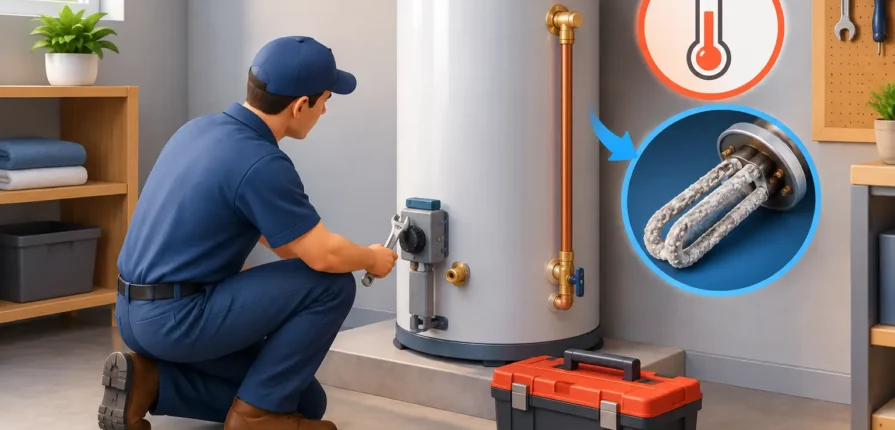
A lukewarm shower is not just an inconvenience, especially when the temperature drops in central Ohio. If your water heater not getting hot enough has become a daily problem, the cause may be as simple as a thermostat setting or as serious as a failing heating element, burner issue, or undersized unit. The right next step depends on the type of water heater you have and whether the problem affects every faucet or only one fixture.
Before you assume the water heater needs replacement, start with a few safe checks. Then know when to stop troubleshooting and bring in a qualified plumbing professional. Hot water involves high voltage, natural gas, high pressure, and scalding temperatures. A quick repair is never worth a safety risk.
First, Confirm It Is a Water Heater Problem
The pattern of the problem tells you a lot. If only one shower or sink produces lukewarm water, the water heater may be working normally. A worn shower cartridge, failed mixing valve, or improperly adjusted anti-scald device can mix too much cold water into the line at that fixture.
If every tap in the home is lukewarm, or the hot water runs out much sooner than it used to, the water heater is the likely source. Pay attention to whether it never gets properly hot, gets hot for a few minutes and then turns lukewarm, or has stopped producing hot water altogether. Each symptom points to a different likely repair.
For property managers, this check matters even more in multi-unit buildings. One tenant’s weak hot water may be a fixture issue. Several units reporting the same problem may indicate a central water-heating or recirculation problem that needs prompt service.
Why Your Water Heater Is Not Getting Hot Enough
The temperature setting is too low
Start with the thermostat. Many manufacturers set water heaters around 120 degrees Fahrenheit, which is generally hot enough for normal household use while helping limit scald risk and unnecessary energy use. If someone recently adjusted the control, the setting may simply be too low.
On a gas water heater, the temperature dial is usually near the bottom of the tank. On an electric model, thermostats sit behind access panels. You can safely inspect the setting, but do not remove electrical covers unless the power is shut off at the breaker. Electric water heaters carry a real shock hazard.
Avoid turning the temperature up aggressively. Water above 120 degrees can cause burns quickly, particularly for children and older adults. If you raise the setting slightly, give the tank several hours to recover and test the water carefully.
One electric heating element has failed
Most standard electric tank water heaters use two heating elements: one near the top and one near the bottom. When one fails, the unit may still produce some hot water, but not enough for a full shower or a busy household. This is one of the most common reasons an electric water heater seems partly functional.
A technician can test the elements, thermostats, wiring, and power supply. Replacing the failed part may be a practical repair if the tank is otherwise in good condition. If the heater is older, leaking, heavily corroded, or repeatedly needing repairs, replacement may make better financial sense.
A tripped breaker or power issue is limiting an electric heater
Electric water heaters often require a dedicated 240-volt circuit. If one side of that circuit trips or a connection fails, the heater may not heat correctly even though it appears to have power. Check whether the breaker is tripped, but do not keep resetting it if it trips again. Repeated breaker trips can signal a damaged element, loose wiring, or another electrical problem.
This is a good point to call for help. Professional Trade Service can address plumbing and electrical concerns without sending you on a search for multiple contractors when the source of the issue is unclear.
A gas burner or pilot problem is reducing heat
A gas water heater needs a properly functioning pilot or electronic ignition, burner assembly, gas supply, venting system, and safety controls. If the burner does not light consistently or burns weakly, the tank may heat slowly or never reach the set temperature.
You may notice that the pilot is out, the burner will not stay lit, or the unit produces unusual odors or sounds. Do not attempt to disassemble the gas control or burner assembly. If you smell gas, leave the area, avoid switches and open flames, and contact your gas utility or emergency service from a safe location.
Sediment is taking up space in the tank
Central Ohio water can leave mineral sediment inside a tank over time. That buildup settles at the bottom, where it can insulate the lower heating element in an electric unit or make it harder for a gas burner to heat the water efficiently. The result is less available hot water, longer recovery times, popping or rumbling noises, and higher utility bills.
Flushing a water heater can help when it is done early and as part of routine maintenance. On a neglected, older tank, however, opening the drain valve can reveal problems or cause a weakened valve to leak. A professional inspection is the safer choice if the unit has not been serviced in years.
The dip tube may be damaged
Inside a tank-style heater, a dip tube directs incoming cold water toward the bottom of the tank. If it cracks or breaks, cold water can mix near the top where hot water exits. You may get a brief burst of hot water followed quickly by lukewarm water.
This repair is less obvious than a thermostat issue and usually requires diagnosis by a plumber. It can be worth repairing on a newer tank, assuming there are no signs of corrosion or leakage.
Your household has outgrown the heater
Sometimes there is nothing mechanically wrong. A 40-gallon tank that once handled two people may struggle after a growing family, added bathroom, larger soaking tub, or new high-flow showerhead changes demand. Back-to-back showers, laundry, and dishwasher cycles can empty a small tank quickly.
A larger tank is one option, but it is not always the best one. A heat pump water heater can reduce operating costs in the right location, while a properly sized tankless water heater provides continuous hot water but has installation and gas or electrical capacity requirements. The best choice depends on your household’s peak demand, available space, fuel source, and budget.
Safe Checks You Can Make Before Calling
You do not need to take apart a water heater to gather useful information. Check that the unit has power or that the gas control appears to be on. Look around the base for moisture, rust, or active leaking. Note any popping, sizzling, rumbling, or burner-ignition sounds. Also check whether the problem occurs at every faucet.
If you have an electric water heater, verify the breaker is on once. If it is tripped, reset it one time only. If it trips again, leave it off and schedule service. For gas units, do not relight a pilot if you smell gas or are not comfortable following the manufacturer’s lighting instructions.
It also helps to estimate the heater’s age. The serial number label usually includes a manufacture date or can be used to identify one. Traditional tank water heaters commonly last eight to 12 years, though water quality, maintenance, and usage can shorten or extend that range.
When a Repair Cannot Wait
Call for service promptly if you see water leaking from the tank itself, rusty water from hot faucets, corrosion around fittings, repeated breaker trips, a pilot that will not stay lit, or a gas smell. A leak at a connection may be repairable. Water coming through the tank shell usually means replacement is near or already necessary.
You should also call when hot water is inconsistent enough to affect normal use. Waiting rarely improves the situation. A failing element, burner, thermostat, or mixing valve can leave you with no hot water at all when you need it most.
Homeowners in Sunbury, Lewis Center, Powell, and nearby communities can get a clear diagnosis before committing to a major expense. A good technician should explain what failed, what the repair involves, and whether the age and condition of the heater make replacement a smarter investment.
Keep the Next Hot Water Problem From Sneaking Up
The simplest way to protect hot water performance is to have the system inspected before it fails. Regular maintenance can catch sediment buildup, leaking valves, worn components, unsafe venting, and temperature-control problems early. It also gives you a realistic picture of how much useful life remains in the unit.
If your water heater is not getting hot enough, do not settle for colder showers or guess at a costly replacement. A careful diagnosis can separate a manageable repair from a tank that has reached the end of its service life, helping you restore dependable hot water with less disruption to your home.
Recent Comments