
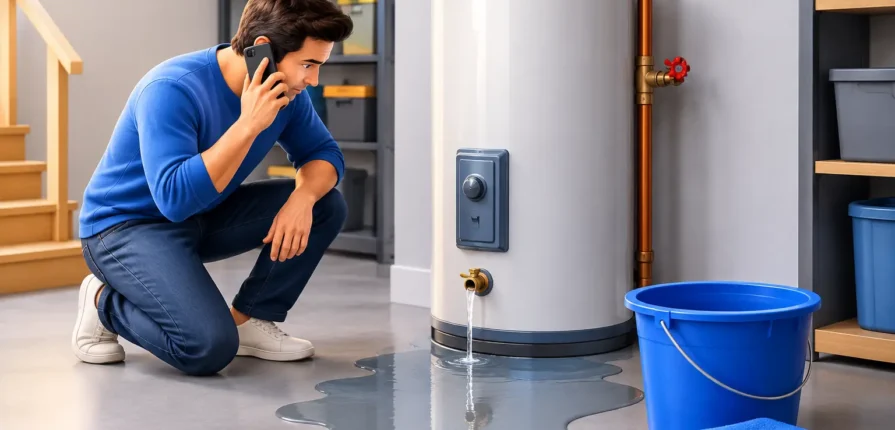
A water heater leaking in a basement, utility room, or closet is not a wait-and-see problem. A few drops may come from a simple valve or fitting, but water around the tank can also point to a failed component or a tank that has rusted through. Acting quickly protects your floors, walls, stored belongings, and home from a much larger repair.
The first job is not figuring out the exact cause. The first job is stopping the water safely. Once the immediate risk is under control, a qualified plumber can determine whether a repair makes sense or whether the unit is nearing the end of its service life.
What to Do When Your Water Heater Is Leaking
Start by looking at the amount of water and where it is collecting. If the area is wet but manageable, place towels or a shallow pan under the leak to limit damage. If water is spreading across the floor, move boxes, furniture, and anything electrical out of the area if it is safe to do so.
Next, turn off the cold-water supply to the heater. The shutoff valve is usually on the pipe above the tank. Turning that valve clockwise should stop new water from entering the unit. Do not force a stuck valve. An older valve can break, and that turns a small leak into an emergency.
For an electric water heater, shut off power at the breaker before touching the unit or standing near water. For a gas water heater, set the control to the off position if you can do so safely. If you smell gas, hear hissing near the gas line, or suspect a gas leak, leave the area and contact your gas utility or emergency services from outside the home. Do not use switches, phones, or open flames near a suspected gas leak.
If you need to drain the tank, use caution. Water inside may be hot enough to cause burns, especially if the heater was recently running. In many cases, it is better to leave draining and diagnosis to a plumbing professional, particularly when the leak is significant or the tank sits in a finished area.
Where Is the Water Coming From?
The location of the leak tells a technician a lot. Condensation, a loose pipe connection, and a leaking tank may all look similar at first, but they have very different fixes.
Water on Top of the Tank
Water near the top often comes from the cold-water inlet, hot-water outlet, expansion tank connection, or nearby plumbing. A loose fitting, worn connector, or failed valve may be the issue. These problems are often repairable when caught early.
Check whether water is running down from a pipe above the heater. A leak from overhead plumbing can make the tank look guilty when the actual problem is elsewhere. Dry the area, then watch carefully for fresh moisture. Avoid tightening fittings yourself if there is corrosion or if the connection is under pressure.
Water Around the Temperature and Pressure Relief Valve
The temperature and pressure relief valve, often called the T&P valve, is a critical safety device. It opens when pressure or temperature inside the tank becomes too high. Water dripping from its discharge pipe does not always mean the valve itself has failed.
The cause may be excess pressure, overheating, a failing expansion tank, or a worn valve. Never cap, plug, or block the discharge pipe to stop the drip. That valve is there to protect the home. A plumber should test the system and correct the reason it is opening.
Water Near the Drain Valve
The drain valve is located near the bottom of the tank. It can drip because it was not fully closed after flushing the unit, because its washer has failed, or because the valve is corroded. A slow drain-valve leak may be repairable, although the age and overall condition of the heater still matter.
If the valve is leaking heavily, do not keep turning it back and forth. A brittle valve can fail completely. Shut off the incoming water and arrange service.
Water Coming From the Bottom of the Tank
Water at the bottom is the most concerning sign, especially if it continues after you rule out the drain valve and condensation. Steel tank water heaters have an interior liner and an anode rod that helps slow corrosion. Over time, sediment and rust can damage the tank from the inside.
Once the tank itself has cracked or rusted through, it cannot be reliably repaired. Replacement is generally the right call. Patching the outside only delays the failure and can leave you dealing with a flooded utility room later.
A Small Puddle Is Not Always a Tank Failure
Not every wet floor means your water heater needs replacement. In humid weather, cold water entering the tank can create condensation on the outside. This is more common when the unit is in a damp basement or when a large amount of hot water has just been used.
Condensation should be light and temporary. Wipe the tank dry and check again after a period of normal use. If water returns from a specific valve, seam, fitting, or the bottom of the unit, it is time for a closer inspection.
Another possibility is a nearby appliance or plumbing line. A leaking furnace humidifier, washing machine hose, sump pump discharge, or overhead pipe can send water toward the heater. A professional inspection prevents spending money on the wrong repair.
When to Call for Plumbing Service Right Away
Some water heater problems can wait until regular business hours. Others should be treated as urgent. Call for prompt service if the leak is actively pooling, water is reaching electrical equipment, the tank is bulging or badly rusted, or you have lost hot water along with the leak.
You should also get help right away if the T&P valve is releasing a steady stream of water, if you smell gas, or if you cannot safely shut off the water supply. Property managers should act quickly as well. A failing water heater in a rental unit can damage multiple areas and leave tenants without hot water.
For homeowners in central Ohio, an active water heater leak can be especially frustrating when the unit is tucked into a cold basement or utility space. Professional Trade Service can inspect the source, explain the repair options plainly, and handle the plumbing work without sending you on a hunt for a second contractor.
Repair or Replace: How to Make the Call
The best choice depends on the source of the leak, the heater’s age, its condition, and the cost of the repair. A relatively new unit with a leaking connector, valve, or fitting may be worth repairing. A tank leaking from the bottom is not.
Age matters because most traditional tank water heaters have a limited service life. If a unit is approaching or past its expected lifespan and needs an expensive repair, replacement can offer better value and fewer surprises. A new properly sized heater may also improve recovery time and energy use, though the right option depends on household demand, fuel type, available space, and budget.
Do not choose a replacement based on tank size alone. A household with several people taking showers in the morning has different needs than a home with one or two occupants. A professional can size the equipment based on how much hot water your home actually uses, not just what was installed years ago.
Preventing the Next Leak
Water heater maintenance will not prevent every failure, but it can reveal warning signs before water reaches the floor. Periodic inspections can catch corrosion, deteriorated pipe connections, a failing expansion tank, and a T&P valve that is not operating as it should.
Flushing sediment may help preserve performance in some homes, but it should be done correctly. On a heavily neglected older heater, disturbing thick sediment can sometimes expose an existing weakness. That is why maintenance should be based on the unit’s condition, not treated as a one-size-fits-all task.
Take a few minutes each month to look around the heater for rust, dampness, mineral buildup, or changes in the floor nearby. Know where the water shutoff and electrical breaker are before a leak starts. That small bit of preparation can make a stressful call much easier when every minute counts.
A water heater should quietly deliver hot water, not demand attention from the floor drain. If yours is leaking, shut it down safely, protect the area, and get a clear diagnosis before a minor drip becomes expensive water damage.
Recent Comments