
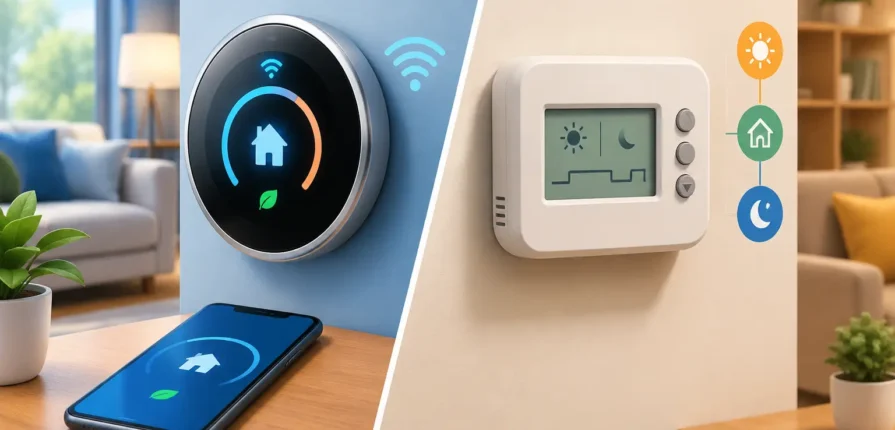
A thermostat can make a noticeable difference in how your home feels and how hard your furnace or air conditioner has to work. When comparing a smart thermostat versus programmable thermostat, the better choice is not always the newest or most expensive option. It is the one that matches your household schedule, your HVAC equipment, and how much control you actually want.
For many central Ohio homeowners, that decision becomes more pressing when heating bills rise in winter or the AC runs longer than expected in summer. A properly selected and installed thermostat can help reduce wasted runtime. But it cannot fix an oversized system, a dirty filter, leaking ductwork, or equipment that needs service.
Smart Thermostat Versus Programmable Thermostat: The Basic Difference
A programmable thermostat follows a schedule you set. For example, you can tell it to lower the heat while everyone is at work, warm the house before you get home, and reduce the temperature overnight. Most models offer daily or weekly scheduling, and many are simple enough to operate without an app or internet connection.
A smart thermostat does that too, but it adds Wi-Fi connectivity and more automation. Depending on the model, you may control it from your phone, receive maintenance reminders, check energy reports, use voice controls, or allow the thermostat to adjust around your routines. Some models use occupancy sensors or location settings to recognize when the house is empty.
The difference is convenience and data, not a guarantee of lower bills. A smart thermostat can save energy when its features are set up correctly and fit the way you live. If the schedule is wrong, the Wi-Fi is unreliable, or no one uses the advanced controls, a basic programmable thermostat may do the same job for less money.
When a Programmable Thermostat Makes Sense
A programmable thermostat is often the practical choice for households with a predictable routine. If the house is empty from 8 a.m. to 5 p.m. most weekdays, a set schedule can reduce heating and cooling when no one needs full comfort.
It is also a good option for homeowners who prefer straightforward controls. You set the temperatures, confirm the time and schedule, and let it run. There is no account to create, no app to learn, and no concern about software updates or an internet outage affecting access.
This option can work especially well in rental homes, small offices, and properties where multiple people may need to adjust the thermostat. The controls are right on the wall, and the expectations are clear. For property managers, that simplicity can be a benefit.
The trade-off is that programmable thermostats do not automatically respond to changes in your day. If you leave early, work from home unexpectedly, or head out for the weekend, the schedule stays put until someone changes it. Many homeowners also never program their thermostat in the first place, which removes most of the potential benefit.
Where Smart Thermostats Earn Their Keep
A smart thermostat is a strong fit for busy households with changing schedules. You may be able to adjust temperatures from work, while traveling, or from another room without getting up. If your family comes and goes at different times, remote control can prevent the system from heating or cooling an empty house longer than necessary.
Many smart models provide usage reports that show when your HVAC system runs most. That information can help you spot habits that are driving up utility use, such as setting the AC very low during a heat wave or constantly changing the temperature throughout the day.
Smart thermostats can also send alerts for filter changes, unusual temperature swings, or lost connectivity. Those alerts are helpful, but they should not replace regular maintenance. A reminder to change a filter is useful. It does not diagnose a failing blower motor, refrigerant issue, or furnace safety concern.
For snowbirds, frequent travelers, and owners of second homes, remote monitoring is often the biggest advantage. Being able to confirm that the heat is on during a cold Ohio week can provide real peace of mind. Still, remote access depends on power and internet service. It is a convenience tool, not a substitute for emergency planning or professional repair.
Compatibility Matters More Than Features
Before buying either type of thermostat, confirm that it works with your heating and cooling system. This is where a lot of homeowners run into trouble.
Many smart thermostats need a common wire, often called a C-wire, to provide steady power. Older homes may not have one at the thermostat location. Some models include adapters or alternative installation methods, but those solutions are not right for every system. Forcing a thermostat onto incompatible wiring can lead to short cycling, loss of power, or damage to HVAC controls.
Heat pumps, multi-stage furnaces, dual-fuel systems, humidifiers, dehumidifiers, and zoning systems deserve extra attention. A thermostat has to be able to control all the equipment functions your system requires. Choosing a basic model for a system with advanced staging can leave comfort and efficiency on the table. Choosing an advanced model without proper setup can create just as many problems.
A professional can verify the wiring, system type, voltage, and control settings before installation. That is particularly worthwhile if your current thermostat is acting erratically, your equipment is older, or you are replacing a thermostat after a furnace or AC repair.
Will Either Thermostat Lower Energy Bills?
Potentially, yes. The savings come from avoiding unnecessary heating and cooling, not from the thermostat itself. Raising the temperature setting a little in summer or lowering it a little in winter while you are away can reduce runtime. Consistency matters more than constantly chasing the “perfect” number.
A programmable thermostat can deliver solid savings when you use a realistic schedule. A smart thermostat may offer additional savings if it adjusts to changing routines and helps you avoid waste. But neither will overcome problems such as poor insulation, clogged filters, dirty coils, duct leaks, or equipment that is losing efficiency.
Be careful with aggressive temperature setbacks, especially with a heat pump. A large setback can trigger auxiliary heat during recovery, which may cost more than maintaining a steadier setting. The right strategy depends on the equipment in your home, the outdoor temperature, and how long the home is unoccupied.
Choosing the Right Thermostat for Your Home
Choose a programmable thermostat if your routine is consistent, you want lower upfront cost, and you prefer simple controls on the wall. It is reliable, easy to understand, and capable of reducing wasted runtime when programmed correctly.
Choose a smart thermostat if your schedule changes often, remote access would be useful, and you are willing to use the app and setup features. It can be a worthwhile upgrade for homeowners who travel, manage multiple properties, or want more visibility into energy use.
If you are unsure, start with the HVAC system rather than the thermostat aisle. The best thermostat is one that works correctly with your equipment and is configured for the way your home is used. Professional Trade Service can help homeowners determine whether a thermostat upgrade makes sense during a seasonal checkup, repair visit, or system consultation.
Get the Settings Right After Installation
Installation is only the first step. Confirm that the thermostat is set for the correct fuel type, number of heating and cooling stages, fan operation, and heat pump settings if applicable. A thermostat that is wired correctly but programmed incorrectly can cause comfort problems and unnecessary system wear.
After installation, give the schedule a week or two before making major changes. Pay attention to rooms that feel too warm or too cool, how often the system runs, and whether the equipment reaches the set temperature without running excessively. If the system short cycles, blows lukewarm air, trips a breaker, or cannot keep up, the issue may be with the HVAC equipment rather than the thermostat.
A good thermostat should make comfort easier to manage, not give you another device to fight with. Pick the controls you will actually use, have the installation checked when compatibility is uncertain, and keep up with regular HVAC maintenance so your heating and cooling system can do its job when Ohio weather turns extreme.
Recent Comments