
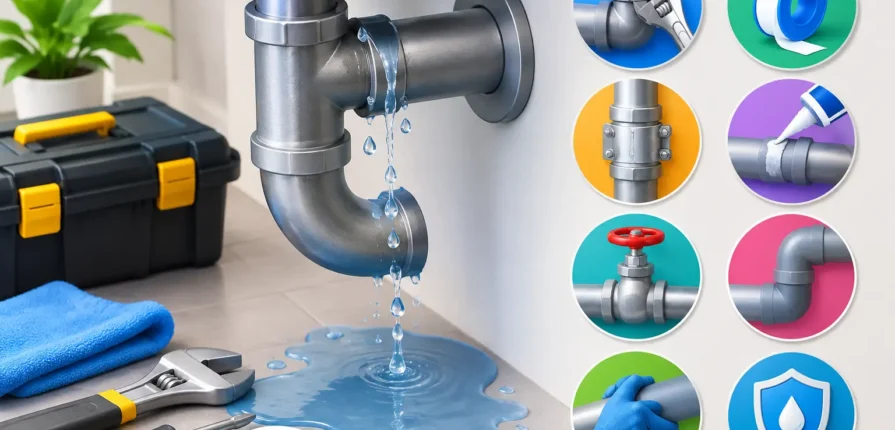
A pipe leak can go from a small drip under the sink to damaged flooring, mold growth, and a major repair bill faster than most homeowners expect. Knowing a few practical ways to stop pipe leaks gives you time to protect your home, but temporary fixes are not the same as a lasting repair. The goal is to control the water, prevent further damage, and get the real cause handled before it gets worse.
1. Shut Off the Water First
If water is actively leaking, the fastest way to limit damage is to stop the supply. For a sink, toilet, dishwasher, or washing machine connection, look for the small shutoff valve near the fixture. Turn it clockwise until it stops. Do not force an old valve if it is corroded or difficult to move.
If you cannot isolate the leak, shut off the home’s main water valve. Many homes have it near the water meter, in a utility room, basement, crawl space, or mechanical area. Every homeowner and property manager should know where this valve is before an emergency happens.
After the water is off, open a nearby faucet to relieve pressure in the line. This can reduce dripping and make the area safer to inspect.
2. Protect the Area Around the Leak
Water does not stay where it starts. It can run inside cabinets, through ceilings, behind walls, and under flooring. Put down towels, a bucket, or a shallow pan to catch water, then move stored items, rugs, electronics, and furniture away from the area.
If water has reached an outlet, appliance, breaker panel, or any electrical equipment, stay clear of it. Shut off power to that area at the breaker only if you can do so safely. Water and electricity are not a DIY combination.
For a leak above a ceiling, place a bucket beneath the wet spot. If the ceiling is sagging with water, do not stand underneath it. A plumber can address the pipe, but the ceiling may also need prompt attention to prevent collapse or mold damage.
3. Tighten a Loose Connection Carefully
Not every leak means a broken pipe. Sometimes the problem is a loose supply-line nut, drain connection, or fitting under a sink. After shutting off the water, dry the area completely and identify where the water begins.
A connection that is visibly loose may need a small adjustment with a wrench or pliers. Turn it only a little at a time. Overtightening can crack plastic fittings, strip threads, crush washers, or create a bigger leak than the one you started with.
If the leak is coming from a threaded pipe joint, tightening may not solve it. The fitting could have worn threads, failed pipe sealant, corrosion, or damage inside the connection. A repair that holds for a day is not necessarily a repair that will hold through the next season.
4. Use a Temporary Patch for Small, Accessible Leaks
For a pinhole leak in an exposed water line, a pipe repair clamp, rubber patch, and hose clamp can slow or stop the leak until a professional arrives. Dry the pipe as thoroughly as possible, place the rubber over the damaged section, and secure it evenly without crushing the pipe.
Epoxy putty can also be useful for a small leak in some pipe materials. It must be applied to a clean, dry surface, and the water should remain off while it cures. Read the product instructions closely, since cure times and approved materials vary.
These products are emergency measures, not permanent solutions. A pinhole in a copper line, for example, can be a sign of corrosion elsewhere in the system. Covering one hole does not tell you why the pipe failed.
5. Address Leaks Around Toilets and Drains Differently
A leak at a water supply line is different from a leak at a drain. Pressurized supply lines can keep leaking as long as the water is on. Drain leaks usually show up only when the sink, shower, or appliance is being used.
Under a sink, check whether water appears around the P-trap, drain tailpiece, garbage disposal connection, or dishwasher drain hose. A loose slip-joint nut or worn washer may be the issue. Avoid using chemical drain cleaners to solve a leak. They will not repair a cracked drain, and they can damage pipes or create a hazardous situation for the person making the repair.
A toilet leaking at its base deserves quick attention. The problem could be a failed wax ring, a loose toilet, cracked porcelain, or moisture from a sweating tank. Do not keep flushing until you know where the water is coming from, especially if it is soaking the floor around the toilet.
6. Prevent Frozen Pipe Leaks Before Winter Hits
Central Ohio winters can be hard on plumbing in crawl spaces, garages, exterior walls, attics, and unheated basements. When water freezes, it expands. That pressure can split a pipe or damage a fitting, sometimes without showing a leak until the pipe thaws.
Insulate exposed water lines and seal obvious drafts near plumbing. Disconnect outdoor hoses before freezing weather, shut off exterior spigots when possible, and drain the line if your home has a dedicated shutoff. During severe cold, opening cabinet doors under sinks can allow warmer indoor air to reach pipes along exterior walls.
A slow drip from a faucet may help in certain vulnerable areas during extreme cold, but it is not a complete prevention plan. It also increases water use. If pipes have frozen, do not use an open flame or high-heat device to thaw them. Warm the area gradually and call for help if you cannot locate the frozen section or see any damage.
7. Watch for Hidden Leaks You Cannot See
Some of the most expensive leaks are hidden behind walls, under slabs, or inside ceilings. You may not see running water, but your home often gives you warning signs. Pay attention to unexplained increases in the water bill, a water meter that continues moving when fixtures are off, damp drywall, peeling paint, musty smells, warm spots on a floor, or the sound of water moving when no one is using it.
A small stain is not something to paint over and forget. It may be old moisture, but it may also be an active leak traveling from another area. The longer water stays hidden, the more likely it is to damage framing, insulation, flooring, and finished surfaces.
Property managers should take resident reports of moisture seriously. A fast inspection can prevent a minor maintenance call from becoming a unit renovation and a disruption for tenants.
8. Know When It Is Time to Call a Plumber
There are times when turning a wrench is reasonable, and times when the right move is getting a trained plumber on site. Call for professional help when a pipe is cracked, corroded, frozen, concealed in a wall or ceiling, repeatedly leaking, or connected to a water heater. You should also call if the leak has caused ceiling damage, affected electrical components, or cannot be isolated with a local shutoff valve.
A plumber can find the source of the problem, replace damaged pipe or fittings, test the repair under pressure, and look for related concerns. That matters with older plumbing, where one failed section may point to broader wear. Professional Trade Service can help homeowners in the Delaware area with plumbing problems that need a dependable repair, not another temporary patch.
Do Not Ignore the Cause of the Leak
Stopping the water is the immediate priority, but finding out why the pipe leaked is what protects your home long term. Age, corrosion, high water pressure, freezing temperatures, poor installation, shifting pipes, and worn seals can all play a part. The right repair depends on the pipe material, its location, and the condition of the rest of the plumbing system.
Keep the affected area dry, document any damage for insurance purposes, and avoid turning the water back on until the repair is secure. A quick response today can save you from a much larger cleanup tomorrow.
Recent Comments