
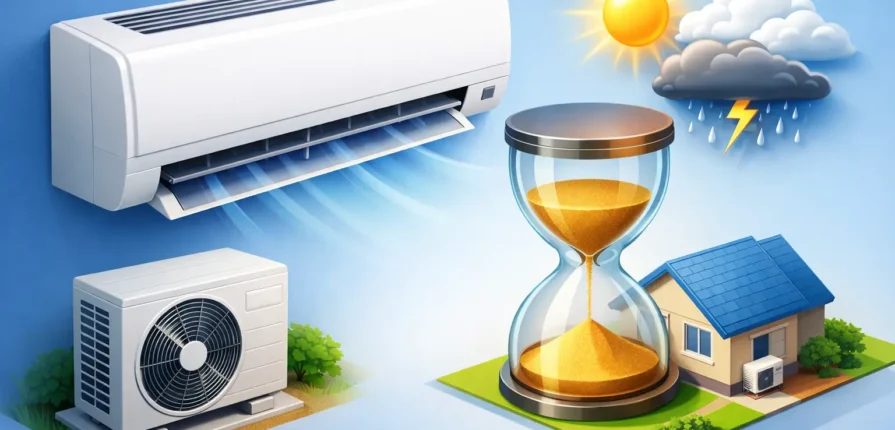
If your air conditioner is 10, 12, or 15 years old and starting to act up, you are probably asking the right question: how long do air conditioners last, and is yours nearing the end. That question matters most when the house will not stay cool, the electric bill keeps climbing, or repairs are starting to stack up in the middle of an Ohio summer.
For most homes, a central air conditioner lasts about 12 to 15 years. Some systems make it closer to 18 or even 20 years, but that usually depends on regular maintenance, proper installation, and how hard the equipment has been working over time. A unit that has been neglected, oversized, undersized, or constantly running in extreme weather can wear out much faster.
The simple answer is that age gives you a range, not a guarantee. Two systems installed in the same year can end up in very different shape depending on how they were maintained and how often they were repaired.
How long do air conditioners last on average?
A standard central AC system usually lands in that 12 to 15 year window. Heat pumps can be in a similar range, though they often run more months out of the year and may wear faster if they handle both heating and cooling. Window units and portable systems tend to have shorter lifespans, often around 8 to 10 years.
That average does not mean a 15-year-old unit automatically needs to be replaced. It means the odds of major problems go up after that point. Compressors wear down, coils corrode, blower components age, and older systems become less efficient than newer equipment.
If your system is still cooling well at 14 years old, that is good news. But if it is 14 years old and needs frequent service, struggles on hot afternoons, or uses outdated refrigerant, replacement becomes a much more practical conversation.
What affects how long an AC lasts?
The biggest factor is maintenance. Air conditioners need routine service to keep airflow, refrigerant charge, electrical parts, and coil condition where they should be. When tune-ups get skipped year after year, the system often runs hotter, longer, and harder than it should.
Installation quality also matters more than many homeowners realize. Even a high-quality unit can have a short life if it was installed with poor airflow design, bad duct connections, incorrect refrigerant levels, or the wrong size for the home. An oversized system may short cycle. An undersized one may run constantly. Neither is good for long-term reliability.
Usage patterns play a role too. A unit cooling a shaded, well-insulated home may last longer than one trying to keep up with leaky windows, poor attic insulation, and long stretches of high heat. Dirt, cottonwood, grass clippings, and clogged filters can also strain the system over time.
Then there is the human side of it. A system that gets checked when it first starts making an odd noise often survives longer than one that is ignored until it stops cooling completely.
Signs your air conditioner may be nearing the end
Age alone is only part of the story. What matters is how the system is behaving now.
If your AC is running longer but cooling less, that can point to declining performance. If some rooms feel comfortable while others stay warm, airflow or equipment wear may be part of the problem. Higher energy bills without a clear reason can also signal a system that is losing efficiency.
Frequent repairs are another red flag. One repair every so often is normal. Needing service every summer, or multiple times in the same season, usually means the system is becoming less dependable. That matters even more for families, property managers, and business owners who cannot afford to wait around during a hot spell.
Watch for these signs in particular:
- Warm air coming from the vents
- Weak airflow
- Short cycling or constant running
- Loud buzzing, banging, or rattling
- Water leaks or ice buildup
- Rising utility costs
- Poor humidity control
Any one of those issues can sometimes be repaired. When several show up together on an older unit, replacement may save money and frustration.
Repair or replace? That depends on the full picture
This is where a lot of homeowners get stuck. They do not just want to know how long do air conditioners last. They want to know whether it still makes sense to put money into the one they already have.
A newer system with a minor issue is usually worth repairing. A bad capacitor, contactor, or thermostat problem does not automatically justify replacement. But the decision changes when the unit is older and the repair is expensive.
A common rule of thumb is to look at the age of the system and the cost of the repair together. If the AC is over 10 years old and the repair is significant, it is smart to compare that cost against the value of a new, more efficient system. You are not just paying for the part today. You are also betting on how much longer the rest of the equipment will hold up.
Refrigerant type matters too. If your system uses R-22, repairs can become more expensive because that refrigerant has been phased out. In those cases, even a repair that looks possible may not be the best long-term move.
The honest answer is that there is no one-size-fits-all line. Some older systems are worth fixing once more. Some are better replaced now before they fail during a 90-degree week.
How to help your AC last longer
If your system is still in decent shape, a few practical steps can help stretch its lifespan.
Change the air filter on schedule. A dirty filter chokes airflow and puts extra stress on the system. Keep the outdoor unit clear of leaves, weeds, and debris so it can breathe properly. Make sure vents are open and not blocked by furniture, rugs, or boxes.
It also pays to schedule professional maintenance before peak cooling season. A proper AC tune-up can catch low refrigerant, dirty coils, weak electrical parts, drainage issues, and airflow problems before they turn into a breakdown. That kind of routine service is usually much cheaper than emergency repair.
If your thermostat settings are extreme, dialing them back a little can help reduce unnecessary run time. Sealing air leaks and improving insulation also lighten the load on the equipment. The less strain the system carries, the better chance it has of lasting closer to the high end of its lifespan.
When replacement makes more sense
There comes a point where replacing the system is not about selling more equipment. It is about avoiding repeated repair costs and unreliable cooling.
If your AC is 15 years old or older, needs major repairs, and still struggles to keep up, replacement is often the better investment. The same goes for systems with compressor failure, major coil issues, or ongoing refrigerant leaks. Those repairs can get expensive fast, and they still do not reset the age of the rest of the machine.
A new system can also improve comfort in ways people notice right away. Better humidity control, steadier temperatures, quieter operation, and lower utility bills all matter, especially in homes where the old unit has been limping along for years.
For homeowners in central Ohio, timing matters too. Replacing an aging system before it completely fails can give you more options and a lot less stress than making a rushed decision during an emergency call.
A good inspection beats guessing
You can read averages online all day, but the real answer depends on your system’s condition. Age, repair history, airflow, refrigerant levels, duct setup, and overall performance all tell the story better than the nameplate alone.
That is why the smartest next step is usually a professional inspection. An experienced technician can tell you whether your AC still has useful life left or whether you are better off planning for replacement before the next heat wave hits.
If your system is showing its age, getting straight answers now can save you money and a lot of discomfort later. Professional Trade Service has seen just about every kind of aging AC problem a homeowner can face, and the right advice is always the same – fix what makes sense, replace what does not, and do not wait for a small problem to turn into a no-cooling emergency.
Recent Comments