
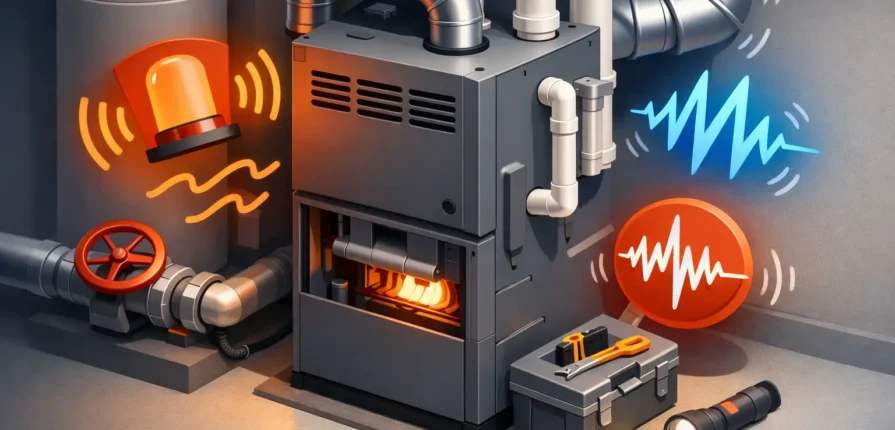
A furnace does not have to be silent, but it should not sound like it is coming apart in the basement. A low fan hum and the click of a normal heating cycle are expected. Loud banging, squealing, rattling, scraping, or booming are different. If you are asking, why is my furnace noisy, the sound can provide a useful clue about what needs attention and how quickly you should act.
Some noises come from a loose panel or a dirty filter. Others point to a worn blower motor, a delayed ignition problem, or a duct system under pressure. The safest move is to pay attention to when the noise starts, where it seems to come from, and whether your furnace is still heating normally.
Why Is My Furnace Noisy? Start With the Type of Sound
A furnace makes several normal sounds during a cycle. You may hear the thermostat signal, the inducer motor start, burners ignite, and the blower fan move warm air through the home. Those sounds are usually brief and consistent.
A new noise, a louder-than-usual noise, or a sound that gets worse over time deserves a closer look. Do not assume an older furnace is supposed to be loud. Age can explain why parts wear out, but it does not make a concerning noise safe to ignore.
Banging or booming at startup
A single loud boom when the burners light is one of the noises homeowners should take seriously. It can happen when gas builds up briefly before ignition, often because the burners are dirty or the ignition system is not lighting the gas promptly. The delayed ignition creates a small ignition event that sounds like a boom.
Turn the furnace off and arrange for a professional inspection. This is not a repair to put off until the end of the heating season. A technician can inspect the burners, igniter, gas pressure, heat exchanger area, and combustion process safely.
Banging can also come from metal ductwork expanding as hot air moves through it. That type of sound often happens shortly after the furnace starts and may be more noticeable during very cold Ohio weather. It is usually less urgent than a combustion-related boom, but duct supports, undersized returns, or excessive airflow may need correction if the sound is frequent or disruptive.
Squealing, chirping, or high-pitched whistling
A squeal or chirp often points to a moving part. Depending on the furnace, the blower motor, inducer motor, wheel assembly, belt, or motor bearings could be wearing down. Older belt-driven systems can squeal when the belt is loose, worn, or misaligned. Many newer furnaces use direct-drive motors, so a similar sound may indicate a bearing or motor issue instead.
Whistling is often an airflow problem. Start with the filter. A clogged filter makes the blower work harder and can restrict airflow enough to create a whistle at the return grille or near the furnace cabinet. Make sure every supply register and return grille is open and free of furniture, rugs, or storage boxes.
If a clean, properly sized filter does not stop the whistling, the system may have a duct restriction, a return-air issue, or a blower setting that needs professional adjustment. Do not install a less restrictive filter just to quiet the sound. The right filter depends on your equipment and duct design.
Rattling or vibrating
Rattling is commonly caused by something loose. A furnace access panel may not be secured fully, a screw may have backed out, or a nearby pipe, duct, or vent connector may be vibrating while the blower runs. Homeowners can safely check that the furnace panels are closed and that nothing is leaning against the unit.
If the rattle is coming from inside the furnace cabinet, leave the diagnosis to a technician. A loose blower wheel, damaged motor mount, failing inducer assembly, or vibrating electrical component can all make noise. What starts as an annoying rattle can become a larger repair if a part continues to shake loose.
Scraping, grinding, or metal-on-metal sounds
Grinding and scraping are not normal operating sounds. These noises can mean the blower wheel is rubbing against the housing, a motor bearing is failing, or an internal component has shifted out of position. Continuing to run the furnace can damage the motor or blower assembly further.
Shut the system down if the sound is severe, especially if you smell burning, notice smoke, or the furnace is struggling to start. A technician can identify whether the problem is isolated to a repairable component or whether an aging motor or assembly should be replaced.
Clicking that will not stop
One or two clicks during startup can be normal. Repeated clicking without the furnace firing may indicate an ignition failure, a problem with the flame sensor, a control board issue, or a safety switch preventing operation.
If the furnace clicks repeatedly and does not produce heat, check that the thermostat is set to heat and that the filter is not badly clogged. Beyond those basic checks, service is the right call. Repeated failed startup attempts can put extra wear on ignition components.
When a Noisy Furnace Becomes an Emergency
Noise alone does not always mean an emergency, but certain combinations should never wait. Turn the furnace off, leave the area if you suspect a gas leak, and contact the appropriate emergency service if you notice any of the following:
- A gas or rotten-egg odor
- A loud boom at ignition
- Smoke, sparks, or a burning electrical smell
- A carbon monoxide alarm sounding
- Severe grinding, shaking, or a furnace that repeatedly shuts down
Never try to relight, disassemble, or clean gas burners yourself. Do not ignore a carbon monoxide alarm because the furnace seems to be working. Get everyone outside, call emergency services or the gas utility as appropriate, and have the heating system inspected before using it again.
Safe Checks You Can Make Before Calling
There are a few simple things worth checking, especially if the furnace is still operating and there are no safety concerns. First, replace a dirty filter with the correct size and type. A filter that is overdue for replacement can contribute to whistling, airflow noise, overheating, and short cycling.
Next, make sure the thermostat has fresh batteries if applicable and is set correctly. Confirm that return grilles and supply vents are open. Check around the furnace for loose items that may be vibrating, and make sure the access panels are firmly in place. If you have a high-efficiency furnace, look outdoors to ensure the intake and exhaust vents are not blocked by leaves, snow, nests, or debris.
These checks can solve simple problems, but they do not replace a furnace inspection. Avoid removing panels while the furnace is operating or touching wiring, motors, gas lines, or venting components.
Why Maintenance Prevents Many Furnace Noises
A furnace tune-up is about more than keeping the heat on. During preventative maintenance, a trained technician can clean burners, inspect ignition components, test safety controls, check blower operation, tighten accessible hardware, inspect venting, and look for early signs of wear.
That matters because furnace noises are often early warnings. A motor may squeal before it fails. A loose blower wheel may rattle before it damages the housing. Dirty burners may boom before they cause a no-heat call on the coldest night of the year.
For homeowners and property managers, regular service also helps with budget control. It is usually easier to plan for a worn part during a seasonal checkup than to deal with a full breakdown after hours. If your furnace is older, maintenance can also help you make a clear repair-versus-replacement decision based on condition, safety, efficiency, and the cost of upcoming repairs.
Get the Right Diagnosis, Not a Guess
The exact cause of a noisy furnace depends on the sound, the furnace type, its age, and when the noise occurs. A brief duct pop may be a comfort issue. A boom, grinding sound, or repeated failed ignition is a repair issue that needs prompt attention.
Professional Trade Service helps homeowners and property managers in central Ohio get clear answers without unnecessary runaround. An experienced technician can trace the noise to the right component, explain what is happening in plain language, and recommend the repair that makes sense for your system.
If the sound is new, loud, or getting worse, trust that change. Turning a noisy furnace into a safe, steady source of heat is usually much easier when the problem is addressed early.
Recent Comments