
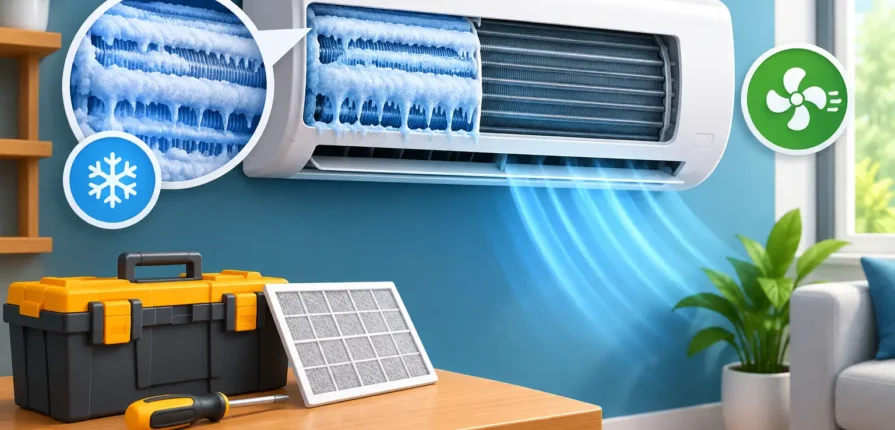
A frozen air conditioner is more than an inconvenience on a hot Ohio afternoon. Ice on the indoor coil, refrigerant lines, or outdoor unit can leave your home warm, strain the compressor, and turn a manageable repair into a costly one. Knowing how to stop AC freezing starts with one rule: do not keep running the system in cooling mode and hope the ice clears on its own.
Turn the thermostat from Cool to Off, then switch the fan setting from Auto to On. The blower can move warm indoor air across the coil and help it thaw without adding more refrigerant flow. Depending on how much ice has built up, thawing may take several hours. Do not chip at ice with a screwdriver, knife, or other sharp tool. Refrigerant coils and drain components are easy to damage.
What to Do When Your AC Is Frozen
First, shut off cooling at the thermostat. Leaving the compressor running while the evaporator coil is frozen can cause refrigerant pressures to operate outside their normal range. That puts extra wear on equipment that is already struggling.
Next, check your air filter. A clogged filter is one of the most common reasons an AC freezes because it restricts airflow over the indoor coil. If the filter looks gray, packed with dust, or has not been changed in the last one to three months, replace it with the correct size and type. Avoid using a high-restriction filter unless your system is designed for it. A filter that is too dense can create the same airflow problem as a dirty one.
While the system thaws, make sure supply vents and return grilles are open and unobstructed. Furniture, rugs, boxes, and closed interior doors can reduce airflow enough to contribute to icing, especially in rooms with limited return air. If you see water around the indoor unit after the ice melts, place towels around the area and call for service if the leak continues.
Once the ice is completely gone, you can try turning the system back on. Watch it closely for the next hour or two. If the larger copper refrigerant line begins frosting again, airflow is weak, or the system blows warm air, turn it back off. The underlying problem still needs attention.
Why an Air Conditioner Freezes Up
Your AC does not freeze because it is working extra hard to cool the house. It freezes when the evaporator coil gets colder than it should and moisture in the air turns to ice. Low airflow and refrigerant problems are the two most frequent causes, but several other issues can create the same result.
Restricted Airflow Across the Indoor Coil
The indoor evaporator coil needs a steady flow of warm household air. That air provides the heat the refrigerant absorbs during the cooling process. When airflow drops, the coil temperature can fall below freezing.
A dirty filter is the easy fix, but it is not the only restriction. A blower motor may be failing, the blower wheel may be coated with dirt, ductwork may be damaged, or the evaporator coil itself may be dirty. Closed vents usually do not cause a freeze-up by themselves, but closing too many can add to an existing airflow issue.
If your system repeatedly freezes after a new filter and open vents, do not assume the problem is solved. A technician needs to check airflow, blower performance, static pressure, and coil condition. Those are not guesses a homeowner should have to make.
Low Refrigerant From a Leak
Refrigerant does not get used up like gasoline. If the level is low, there is typically a leak somewhere in the system. Low refrigerant lowers pressure in the evaporator coil, which can make the coil cold enough to freeze.
Adding refrigerant without locating the leak is a temporary patch at best. The system may freeze again, lose cooling capacity, and waste energy. A proper repair involves finding the leak, repairing it when practical, and charging the system to manufacturer specifications.
Dirty Coil or Drain Trouble
A coil can collect dust, pet hair, and residue over time, particularly if filters are neglected or there are gaps around the filter rack. That buildup acts like insulation and limits heat transfer. The result can be poor cooling, high energy bills, and ice.
A clogged condensate drain does not always cause a frozen coil, but it can create water backup and make an existing problem harder to spot. If you notice standing water, repeated drain pan overflow, or a musty smell near the indoor unit, have the drainage system inspected and cleaned.
Thermostat, Blower, or Outdoor Unit Problems
A thermostat that runs the system too long, a malfunctioning blower, or an outdoor unit with a failing fan can contribute to improper operating conditions. These faults are less obvious than a dirty filter, which is why a freeze-up that keeps returning deserves a full diagnosis.
The age of the equipment matters, too. An older system may have multiple small issues at once: worn electrical parts, weak airflow, dirty coils, and declining efficiency. Repair may still make sense, but the decision should be based on the condition of the system, repair cost, and how reliably it can serve your home through the next summer.
How to Stop AC Freezing Before It Starts
The best way to stop AC freezing is regular maintenance before summer heat arrives. A seasonal checkup gives a technician time to inspect refrigerant performance, clean components, test the blower, clear the drain, and catch worn parts before they leave you without cooling.
At home, replace filters on schedule and keep the area around the indoor and outdoor equipment clear. The outdoor condenser needs room to move air. Trim back grass, weeds, and shrubs that crowd the unit, and gently rinse loose debris from the outside cabinet with a garden hose when the power is off. Do not use a pressure washer, which can bend the delicate fins.
Keep supply registers and return vents clear, and pay attention to changes in comfort. Rooms that suddenly feel stuffy, reduced air coming from vents, new rattling sounds, or longer cooling cycles are early warning signs. Addressing them before ice appears is usually easier on your budget.
For property managers, a maintenance schedule is especially useful. A filter replacement plan and seasonal inspection can prevent one neglected unit from becoming an emergency call during a heat wave. It also helps document equipment condition and plan for replacement instead of making a rushed decision after a major failure.
When to Call for AC Repair
A filter change and a full thaw are reasonable first steps. Anything beyond that is a job for a qualified HVAC technician. Call for service if your AC freezes again, runs but does not cool, makes unusual noises, has water leaking indoors, trips a breaker, or shows ice on the refrigerant lines.
Do not try to open refrigerant lines, recharge the system with store-bought products, or bypass electrical controls. Refrigerant work requires proper equipment, training, and testing. Electrical repairs carry their own risks, particularly around outdoor equipment exposed to weather.
For homeowners in Sunbury, Lewis Center, Powell, and nearby central Ohio communities, Professional Trade Service can inspect the system, identify the real cause of the freeze-up, and explain the repair in plain language. The goal is not just to get ice off the coil. It is to restore dependable cooling without setting you up for the same breakdown next week.
A frozen AC is your system telling you something is wrong. Shut off the cooling, let the equipment thaw, handle the simple airflow checks, and get help promptly if the ice returns. Fast action protects your comfort now and gives your equipment a better chance of making it through the season.
Recent Comments