
Your air conditioner can still blow some cool air while losing refrigerant. That is what makes a leak easy to miss at first. But if your home takes longer to cool, your electric bill climbs, or ice starts forming on the system, you may need to know how to identify refrigerant leaks before a small issue turns into a major repair.
Refrigerant does not get used up like gasoline. A properly sealed AC system should keep the same refrigerant charge for years. When the level is low, there is usually a leak somewhere in the system. Adding more refrigerant without finding and repairing that leak may restore cooling temporarily, but it does not solve the real problem.
How to Identify Refrigerant Leaks Before Your AC Fails
A refrigerant leak is not always visible, and homeowners should not try to handle refrigerant themselves. Still, there are clear warning signs that tell you it is time to schedule an HVAC diagnostic.
Your home is not cooling like it used to
The most common sign is weak cooling. You may set the thermostat to 72 degrees, but the house stays warm well into the evening. Or the system may run for long stretches without reaching the temperature you selected.
This symptom can also point to dirty filters, duct problems, a failing capacitor, or an undersized system. That is why a professional inspection matters. But when poor cooling is paired with ice, hissing noises, or unusually high utility costs, low refrigerant becomes more likely.
Ice forms on the refrigerant line or indoor coil
Look near the outdoor unit for the larger insulated copper line. Light condensation can be normal during operation. Frost or thick ice is not.
Low refrigerant lowers pressure inside the system, which can make the indoor evaporator coil too cold. Moisture in the air then freezes on the coil and refrigerant line. Restricted airflow from a dirty filter or blower problem can create similar icing, so do not assume ice confirms a leak. Turn the cooling system off, set the fan to ON if possible, and let the equipment thaw before calling for service.
Running an iced-up unit can damage the compressor. That is one repair no homeowner wants to face during an Ohio heat wave.
You hear hissing or bubbling near AC equipment
A small leak may make a faint hissing sound as pressurized refrigerant escapes. A larger leak can sometimes produce a bubbling or gurgling sound. Pay attention around the indoor air handler, refrigerant lines, and outdoor condenser.
Not every HVAC noise is a refrigerant issue. Normal operation includes airflow, fan noise, and occasional clicks as components start and stop. A new, persistent hiss or bubbling sound is worth mentioning when you call for service.
Your energy bills rise without a good reason
An AC system low on refrigerant has to work harder to move heat out of your home. Longer run times mean more electricity used, even though comfort gets worse. If your usage habits have stayed about the same but summer bills keep climbing, a leak is one possible cause.
Compare bills from similar weather periods when you can. A single hot month does not prove a problem. A steady increase along with reduced cooling performance gives a technician useful information.
Air from the vents feels less cold
Hold your hand near a supply vent after the system has run for 10 to 15 minutes. The air should feel noticeably cooler than the room. If it feels only mildly cool and the system runs constantly, write down what you notice.
Do not rely on a vent-temperature check alone. Thermostat settings, outdoor temperature, indoor humidity, airflow, and system type all affect what you feel. It is a clue, not a diagnosis.
You notice oily residue on copper lines or fittings
Refrigerant itself is generally colorless, but it circulates with compressor oil. At some leak points, that oil can leave a greasy film on copper lines, connections, coils, or the outdoor unit. This is one of the more useful visual signs, especially around joints and service ports.
Avoid touching damaged insulation, electrical components, or corroded coils. A technician can inspect the area safely and determine whether the residue is related to a refrigerant leak or another equipment issue.
Why Refrigerant Leaks Happen
Leaks can develop in several places, and the cause affects the right repair. A loose fitting or leaking Schrader valve may be a relatively straightforward fix. Corrosion on an evaporator coil, often called formicary corrosion, can create tiny pinhole leaks that are harder to locate and may make coil replacement the better long-term option.
Vibration can loosen connections over time. Physical damage to exposed line sets, poor installation practices, and age-related wear can also cause problems. In some cases, a system has a factory or installation defect that did not become obvious until years later.
The location and size of the leak matter. A repairable fitting leak is different from a badly corroded coil in an older system using an outdated refrigerant. An honest technician should explain the source of the leak, the repair options, and whether putting significant money into an aging unit makes financial sense.
What an HVAC Technician Does to Find the Leak
Finding a refrigerant leak takes more than checking a pressure reading. Low pressure suggests a problem, but it does not show where refrigerant is escaping.
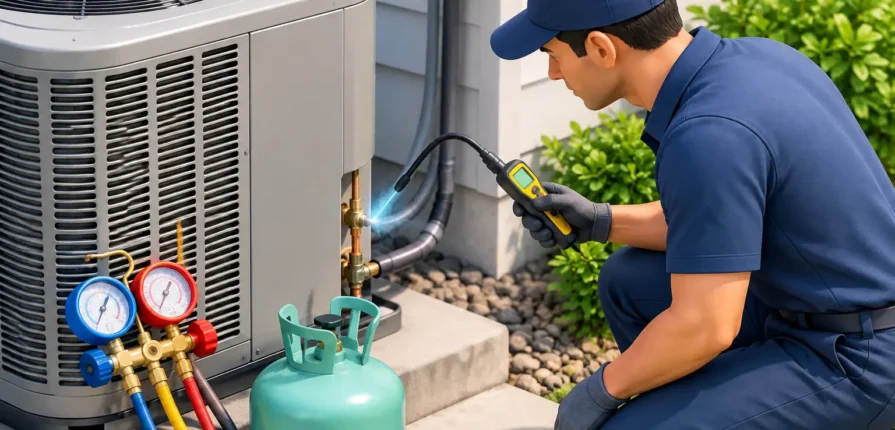
A qualified HVAC technician starts by checking overall system operation, airflow, electrical performance, and refrigerant pressures. They may inspect fittings and coils for oil residue, use an electronic leak detector, apply a bubble solution at suspected connection points, or pressure-test the system with dry nitrogen. In certain cases, ultraviolet dye can help locate a difficult leak.
The system should be repaired and tested before refrigerant is added. Then the technician evacuates moisture and air from the sealed system and charges it to the manufacturer’s specifications. This process protects equipment performance and helps prevent another service call a few weeks later.
What You Should and Should Not Do at Home
There are a few sensible steps homeowners and property managers can take while waiting for service. Replace a visibly clogged air filter, make sure supply vents are open, clear leaves and debris from around the outdoor unit, and note when the problem started. If you see ice, shut off cooling to prevent additional strain.
Do not buy refrigerant cans or attempt a recharge yourself. Refrigerant handling requires proper equipment, certification, and safe recovery procedures. Overcharging, undercharging, mixing refrigerant types, or releasing refrigerant can harm the system and create expensive problems.
Do not use a temporary recharge as a permanent solution either. If your contractor says the system is low, ask whether they found the leak, how they confirmed it, and what repair is recommended. You deserve a clear answer before approving work.
When a Leak Repair Makes Sense vs. Replacement
Repair is often the right call when the system is relatively new, the leak is accessible, and the rest of the equipment is in good condition. A leaking service valve, line connection, or minor line-set issue may be repaired without replacing the entire unit.
Replacement may be worth considering when the evaporator coil is badly corroded, the compressor has been stressed by repeated low-refrigerant operation, or the system is older and facing several costly repairs. The refrigerant type matters, too. Older equipment can be more expensive to keep running if its refrigerant is difficult or costly to obtain.
There is no one-size-fits-all answer. The best choice depends on the unit’s age, repair cost, efficiency, condition, and how long you plan to stay in the property. A good HVAC company will give you the facts without pushing a replacement that does not fit your situation.
Get the Problem Fixed, Not Just Refilled
For homeowners and property managers in the Sunbury and Lewis Center area, refrigerant problems tend to show up at the worst time: when summer heat is already pushing the system hard. Professional Trade Service can inspect the system, locate the source of the problem, and explain the repair in plain language.
If your AC is icing up, running nonstop, or no longer keeping your home comfortable, do not wait for a complete breakdown. Turn off cooling if ice is present, protect the equipment, and have a trained technician find the leak before a manageable repair becomes a compressor replacement.
Recent Comments