
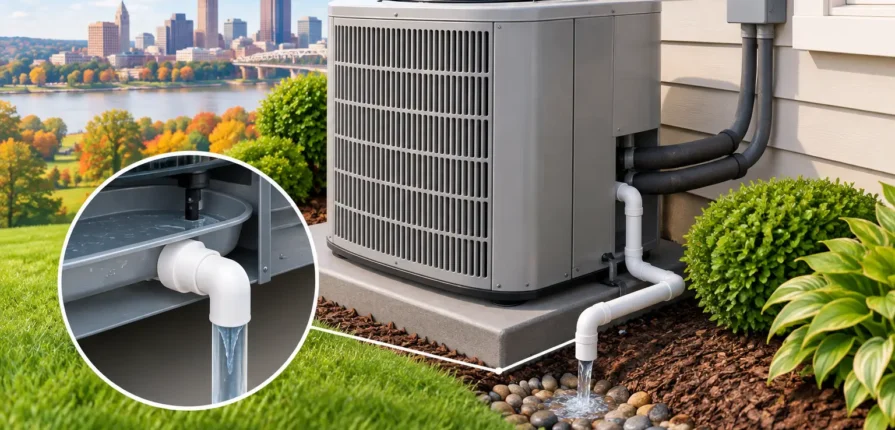
A puddle beside your indoor AC unit is not a problem to ignore until the weekend. A small condensate drain issue can turn into ceiling damage, mold growth, a shutdown system, or an uncomfortable house during a hot Ohio afternoon. This air conditioner drainage guide explains where the water comes from, what you can safely check, and when it is time to bring in an HVAC professional.
Why Your Air Conditioner Produces Water
Your air conditioner does more than cool the air. As warm, humid indoor air passes over the cold evaporator coil, moisture in that air collects on the coil. That moisture drips into a drain pan and flows out through a condensate drain line, usually a small PVC pipe connected near the indoor unit.
When the system is working properly, this process is quiet and easy to miss. In many homes, the drain line runs to a floor drain, utility sink, condensate pump, or exterior discharge point. The amount of water can be surprising during humid weather. Several gallons per day may be normal, especially when the AC runs for long stretches.
The trouble starts when water cannot move through the system as intended. Algae, mildew, dust, insulation debris, rust, or a poorly sloped line can restrict drainage. A failed condensate pump can cause the same result. Water then backs up into the pan, spills around the air handler, or triggers a safety switch that shuts the cooling system down.
Air Conditioner Drainage Guide: Signs of a Problem
A visible leak is the clearest warning sign, but it is not the only one. Catching drainage trouble early can save a homeowner from replacing drywall, flooring, or part of a ceiling.
Watch for moisture around the furnace or air handler, a musty smell near supply vents, water stains on a ceiling below attic equipment, or an AC system that suddenly stops running on a hot day. If your thermostat is set to cool but the indoor unit will not start, a full drain pan or activated float switch may be part of the problem.
Also check the drain outlet when the AC has been running. If you normally see a steady drip outdoors or into a drain and it has stopped during humid conditions, the line may be blocked. No outdoor drip is not always a problem because every installation drains differently, but it is worth investigating when paired with indoor water or poor cooling.
Ice on the refrigerant line or evaporator coil can also lead to water trouble after the ice melts. In that situation, the drain line may not be the root cause. Restricted airflow, a dirty filter, blower problems, or low refrigerant can freeze the coil and overwhelm the pan later.
What You Can Safely Check First
Before touching the equipment, turn the thermostat to off. If you see water near electrical connections, a furnace control board, or a condensate pump, do not attempt a repair. Shut off power at the equipment switch or breaker if you can do so safely, then call for service.
Start with the air filter. A badly clogged filter restricts airflow and can contribute to a frozen coil. Replace a disposable filter if it is dirty, and make sure it is installed in the correct direction. This is simple maintenance, but it prevents more AC problems than many homeowners realize.
Next, look at the area around the indoor unit. If the drain pan is accessible and visibly full, do not simply restart the system and hope for the best. Remove standing water only if it can be done safely without disturbing wiring or components. Towels and a wet/dry vacuum can help contain a minor spill, but they do not correct the blockage that caused it.
If your system has an exposed PVC cleanout fitting on the drain line, you may be able to clear the line with a wet/dry vacuum at the outdoor end. A short, controlled vacuum can remove loose buildup. Avoid using high-pressure air, rigid wire, or harsh drain chemicals. Those methods can crack fittings, separate glued joints, damage a drain pan, or push debris farther into the line.
Do not pour bleach into the line. Bleach can damage components and may not remove the biofilm that commonly causes condensate clogs. Vinegar is sometimes used for routine maintenance, but the right approach depends on the unit, drain layout, and whether a pump or safety switch is installed. When in doubt, leave drain cleaning to a technician who can flush and test the complete system.
Common Causes of Condensate Drain Problems
Drainage issues do not all have the same fix. A technician should identify why the water is backing up rather than clearing a line and leaving a larger issue behind.
- Clogged drain line: Slime, algae, dust, and debris can narrow or fully block the PVC line. This is one of the most common causes of AC leaks.
- Damaged or rusted drain pan: Older systems may have corroded pans, cracks, or improper pan positioning. Water can escape even when the drain line is open.
- Failed condensate pump: Units in basements or locations without a gravity drain may rely on a pump. If the float, motor, tubing, or power supply fails, water has nowhere to go.
- Improper drain slope or installation: A line that sags, runs uphill, or lacks the correct trap may drain poorly. These issues may appear after a renovation, replacement, or settling over time.
- Frozen evaporator coil: A frozen coil creates excess meltwater. Cleaning the drain alone will not solve the airflow or refrigerant issue that caused the freeze-up.
This is why a recurring leak deserves more than a quick cleanup. The visible water is the symptom. The cause determines whether you need a drain cleaning, pump repair, airflow correction, or a more complete AC repair.
When to Call an HVAC Technician
Call for professional help right away if water is reaching finished walls, ceilings, electrical equipment, or flooring. The same goes for a system that has shut down, a drain pan that repeatedly fills, or ice on refrigerant lines. Continuing to run the AC can make the damage worse.
A trained technician can clear the line properly, inspect the primary and secondary pans, test the condensate pump, verify the float switch, and check whether the coil is freezing. They can also confirm that the drain trap and line slope are correct for your specific equipment. That matters because modern high-efficiency systems can have drainage requirements that differ from older equipment.
For homeowners and property managers in central Ohio, Professional Trade Service can diagnose AC leaks and drainage failures without guesswork. Prompt service is especially valuable when a water issue threatens a finished basement, an attic ceiling, or a business space that cannot afford downtime.
Preventing the Next Drain Clog
The best time to deal with condensate drainage is before the first heat wave. During a seasonal AC tune-up, the technician should inspect and clean the condensate path, look for pan damage, verify safety controls, and check the system for airflow issues that could freeze the coil.
At home, change filters on schedule and keep the space around the indoor unit clear. If you have a condensate pump, listen for it during a cooling cycle and watch for signs of overflow. Do not cover or block the exterior end of a drain line, and do not assume that a small amount of moisture is harmless just because the AC still cools.
A dry mechanical room and a properly draining AC system offer more than convenience. They protect your home, help your equipment run as intended, and let you deal with a small maintenance issue before it becomes an urgent repair call.
Recent Comments