
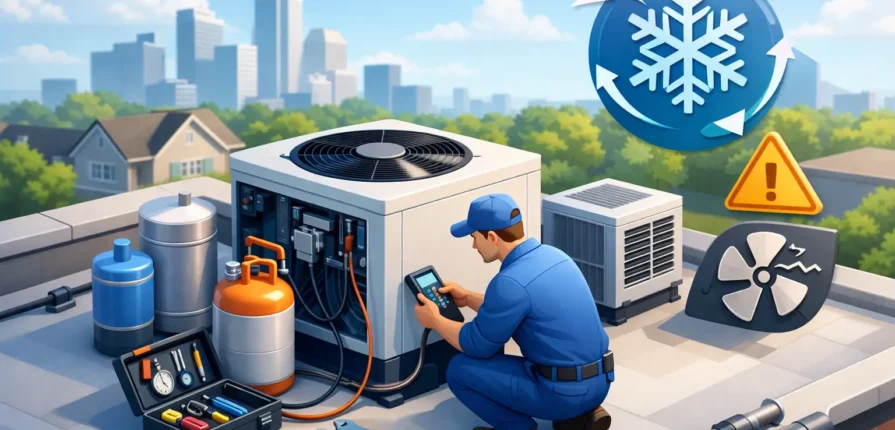
A central Ohio summer can turn a minor A/C issue into a miserable afternoon fast. When the system starts blowing warm air, runs without shutting off, or quits during a heat wave, homeowners are often left scrambling for emergency service. Central Ohio cooling maintenance is the practical way to catch many of those problems before your comfort, schedule, and budget take the hit.
A tune-up cannot promise that an older air conditioner will never fail. It can, however, give a trained technician the chance to spot worn parts, airflow problems, electrical concerns, and performance issues while there is still time to make a clear, unhurried decision. That matters whether you are caring for a family home, a rental property, or a small business.
Why Cooling Systems Fail When You Need Them Most
Air conditioners work hardest during long stretches of high heat and humidity. That is usually when a system with a dirty coil, weak capacitor, clogged drain, low airflow, or a loose electrical connection finally shows its age.
Many breakdowns do not begin as sudden failures. They start with a unit that takes longer to cool the house, rooms that feel uneven, ice on a refrigerant line, or an electric bill that has crept higher than usual. Homeowners often learn to live with these signs until the equipment can no longer keep up.
Preventative service gives the system a better chance to handle its busiest season. It also gives you useful information about its condition. If a repair is recommended, you can ask questions, consider the cost, and decide whether repairing the unit makes sense instead of making a rushed choice on the hottest day of the year.
What Central Ohio Cooling Maintenance Should Cover
A real maintenance visit is more than changing an air filter and looking at the outdoor unit. Filters are essential, but the cooling system is made up of electrical components, moving parts, drains, coils, controls, and airflow pathways that all need to work together.
During a professional cooling checkup, a technician should inspect the equipment’s overall operation and look for concerns that can lead to poor performance or a breakdown. The exact work depends on the system, its age, and its condition, but a thorough visit commonly includes checking thermostat operation, electrical connections, safety controls, system cycling, condensate drainage, and the condition of key components.
The technician should also evaluate airflow and inspect accessible coils and the outdoor unit. Restricted airflow is one of the most common causes of cooling trouble. A dirty filter, blocked return, clogged indoor coil, damaged ductwork, or a weak blower can force the equipment to run longer while delivering less comfort.
For systems that are not cooling properly, refrigerant-related concerns may need further diagnosis. Refrigerant does not get used up like fuel. If levels are low, there may be a leak or another issue that needs to be identified. Simply adding refrigerant without finding the cause is not a lasting repair.
At the end of the visit, you should get a straightforward explanation of what was found. A dependable contractor will separate immediate safety or reliability concerns from items that can be watched or planned for later. That kind of honest communication helps you control costs without ignoring a problem that is likely to get worse.
The Best Time to Schedule A/C Service
Spring is generally the best time for a cooling tune-up in central Ohio. Scheduling before sustained hot weather gives you more flexibility and lets you address repairs before the system is under heavy demand. It is also easier to schedule a convenient appointment before emergency calls become more common.
That said, maintenance is still worthwhile in the middle of summer. If your A/C has become louder, less effective, or more expensive to operate, a checkup can identify whether there is a service issue behind the change. Do not wait until the unit stops completely if you are already seeing warning signs.
Property managers may benefit from scheduling service before tenants begin reporting comfort complaints. A planned maintenance visit is usually less disruptive than responding to a no-cooling call after hours, especially at properties with aging equipment.
Simple Things Homeowners Can Do Between Visits
Professional service handles the technical work, but a few basic habits can support better system performance between appointments. Check the air filter regularly and replace it when it is dirty. A filter may need attention more often in homes with pets, remodeling dust, allergies, or heavy system use.
Keep the area around the outdoor condenser clear of leaves, grass clippings, weeds, and stored items. The unit needs room to release heat. Do not cover it while it is operating, and avoid aiming lawn equipment directly at the coils.
Pay attention to changes in how the system sounds and feels. Weak airflow, new rattling or buzzing sounds, frequent cycling, water near the indoor unit, musty odors, and warm air from supply vents are all reasons to call for service. Shutting off a system that is making unusual noises or leaking water can sometimes prevent additional damage while you wait for a technician.
Your thermostat settings also matter. Constantly dropping the temperature will not make the house cool faster. It only tells the system to run longer. A programmable or smart thermostat can help maintain more consistent settings, but it will not fix equipment or airflow problems. If comfort is uneven, the underlying cause should be checked.
Repair, Maintenance, or Replacement: How to Make the Call
Not every maintenance visit ends with a repair recommendation, and not every repair means replacement is the better choice. The right answer depends on the unit’s age, repair history, efficiency, condition, and the cost of the specific repair.
A newer system with a failed electrical part or drainage issue is often worth repairing. On the other hand, an older unit that needs frequent service, struggles to cool, or requires a major repair may deserve a replacement conversation. Higher-efficiency equipment can reduce operating costs, but the savings should be weighed against the installation cost, how long you expect to stay in the home, and whether the existing ductwork can support the new system properly.
Be cautious with a quick recommendation that offers no explanation. Ask what has failed, why it failed, what the repair includes, and what the expected condition of the system will be afterward. If you have received a large repair or replacement quote elsewhere, a second opinion can give you more confidence before moving forward.
Maintenance Helps More Than Your Air Conditioner
Cooling performance is connected to the rest of the home. Electrical problems can affect system operation. Drainage issues can lead to water damage. Poor insulation, duct leaks, and airflow restrictions can make a perfectly functional air conditioner work harder than it should.
That is one reason homeowners appreciate working with a full-service trade provider. When an HVAC concern overlaps with a minor electrical or plumbing issue, you have a clearer path to getting the right problem addressed instead of calling several different companies.
For homeowners and property managers in Sunbury, Lewis Center, Powell, Morrow, Knox, Union, and Wyandot County, Professional Trade Service brings more than 40 years of experience to seasonal service, repairs, and urgent comfort problems. If your system needs attention when the heat is already on, emergency availability can make a difficult situation easier to manage.
Do Not Wait for a No-Cooling Emergency
The best time to think about air conditioning is when it is still working. Schedule maintenance before the heavy heat arrives, replace filters as needed, and take small changes in comfort seriously. A well-timed service visit may be the difference between a manageable repair and a long, hot wait for relief.
Recent Comments