
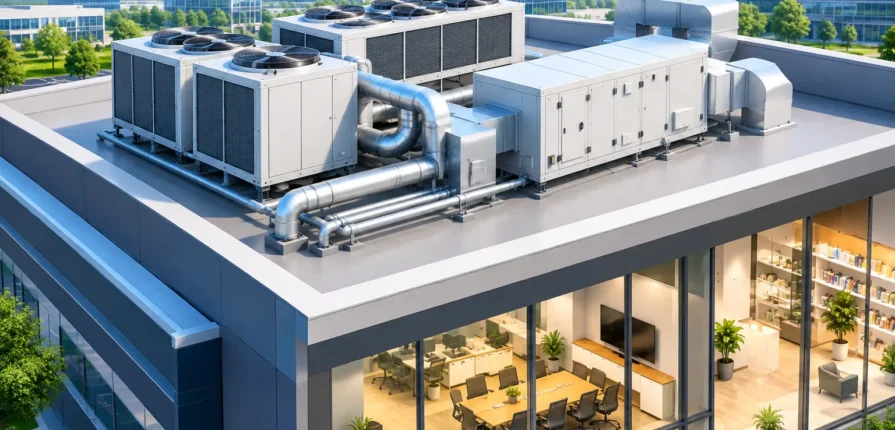
When a restaurant dining room gets too warm, an office has cold spots, or a retail store loses heat on a January morning, the problem is bigger than comfort. Commercial HVAC systems affect employee productivity, customer experience, equipment protection, and monthly operating costs. For a business owner or property manager, the right response is not guesswork. It is fast diagnosis, a clear plan, and work done correctly.
Commercial HVAC Systems Need a Different Approach
A commercial system is not simply a larger version of the equipment in a house. It may serve multiple zones, operate for longer hours, use rooftop units, control fresh-air ventilation, or support specialized spaces such as server rooms, kitchens, medical offices, and tenant suites. One failed component can affect far more people than a single home system failure.
That is why commercial service begins with understanding the building. A technician needs to look beyond the thermostat setting and ask practical questions: Is the issue affecting one area or the whole building? Did utility costs rise before the comfort complaint started? Are occupancy hours different from when the system was installed? Has a tenant added heat-producing equipment or changed the layout?
The answer may be a straightforward repair. It may also point to an airflow problem, controls issue, undersized equipment, duct leakage, or a unit nearing the end of its useful life. Replacing parts without finding the cause can turn one service call into a recurring expense.
Signs Your Building Needs HVAC Attention
Most costly breakdowns do not happen without warning. The early signs are often easy to overlook because the system still runs. Paying attention before a complete failure gives you more choices and helps avoid emergency downtime.
Watch for these common warning signs:
- Utility bills that climb without a clear change in weather or building use
- Hot and cold areas that lead to frequent thermostat adjustments or tenant complaints
- Loud cycling, rattling, grinding, or a unit that runs almost constantly
- Water around indoor equipment, weak airflow, unusual odors, or repeated breaker trips
A filter change may solve a minor airflow concern, but it is not the answer to every problem. Dirty coils, failing blower motors, refrigerant leaks, damaged belts, blocked drains, and thermostat communication failures can create similar symptoms. A proper inspection separates a simple maintenance need from a repair that should not wait.
Preventive Maintenance Protects the Budget
Commercial HVAC maintenance is one of the most practical ways to control building costs. It does not make equipment last forever, and it cannot prevent every failure. What it can do is catch wear before it becomes a shutdown, improve efficiency, and give you a clearer picture of what to budget for next.
A seasonal maintenance visit should involve more than a quick look at the equipment. The technician should inspect electrical connections, filters, belts, motors, drains, safety controls, coils, refrigerant performance, blower operation, and thermostat or building controls. Heating equipment also needs combustion and safety checks when applicable.
The maintenance schedule depends on the equipment and how hard it works. A lightly used office may need a different plan than a busy retail space, restaurant, or facility with long operating hours. Buildings with dusty conditions, multiple tenants, or frequent door traffic often need more frequent filter and coil attention.
Keeping records matters, too. A service history can reveal that the same motor, drain, or control issue is returning. It also helps a property manager make decisions based on actual repair patterns instead of relying on memory after a stressful breakdown.
Repair or Replace? Make the Call With Real Numbers
No business owner wants to replace a commercial unit before it is necessary. At the same time, continuing to repair unreliable equipment can cost more than it saves through repeat service calls, high energy use, lost business, and unhappy occupants.
Age is part of the decision, but it is not the only factor. An older system with a small, isolated repair may still have useful life left. A newer system with recurring compressor trouble, major refrigerant leaks, or costly controls failures needs a closer look. The availability and cost of replacement parts also matter.
Ask for a clear explanation of the repair, the expected remaining life of the unit, and the likely cost of future work. A good recommendation should include the trade-off, not push replacement simply because it is the larger project. If replacement makes sense, the equipment should be sized for the building as it operates now, not just copied from the nameplate on the old unit.
Installation Is About More Than the New Unit
A high-efficiency unit cannot perform as promised if it is installed poorly or paired with existing problems. Ductwork, drainage, electrical capacity, ventilation needs, curb condition, controls, and access for future service all deserve attention before installation begins.
Sizing is especially important. Equipment that is too small may struggle during Ohio’s hottest and coldest stretches. Equipment that is too large can cycle on and off too often, wasting energy and creating uneven temperatures. The right system is based on the building load, square footage, occupancy, insulation, windows, equipment use, and operating hours.
For multi-zone spaces, controls can make a major difference. Separate areas with different sun exposure, occupancy, or business use may need independent scheduling and temperature control. A warehouse office, for example, should not necessarily be conditioned the same way as the rest of the warehouse.
Installation planning should also reduce disruption. Business owners need to know when work will happen, whether a portion of the building will be offline, what access is required, and how the area will be protected. Clear communication is not an extra. It is part of getting the job done right.
Do Not Wait on an HVAC Emergency
A no-heat call during a winter cold snap or an air conditioning failure during a packed summer day needs immediate attention. First, protect people and sensitive equipment. If the building has a burning smell, smoke, sparking, or a suspected gas issue, move people away from the area and follow emergency safety procedures before calling for service.
For less immediate problems, check the thermostat settings, breaker status, and accessible filters if it is safe to do so. Do not keep resetting a breaker or bypassing a safety control to force a unit to run. Those actions can damage equipment and create a larger repair.
Professional Trade Service provides responsive commercial HVAC help for businesses and property managers in the Delaware, Ohio area and nearby communities. Whether the issue is a failed rooftop unit, unreliable heat, poor airflow, or an urgent comfort complaint, a prompt diagnosis helps get your operation back on track.
Choose a Service Partner Who Explains the Work
Commercial HVAC service should not leave you wondering what was repaired, why it failed, or what may happen next. Look for a contractor who communicates in plain language, provides clear recommendations, and respects the reality that downtime affects your customers and staff.
It also helps to work with a team that can handle routine maintenance, repairs, replacement planning, and emergency calls. Familiarity with your building saves time over the long run. When a technician knows the equipment history and recurring trouble spots, they can spot changes sooner and offer more useful options.
The best time to address a commercial HVAC concern is before your building is uncomfortable, your equipment is at risk, or your business day is interrupted. Schedule a practical inspection, keep up with maintenance, and make repair or replacement decisions with the full picture in front of you.
Recent Comments