
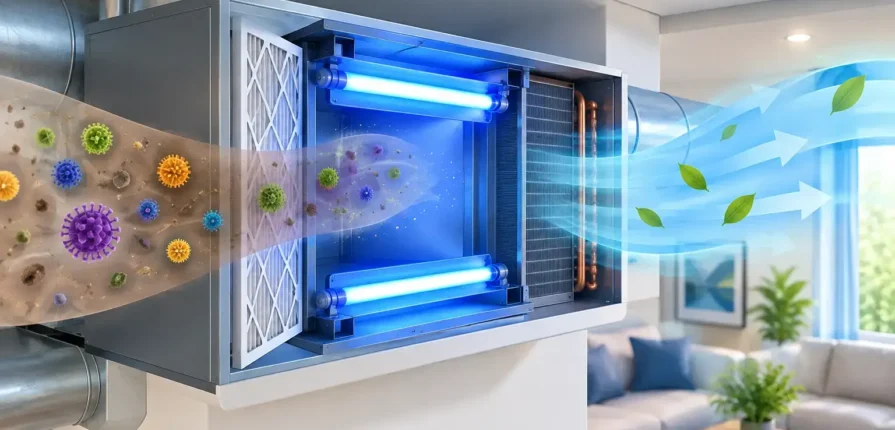
A UV light inside your heating and cooling system is not a magic fix for every indoor air complaint. But in the right system, and for the right problem, HVAC UV lights can help keep biological growth from building up where moisture and moving air meet. For many central Ohio homeowners, that means the indoor coil, drain pan, and nearby ductwork.
The real question is not whether UV technology works. It does. The question is whether it solves a problem your home actually has. Before adding equipment, it helps to understand what these lights do, what they do not do, and how they fit into proper HVAC maintenance.
What HVAC UV Lights Actually Do
Most HVAC UV lights use UV-C energy, a type of ultraviolet light that can damage the DNA or RNA of microorganisms. When placed inside an HVAC system, the light is intended to reduce mold, bacteria, and similar biological growth on surfaces exposed to the light.
The most common installation location is near the evaporator coil in an air conditioner or heat pump. This coil gets cold while the system runs in cooling mode, which causes moisture to condense on it. That damp environment can collect dust and support microbial growth, especially when a system has drainage problems, poor filtration, or high indoor humidity.
A coil-mounted light shines continuously on the coil and drain pan. Over time, it can help keep those surfaces cleaner. That may support better airflow and help reduce musty odors coming from the system.
Some systems use in-duct UV lights designed to treat air as it moves through the ductwork. These can have a purpose in certain homes or commercial buildings, but the moving air passes the light quickly. That limited exposure time means an in-duct light is not a substitute for filtration, source control, or cleaning a contaminated system.
Where UV Lights Make the Most Sense
UV lights are most useful when there is a clear reason to install one. A home with a repeatedly dirty indoor coil, a persistent musty smell when the AC starts, or a history of moisture around the drain pan may be a good candidate. They can also be worth considering for some property managers who need to protect equipment that runs for long hours and serves many occupants.
They may be especially helpful if your system has a difficult-to-access coil or if the equipment is located in a damp basement, crawl space, or mechanical room. In these situations, preventing buildup is often easier and less expensive than repeatedly dealing with it after the fact.
Still, a UV light should not be the first answer to every odor or air-quality concern. If the condensate drain is blocked, the blower wheel is dirty, the filter does not fit correctly, or humidity is too high, those issues need to be corrected. Installing a light without fixing the moisture source is like putting a new lock on a door that will not close.
What HVAC UV Lights Will Not Fix
Homeowners sometimes hear “air purifier” and expect one device to remove every concern from their indoor air. That is not how HVAC UV lights work.
A UV light will not remove dust, pet hair, pollen, smoke particles, or most household odors from the air. It will not repair leaky ducts, eliminate mold growing behind a wall, or correct a system that is oversized and short-cycling. It also will not replace regular filter changes.
For airborne particles, a properly selected filter is usually the first line of defense. For humidity, the answer may be better cooling-system performance, duct improvements, a whole-home dehumidifier, or changes to ventilation. For recurring odors, a technician needs to identify whether the source is the HVAC equipment, plumbing, stored items, pets, or another issue in the home.
That is why a good recommendation starts with an inspection, not a sales pitch. If someone recommends a UV light without looking at the coil, drainage, airflow, and overall condition of the system, ask more questions.
Potential Benefits for Your System
When installed correctly, a coil UV light can help keep the evaporator coil cleaner between maintenance visits. A cleaner coil allows air to move more freely and transfer heat more effectively. It can also help prevent the kind of buildup that makes a system work harder than it should.
The benefit is often more about equipment cleanliness and odor control than a dramatic change you immediately feel in every room. Some homeowners notice less of that damp or dirty-sock smell when cooling begins. Others mainly benefit from a cleaner coil during annual service.
There is also a maintenance angle. If biological buildup is a recurring problem, the light may reduce how quickly it returns after a professional cleaning. That does not eliminate the need for seasonal tune-ups, but it can support the work performed during them.
The Trade-Offs to Consider
UV lights require an upfront installation cost, use a small amount of electricity, and need periodic lamp replacement. Many bulbs need replacement about once a year, although the schedule depends on the product and manufacturer. A bulb can still glow after its germicidal output has dropped, so a visible blue light does not necessarily mean it is still performing as intended.
Installation quality matters. UV-C light can damage certain plastics, wire insulation, and other HVAC components if the unit is placed incorrectly. It can also irritate eyes and skin. The light must be mounted in the correct location, secured properly, and serviced safely.
Some systems are better candidates than others. An older unit with a failing coil, significant airflow problems, or a major drainage issue may need repair first. If you are planning a full system replacement soon, it may make more sense to choose indoor-air-quality options as part of the new installation rather than adding equipment to an aging system.
What to Ask Before Installing a UV Light
A qualified technician should be able to explain exactly why the light is being recommended. Ask whether the indoor coil shows visible buildup, whether the drain pan and condensate line are working properly, and whether the system has airflow or humidity issues that need attention first.
You should also ask where the light will be installed and what maintenance it requires. Coil-mounted lights and in-duct lights serve different purposes. The answer should be specific to your equipment, not a one-size-fits-all explanation.
If indoor allergies are the main concern, discuss filtration, duct leakage, humidity, and possible air-cleaning options too. A UV light may be part of the plan, but it is rarely the entire plan. The right solution depends on what is in the air, where it is coming from, and how your HVAC system is operating.
Professional Installation Protects Your Equipment
Adding electrical equipment inside an HVAC cabinet is not a casual weekend project. The installer needs to choose a safe mounting location, protect components from UV exposure, make the electrical connection correctly, and verify that service access is still practical. They should also inspect the coil, blower, filter rack, and drain system while they are there.
For homes in Sunbury, Lewis Center, Powell, and nearby central Ohio communities, the best time to ask about a UV light is often during a cooling tune-up, a repair visit, or an indoor-air-quality inspection. That gives a technician a chance to see whether the system has the moisture or coil-cleanliness issues that make the investment worthwhile.
A clean filter, a clear drain line, proper airflow, and seasonal maintenance will always do more for comfort than a gadget added without a plan. If your system has recurring odors, visible buildup, or moisture around the indoor unit, have it checked before the next heavy cooling season. A straightforward diagnosis can tell you whether a UV light is a smart addition or whether your money belongs somewhere else.
Recent Comments