
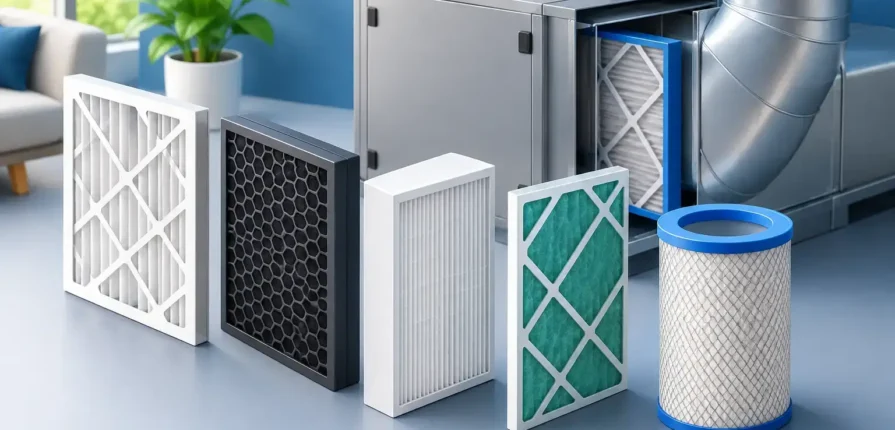
A dirty or poorly matched air filter can make a good HVAC system work harder than it should. It can also leave your home dusty, restrict airflow, raise energy use, and contribute to avoidable repair calls. This air filter types for HVAC review breaks down what each filter does, what MERV ratings mean, and how to choose one that protects your equipment without choking off the airflow it needs.
The best filter is not automatically the most expensive one or the one with the highest number on the package. Your furnace or air handler has a blower designed to move a certain amount of air. A filter that is too restrictive for that system can create comfort problems just as surely as a filter that is too weak.
Air Filter Types for HVAC Review: Start With the Basics
Most residential HVAC filters fall into a few common categories: fiberglass, pleated disposable, washable reusable, electrostatic, and high-efficiency media filters. Each type handles dust and airborne particles differently. The right choice depends on your equipment, household needs, filter cabinet size, pets, allergies, and maintenance habits.
A filter has two jobs. First, it protects the heating and cooling equipment from dirt buildup. Second, it can improve the air your family breathes by catching particles before they circulate through the home. Equipment protection should always come first. A clean system with proper airflow is more reliable, more efficient, and less likely to suffer overheating, frozen coils, or blower problems.
Fiberglass filters
Fiberglass filters are the thin, inexpensive filters often sold in multi-packs. They are usually one inch thick and use loose spun glass fibers to catch larger particles such as lint, hair, and some dust.
Their main advantage is low airflow resistance. They let air pass easily, which can be helpful for older equipment or systems that struggle with static pressure. The trade-off is that they do not capture smaller particles very well. If your household has pets, allergy concerns, or noticeable dust, a basic fiberglass filter may not provide enough filtration.
Fiberglass filters are generally best for equipment protection in homes with low indoor air-quality demands. They need regular replacement, often every 30 days, because their light construction can load up quickly.
Pleated disposable filters
Pleated filters are the most common step up for homeowners. Their folded media creates more surface area than a flat fiberglass filter, allowing them to capture more dust, pollen, pet dander, mold spores, and other particles.
You will find pleated filters in a wide range of MERV ratings. A basic pleated filter may be a good fit for an average home, while higher-rated options can help households with pets or allergy sufferers. They are widely available, easy to replace, and usually offer a sensible balance between filtration and airflow.
The catch is that not every pleated filter is right for every system. A very dense one-inch filter can become restrictive quickly, especially if it is left in place too long. If you want higher filtration, a deeper media cabinet using a four- or five-inch filter is often a better solution than forcing a high-MERV one-inch filter into a standard return grille.
Washable and electrostatic filters
Washable filters are designed to be cleaned and reused. Some use an electrostatic charge to attract particles, while others rely on layered mesh material. The appeal is obvious: buy one filter, clean it, and put it back.
In practice, these filters require discipline. They must be cleaned thoroughly, allowed to dry completely, and reinstalled correctly. A damp filter can encourage mold growth, and a filter that is only partially cleaned will not perform as intended. Many reusable filters also do not capture fine particles as effectively as a quality disposable pleated filter.
They can make sense for homeowners who will maintain them on schedule and whose equipment can handle the filter’s resistance. For many busy households, a correctly sized disposable filter changed regularly is the more dependable choice.
High-efficiency media filters
Media filters are deeper filters installed in a dedicated cabinet near the furnace or air handler. They are often four or five inches thick, though sizes vary by system. Because they have much more filter surface area, they can provide stronger filtration with less airflow restriction than a high-efficiency one-inch filter.
This is often the best option for homeowners who want improved filtration for pets, allergies, dust, or smoke particles without putting unnecessary strain on the blower. A media filter can last several months, and in some homes up to a year, depending on its rating, the season, and how much debris is in the air.
The filter still needs inspection. Do not assume a thick filter is automatically clean just because it has been installed for a few months. Construction dust, pet hair, heavy summer cooling use, and frequent furnace operation can shorten its service life.
Understanding MERV Ratings
MERV stands for Minimum Efficiency Reporting Value. In plain terms, it tells you how effectively a filter captures particles of different sizes. A higher MERV rating generally means finer filtration, but it can also mean more resistance to airflow.
For many homes, a MERV 8 filter is a solid starting point. It captures common household dust, pollen, lint, and some mold spores while usually allowing good airflow. MERV 11 filters can be a practical choice for homes with pets, heavier dust, or mild allergy concerns, provided the HVAC system is designed to handle it.
MERV 13 filters catch smaller particles and are sometimes recommended for improved indoor air quality. They can be appropriate in the right system, particularly with a deeper media cabinet. But they are not a universal upgrade. In an older system, a restrictive MERV 13 one-inch filter may reduce airflow enough to cause comfort issues or equipment stress.
Very high-MERV filters and HEPA filtration are specialized solutions. Standard residential HVAC systems usually cannot handle a true HEPA filter without modifications. If your family has serious respiratory concerns, ask an HVAC professional about filtration, air cleaners, duct conditions, humidity control, and whether your equipment can support an upgrade. A filter alone is not a complete indoor air-quality plan.
How to Choose the Right Filter for Your Home
Start with the filter size printed on the existing filter or inside the return grille. Measure if needed, because the actual filter dimensions may be slightly smaller than the nominal size listed on the frame. A filter that does not fit tightly can allow unfiltered air to bypass it.
Then consider your household. A home with no pets and no allergy concerns may do well with a MERV 8 pleated filter. A home with dogs, cats, or frequent dust may benefit from MERV 11. If allergies are a major concern, higher filtration may help, but the system should be evaluated before moving to a more restrictive filter.
Also consider the age and condition of the HVAC equipment. Older furnaces, undersized return ducts, dirty coils, and weak blower motors are less forgiving of restrictive filters. If certain rooms are already hard to heat or cool, changing to a denser filter without checking the system can make the issue worse.
Property managers should pay close attention to filter access and replacement schedules. A good filter does no good if tenants cannot reach it, do not know its size, or leave it in place for a year. Label the filter location, keep the correct size on hand, and set a recurring reminder.
When to Replace Your HVAC Filter
There is no single replacement schedule that fits every home. One-inch fiberglass filters often need replacement monthly. One-inch pleated filters commonly last one to three months. Deeper media filters may last six to 12 months, but only if the system, home conditions, and manufacturer guidance support that interval.
Check the filter monthly during heavy heating and cooling seasons. Replace it sooner if it looks gray and loaded with debris, if air seems weaker from the vents, or if you notice more dust around the home. A sudden increase in utility costs or rooms that are taking longer to reach temperature can also point to airflow trouble.
Always install the filter with the airflow arrow pointing toward the furnace or air handler. The arrow should point in the direction air is traveling, not toward the room. This small detail prevents the filter from bowing or collapsing under airflow.
Filter Problems That Need a Professional Look
If filters get dirty unusually fast, there may be more going on than normal household dust. Leaky return ducts can pull in attic, crawlspace, or basement debris. A clogged evaporator coil, dirty blower wheel, poor duct design, or an oversized filter rating can all affect airflow.
Do not keep moving to thinner or cheaper filters just because your system seems to struggle. That may hide an underlying problem while allowing more debris into the equipment. Likewise, do not keep installing the highest-rated filter available because it sounds healthier. HVAC systems need clean air and adequate airflow.
For homeowners in central Ohio dealing with an aging furnace, uneven temperatures, or frequent filter problems, Professional Trade Service can inspect the system and give you a straight answer about what your equipment needs. The right filter should be an easy part of keeping your home comfortable, not a recurring source of guesswork.
Recent Comments