
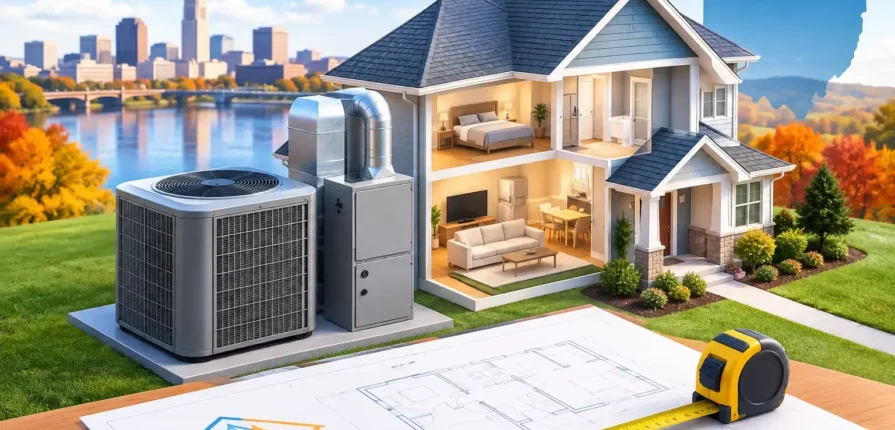
A new furnace or air conditioner may be one of the biggest comfort investments you make in your home. Choosing HVAC system size is not a matter of picking the same capacity as the old unit or estimating based on square footage alone. A system that is too large or too small can leave your family uncomfortable, raise utility costs, and create avoidable repair problems.
For homeowners in central Ohio, proper sizing matters even more. Our weather can demand dependable cooling in a humid July and steady heat during a hard January cold snap. The right system needs to handle both conditions without running longer than necessary, short cycling, or leaving some rooms uncomfortable.
Why Choosing HVAC System Size Matters
HVAC equipment is sized by its heating and cooling output. Air conditioners and heat pumps are commonly measured in tons, while furnaces are rated in BTUs. Those numbers tell part of the story, but they do not tell you what your house actually needs.
A properly sized system should maintain your desired indoor temperature during normal seasonal extremes while operating in efficient cycles. It should also work with your ductwork, thermostat, insulation, and airflow. When one part of that setup is wrong, even a high-quality new unit can disappoint.
Many older homes have equipment that was oversized from the start. Others have had additions, replacement windows, attic insulation, or basement finishing completed since the last system was installed. That means the old nameplate is not a reliable sizing recommendation for the next system.
Bigger Is Not Always Better
It is easy to assume a larger system will cool or heat a home faster and therefore do a better job. In real homes, oversized equipment often creates the opposite result.
An oversized air conditioner cools the thermostat area very quickly, then shuts off before it has had time to remove enough humidity from the air. Your home may feel cool but damp, especially during an Ohio summer. Frequent starts and stops also put extra wear on components and can increase electrical use.
Oversized furnaces can short cycle as well. They blast heat into the home, shut down quickly, and repeat the process. That can create hot and cold rooms, more noticeable temperature swings, and unnecessary stress on the equipment.
A system that is too small has its own problems. It may run almost continuously during severe weather and still struggle to reach the set temperature. Long run times can mean higher bills, uneven comfort, and added wear. The goal is not the biggest unit or the smallest unit. It is the unit that matches the home.
What Determines the Right HVAC Size?
Square footage is a starting point, not a final answer. Two 2,000-square-foot homes can have very different heating and cooling needs. A professional load calculation, often called a Manual J calculation, looks at the conditions that affect how quickly your home gains or loses heat.
A thorough sizing review considers several connected factors:
- Home layout and ceiling height: A ranch home, a two-story home, and a home with vaulted ceilings do not condition air the same way. Open staircases and large open rooms can also affect airflow.
- Insulation, windows, and air leaks: Attic insulation, window quality, door seals, and gaps around penetrations all change the amount of heating and cooling required.
- Sun exposure: Rooms facing west can collect significant afternoon heat. Shade trees, window coverings, and roof orientation can make a real difference.
- People, appliances, and room use: Kitchens, home offices, finished basements, sunrooms, and rooms with several occupants can have different comfort demands than the rest of the house.
- Ductwork condition and design: Leaky, undersized, poorly routed, or unbalanced ducts can prevent the right amount of conditioned air from reaching each room.
The calculation also accounts for local design temperatures. A contractor sizing equipment for a home in Sunbury, Lewis Center, or nearby communities should use conditions that make sense for central Ohio, not a generic national chart.
The HVAC System Size Calculation Is Only Step One
A correct load calculation identifies how much heating and cooling the house needs. The next step is selecting equipment that can deliver that capacity under actual operating conditions.
For example, an air conditioner is often described as a 3-ton unit, but its real output can change based on outdoor temperature, indoor airflow, refrigerant settings, and the indoor coil paired with it. Heat pumps also have changing heating capacity as outdoor temperatures fall. In some cases, supplemental heat or a dual-fuel setup may be worth discussing.
Furnace sizing requires the same attention. A furnace’s input BTU rating is not the same as the heat delivered into the home. Efficiency affects output. A 100,000 BTU furnace with 80% efficiency delivers less usable heat than one with a higher efficiency rating, so comparing labels without doing the math can lead to the wrong choice.
Your technician should also look at the full system match. Outdoor equipment, indoor coils, furnaces or air handlers, thermostats, and ductwork need to work together. Replacing just one part may be practical in some situations, but it should not be treated as an automatic solution.
Comfort Problems Can Point to More Than Equipment Size
If one bedroom is always stuffy, the upstairs is hot in summer, or the basement stays chilly in winter, a larger unit may not solve the problem. In fact, it can make certain comfort issues worse by cycling off too quickly.
The source may be duct leakage, inadequate return air, blocked registers, poor insulation, thermostat placement, or a zoning issue. A room addition may have been tied into existing ductwork without enough capacity to serve it. Before replacing equipment, it makes sense to identify why the comfort problem exists.
This is especially important when replacing an aging system that has “always” had uneven temperatures. Do not assume that discomfort is normal for the home. A careful inspection can reveal practical improvements that protect your investment in new HVAC equipment.
Efficiency Ratings Matter, But Sizing Comes First
High-efficiency HVAC equipment can reduce energy use, but it cannot overcome a poor sizing decision or weak airflow. A correctly sized, properly installed standard-efficiency unit often performs better than an oversized premium system installed without attention to ducts and setup.
Once the right capacity is established, then compare options such as SEER2 for cooling, AFUE for furnaces, heat pump performance, variable-speed operation, and available comfort features. Variable-speed equipment can be a good fit for homes with longer humidity seasons or changing comfort needs because it can run at lower output for longer periods. Still, it is not the right answer for every budget or every house.
The best choice depends on your existing equipment, fuel source, electrical capacity, duct condition, long-term plans for the property, and what matters most to your household. Some homeowners prioritize the lowest upfront cost. Others want stronger humidity control, quieter operation, or lower monthly utility bills. An honest recommendation should explain those trade-offs clearly.
What to Expect From a Professional Sizing Visit
When you are replacing a furnace, air conditioner, or full HVAC system, ask how the system size will be determined. A qualified technician should measure and evaluate the home instead of giving a firm equipment size based only on a quick walk-through or the old unit’s label.
Expect questions about rooms that run hot or cold, recent renovations, insulation upgrades, window replacements, occupancy, and your current energy bills. The technician should inspect accessible ductwork and discuss whether repairs, modifications, or additional returns may improve performance.
Professional Trade Service helps homeowners make these decisions with a practical, no-pressure approach. The job is not just to install a new box outside or in the basement. It is to recommend equipment that fits the home, explain the options in plain language, and install it correctly so it performs when you need it most.
When It Is Time to Recheck Your HVAC Size
A sizing review is smart whenever you replace major equipment, but it is particularly worthwhile after a renovation, room addition, attic conversion, window upgrade, or major insulation project. It also makes sense when you are changing from an older furnace and central air setup to a heat pump, adding a finished basement, or addressing years of uneven comfort.
If your current system runs constantly, short cycles, leaves rooms uncomfortable, or has become expensive to repair, do not let urgency force a guess. A dependable contractor can assess the equipment, calculate the load, and explain whether repair, replacement, duct improvements, or a combination of solutions makes the most sense.
Your home should feel comfortable without making you think about the equipment every day. Start with accurate sizing, ask direct questions, and choose a team that is willing to look beyond square footage before recommending a system.
Recent Comments