
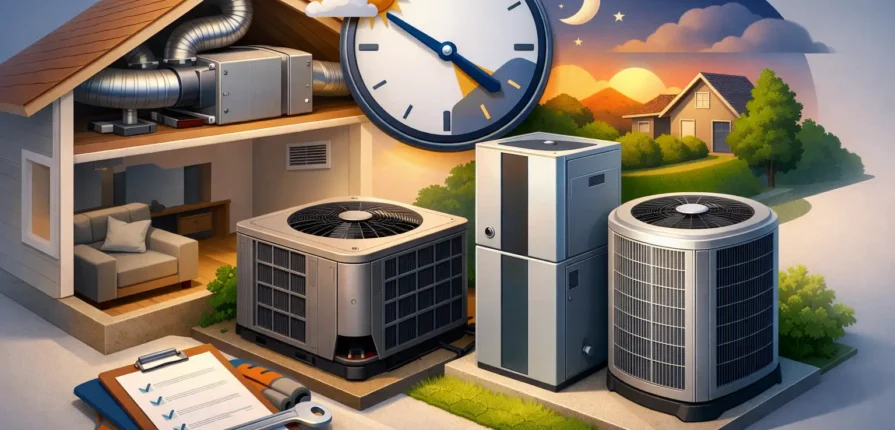
If your furnace or AC has started making new noises right before a weather swing, you are asking the right question. The best time to replace HVAC system equipment is usually before it quits, not after you are stuck without heat in January or cooling in July.
That answer sounds simple, but real homes are not simple. Some systems still have life left in them at 15 years. Others become money pits much sooner because of poor maintenance, oversized equipment, bad airflow, or repeated repairs. The right timing comes down to age, repair history, energy use, comfort problems, and whether you can still count on the system when Ohio weather turns serious.
Best time to replace HVAC system before it fails
For most homeowners, the sweet spot is the shoulder season – early spring or early fall. Those are the months when heating and cooling demand is lower, scheduling is easier, and you have time to compare options instead of making a rushed decision during an emergency call.
If your air conditioner is limping through late summer or your furnace barely made it through winter, replacing it in the off-season usually makes more sense than squeezing one more peak season out of it. You may avoid overtime service, limited equipment availability, and the stress of being forced into a same-day decision.
There is also a practical comfort reason. When temperatures are mild, your home can tolerate a day or two of installation work much better than during a freeze or heat wave. That matters for families with kids, older adults, tenants, or anyone managing a commercial space where downtime creates bigger problems.
Age still matters, but age is not the whole story
Most HVAC systems do not fail on a birthday. Still, age gives you a useful starting point.
A central air conditioner often lasts around 10 to 15 years. Furnaces can last 15 to 20 years, sometimes longer with strong maintenance. Heat pumps usually land in the 10 to 15 year range. If your system is moving into those years and repair calls are becoming more common, replacement should be part of the conversation.
That does not mean every older unit needs to go right now. A well-maintained system with solid performance can still be worth keeping. On the other hand, a 10-year-old unit with refrigerant leaks, airflow problems, and rising utility bills may already be costing more than it is worth.
The question is not just how old it is. The better question is whether it is still dependable, efficient, and safe for the way you use your home or building.
Signs your timing is probably right
Sometimes the best time to replace HVAC system equipment becomes obvious because the warning signs stack up.
Frequent repairs are one of the clearest signals. If you have paid for service more than once in the past year, and each fix feels like it buys only a little more time, you are likely spending good money after bad. A single repair is one thing. A pattern of repairs is different.
High energy bills can be another clue. Older systems lose efficiency over time, especially if coils are dirty, motors are wearing out, or ductwork issues force the equipment to run longer. If your usage has stayed about the same but your bills keep climbing, the system may be telling you it is working too hard.
Uneven temperatures matter too. Maybe the upstairs is always hot in summer, or some rooms never seem warm enough in winter. Not every comfort issue means replacement is necessary. Sometimes it is a duct or thermostat problem. But if your equipment is aging and no longer keeping up, comfort complaints are worth taking seriously.
Then there is noise. Banging, rattling, screeching, and grinding are not just annoying. They can point to worn components, blower issues, or mechanical strain. When an older system starts sounding rough and performing poorly, replacement often makes more sense than repeated patchwork.
When repair still makes sense
A lot of contractors jump straight to replacement. That is not always the honest answer.
If your system is relatively new, the repair is straightforward, and the rest of the equipment is in good shape, fixing it may be the smart move. The same goes for issues like a capacitor, contactor, igniter, or thermostat problem on a system that still has solid years left.
One rule many homeowners use is the repair-cost test. If the repair is getting close to half the value of an aging system, or if you are facing a major component failure late in the unit’s life, replacement deserves a serious look. Not because repair is impossible, but because it may not be the best use of your money.
Safety can tip the scale fast. A cracked heat exchanger, electrical concerns, or repeated operational issues that affect safe performance are not problems to put off. In those cases, timing is less about convenience and more about protecting your home and the people in it.
The best season to replace is not always the best personal time
Early spring and fall are often ideal on paper, but your own timing matters just as much.
If you know your system is near the end, replacing it before a major life event can save a lot of stress. Maybe you are heading into winter with an older furnace and do not want to risk losing heat during the holidays. Maybe you manage a rental or small commercial property and cannot afford downtime during a busy season. In those cases, planning ahead beats waiting for the calendar to line up perfectly.
Budget also plays a role. Some homeowners would rather replace on their own terms while they have time to review options and prepare financially. Others need to stretch the current system as long as possible and focus on maintenance while planning for a future replacement. Both approaches are understandable. The key is knowing where your system stands so you are not caught off guard.
Why waiting too long usually costs more
A lot of people try to squeeze one last season out of an older unit. Sometimes that works. Sometimes it backfires at the worst possible time.
Emergency replacement usually means less flexibility. You are making decisions fast, availability may be tighter, and your priority shifts from choosing the best fit to simply restoring heat or cooling. That pressure can lead to compromises on equipment selection, scheduling, and budget.
There is also the hidden cost of poor performance before failure. An aging system can run longer, waste energy, struggle with humidity, and put extra wear on components for months before it finally gives out. So even if it is technically still operating, it may already be costing you in higher bills and lower comfort.
For property managers, the cost of waiting can include tenant complaints, service disruptions, and after-hours emergencies. For homeowners, it often means stress, lost sleep, and a cold or overheated house when you least need the problem.
What to ask before you replace
Before moving forward, it helps to ask a few plain questions. Is the current system properly sized for the home? Has anyone checked ductwork, airflow, and insulation issues? Are you replacing just the failing piece, or is the full system the better long-term move?
Those details matter. A new unit will not perform the way it should if the duct system is undersized, leaking, or poorly designed. The same goes for thermostat problems or weak return airflow. Good replacement advice should look at the whole comfort picture, not just the box outside or the furnace in the basement.
You should also ask about efficiency in practical terms. Higher efficiency can lower operating costs, but not every home needs the top-tier option. The right choice depends on how long you plan to stay, how much you use the system, and whether the added upfront cost makes sense for your budget.
A dependable local contractor should be able to explain those trade-offs clearly without a lot of sales talk. That is especially important if you are comparing repair against replacement and want a straight answer.
Best time to replace HVAC system in Ohio homes
In central Ohio, weather extremes make planning more important. Furnaces work hard through winter, and AC systems can take a beating during humid summer stretches. If your equipment is showing its age in Delaware, Lewis Center, Sunbury, or nearby communities, waiting until peak season can leave you in line with everyone else whose system picked the same bad week to fail.
That is one reason many homeowners schedule inspections and replacement estimates before the weather turns. You get time to think, ask questions, and make a decision without the pressure of an active breakdown.
If you are unsure, start with an honest evaluation of the system you have. A good technician should be able to tell you whether you need a repair, a plan for replacement soon, or a full replacement now. Professional Trade Service handles that every day, and the right answer should always be based on what actually makes sense for your home.
The best timing is the one that gives you control. If your HVAC system is aging, unreliable, or costing too much to keep alive, replacing it before it fails is usually the move that saves the most headaches later.
Recent Comments