
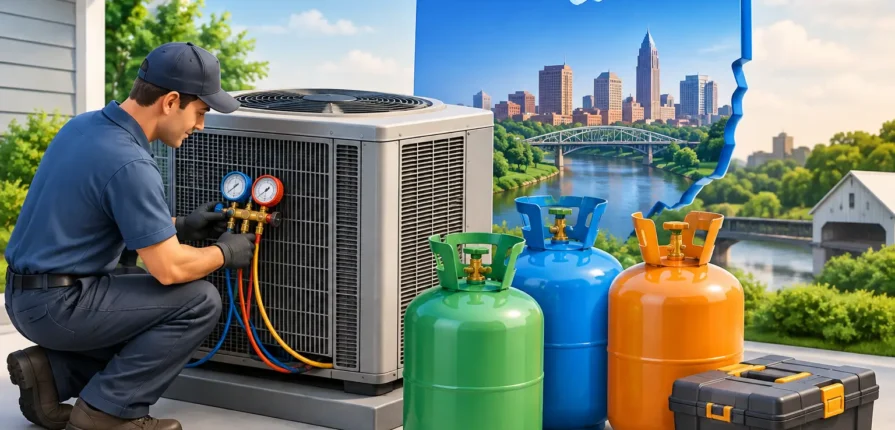
Your air conditioner may be cooling just fine, but the equipment being installed around central Ohio is changing fast. HVAC refrigerant changes 2026 are affecting what contractors can install, which parts and refrigerants they carry, and how homeowners should compare a major repair with a replacement.
The practical message is simple: you do not need to replace a working system just because it uses an older refrigerant. But if your A/C or heat pump is nearing the end of its life, the refrigerant it uses now matters more than it did a few years ago.
What is changing with HVAC refrigerants in 2026?
Federal rules are reducing the use of high-global-warming-potential HFC refrigerants. For years, R-410A has been the standard refrigerant in many residential central air conditioners and heat pumps. New equipment is now moving to lower-impact alternatives, most commonly R-454B and, in some cases, R-32.
This transition began affecting newly manufactured residential equipment in 2025. By 2026, the change will be much more visible to homeowners shopping for a new system. Most new split-system air conditioners and heat pumps will use a lower-GWP refrigerant rather than R-410A.
That does not mean R-410A equipment suddenly stops working or becomes illegal to repair. It means manufacturers, distributors, and service companies are shifting their inventory, tools, training, and installation practices toward the new generation of equipment.
Your current air conditioner does not need to be replaced just yet
A common concern is that homeowners with R-410A systems will be forced into a replacement. That is not the case. If your existing A/C or heat pump is properly cooling your home, has no major refrigerant leak, and is otherwise in good shape, routine maintenance and repairs can still make sense.
R-410A will remain available for servicing existing systems. Over time, however, supply can tighten and costs can change. A large refrigerant leak in an older system may become more expensive to address, especially when combined with other repairs such as a failing compressor, coil, blower motor, or control board.
The decision is not just about refrigerant. It depends on the age of the system, its condition, the repair cost, efficiency, and how long you expect to stay in the home. A reliable 7-year-old R-410A system with a minor repair is very different from a 16-year-old unit with a leaking coil and repeated breakdowns.
What refrigerants will new systems use?
Many newly installed systems will use R-454B, while some manufacturers may use R-32. Both options have a much lower global warming impact than R-410A. They are not interchangeable with R-410A, and they are not a simple drop-in replacement for an older system.
These newer refrigerants fall into a category often called A2L. That means they are classified as mildly flammable under certain conditions. For homeowners, this should not be a reason for alarm. Modern HVAC equipment is designed, tested, and installed with safety requirements that address the refrigerant used.
For contractors, the change is more involved. Technicians need compatible recovery equipment, leak detectors, charging tools, procedures, and training. Installations must follow manufacturer instructions and applicable codes. That is one reason it pays to work with a qualified HVAC company instead of choosing an installer based on the lowest number on a quote.
Why the 2026 refrigerant changes may affect replacement costs
A new HVAC system has always been a major investment, and the refrigerant transition adds a few moving parts. Manufacturers have redesigned equipment, distributors are managing separate inventories, and contractors have invested in new tools and technician education.
In some cases, those costs can influence pricing. Availability may also vary by brand, system size, and season. During the first years of a major equipment transition, a specific model may be harder to get than another comparable option.
That said, refrigerant is only one piece of replacement pricing. The bigger factors usually include your home’s size and layout, duct condition, electrical capacity, insulation, desired efficiency level, indoor air quality options, and whether you are replacing an air conditioner, furnace, heat pump, or complete system.
A good estimate should explain what is included. Ask about the equipment model, efficiency rating, warranty coverage, thermostat, permits, startup procedures, and any electrical or ductwork work needed for a safe installation. A low quote that skips necessary work is not a bargain if it creates comfort problems later.
Do not put a new refrigerant into an old R-410A system
This point matters: an R-410A air conditioner is designed specifically for R-410A. It should not be converted to R-454B or R-32 by simply changing the refrigerant.
The refrigerant, compressor, metering device, controls, safety components, and factory design all work together. Attempting an improper conversion can damage equipment, create safety concerns, void warranties, and leave you with an unreliable system.
The same principle applies to older R-22 units. R-22 production for new use ended years ago, and it is expensive to service those systems when they leak. There is no universal refrigerant swap that turns an old R-22 unit into a modern, efficient system. If a major R-22 repair is needed, it is worth comparing the repair against replacement before making a rushed decision.
When repair still makes sense
Homeowners do not need to panic every time a technician mentions refrigerant. A repair may be the right call when the system is reasonably young, the issue is isolated, and the repair cost is sensible compared with replacement.
For example, a small electrical repair, capacitor replacement, drain issue, or minor leak repair on a well-maintained system may be worth handling. Regular maintenance also helps technicians catch dirty coils, airflow restrictions, loose electrical connections, and drainage problems before they lead to compressor damage or refrigerant loss.
A repair becomes harder to justify when a system is older, inefficient, frequently failing, or facing a major leak and expensive component failure at the same time. No honest contractor can make that decision with a one-size-fits-all rule. The right answer comes from a real diagnosis and clear numbers.
Questions to ask before replacing your HVAC system
If you are comparing options in 2026, ask which refrigerant the proposed equipment uses and whether the contractor is trained and equipped to install it. Ask whether the estimate includes removal of the old equipment, proper refrigerant recovery, permits, code-required safety measures, and a full system startup.
It is also smart to ask whether your current furnace, air handler, thermostat, and electrical service are compatible with the new equipment. A heat pump installation may offer strong comfort and efficiency benefits, but the best setup depends on your home’s heating needs, existing equipment, and budget.
For property managers, consistency matters too. If several units may need replacement over the next few years, planning ahead can help avoid emergency decisions during a July heat wave or a January cold snap.
A practical plan for Ohio homeowners
If your system is working, keep it maintained and address problems early. A seasonal checkup gives you time to understand your equipment’s condition before extreme weather puts it under heavy demand.
If your system is older or has a known refrigerant leak, schedule an inspection before it fails completely. You can then compare repair costs, replacement options, efficiency, and refrigerant type without the pressure of an emergency call. For homeowners in Sunbury, Lewis Center, Powell, and nearby central Ohio communities, that planning can make the difference between a controlled upgrade and a stressful no-cooling situation.
The refrigerant transition is real, but it does not have to be confusing. Get a clear diagnosis, ask direct questions, and choose equipment that fits your home instead of making a decision based on fear or a quick sales pitch.
Recent Comments