
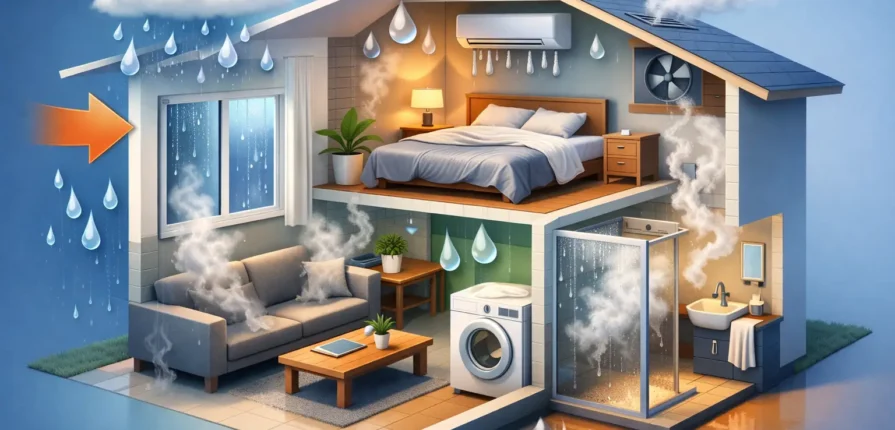
A sticky house is more than a summer annoyance. When the air feels damp, your thermostat may say 72 degrees, but your home can still feel warmer, smell musty, and take longer to cool down. If you are asking what causes high indoor humidity, the answer is usually not one thing. It is often a mix of outdoor moisture, HVAC performance, ventilation, and hidden water problems.
For most homes, indoor relative humidity should stay around 30 to 50 percent. Levels can rise during central Ohio’s hot, rainy summers, but ongoing readings above 60 percent deserve attention. Too much moisture can encourage mold growth, damage wood floors and trim, cause window condensation, and put extra strain on your cooling system.
What Causes High Indoor Humidity in a House?
Your air conditioner plays a major role in removing moisture. As warm indoor air passes over the cold evaporator coil, water vapor condenses and drains away. That means humidity problems often show up when the AC is not running long enough, is not operating correctly, or is fighting more moisture than it can handle.
An air conditioner that short cycles
A properly sized air conditioner should run long enough to cool the house and pull moisture from the air. If it turns on and off every few minutes, it may lower the temperature without doing much dehumidifying.
Short cycling can happen because the system is oversized, the thermostat is in a poor location, the refrigerant charge is off, or a mechanical issue is interrupting normal operation. An oversized unit may sound like a good upgrade, but bigger is not always better. It can cool a space too quickly and leave it clammy.
A system that is undersized can also struggle. On very hot days, it may run constantly but still fail to keep up with the heat and moisture entering the home. The right answer depends on the home, insulation levels, window exposure, ductwork, and the equipment itself. A professional load calculation is more reliable than choosing a unit based on square footage alone.
Dirty filters, coils, or drainage problems
Restricted airflow reduces an air conditioner’s ability to do its job. A clogged air filter can make the evaporator coil too cold, leading to freezing and poor moisture removal. Dirt on the indoor coil creates another barrier between the moving air and the cooling surface.
The condensate drain matters, too. Your AC produces a surprising amount of water on humid days. If its drain line is blocked, the pan is damaged, or the condensate pump fails, you may see water near the furnace or air handler. In some cases, the system may shut down for safety. Regular seasonal maintenance helps catch these issues before they turn into water damage or a no-cooling call.
Humid outdoor air leaking inside
Outdoor air carries a lot of moisture in summer. Gaps around windows, doors, attic hatches, utility lines, and duct penetrations can let that humid air into the house. Leaky return ducts are especially troublesome because they can pull hot, damp air from an attic, crawl space, basement, or garage area directly into the HVAC system.
Air sealing can help, but it needs to be done thoughtfully. A house still needs controlled ventilation for healthy indoor air. The goal is not to trap stale air inside. The goal is to prevent unwanted humid air from entering wherever it can.
Basement and crawl space moisture
Damp basements and crawl spaces are common sources of whole-home humidity. Moisture can enter through foundation walls, floor cracks, poor grading, leaky gutters, plumbing lines, or an unsealed crawl space. Once that moisture gets inside, air movement can carry it upstairs.
Signs include a persistent earthy odor, damp insulation, visible condensation on pipes, peeling paint, or a basement that feels chilly and wet even when the rest of the home is comfortable. A dehumidifier may improve the symptoms, but drainage, grading, waterproofing, or plumbing repairs may be needed to solve the source.
Plumbing leaks and hidden water damage
Not every humidity problem starts with the HVAC system. A slow leak behind a wall, under a sink, around a toilet, or near a water heater can release moisture into the air for weeks before it becomes obvious. Watch for water stains, warped flooring, soft drywall, a musty smell in one room, or an unexplained increase in your water bill.
This is where a full-service trade company can save time. If the issue turns out to be a leaking pipe rather than a cooling failure, you need a clear diagnosis and the right repair instead of guessing at expensive equipment changes.
Everyday moisture from cooking and bathing
Normal household activities add water vapor to the air. Long showers, boiling food, indoor clothes drying, and unvented gas appliances all contribute. In a busy household, these small sources can add up, especially when the AC is already struggling during a stretch of humid weather.
Use bathroom exhaust fans during showers and leave them running for about 15 to 20 minutes afterward. Run the kitchen exhaust fan when cooking with steam. These fans should vent outdoors, not into the attic. If they are weak, noisy, or not moving air, they may need service or replacement.
Signs Humidity Is Too High
You do not need special equipment to notice every moisture issue, although an inexpensive hygrometer can give you a useful humidity reading. The warning signs are often right in front of you: foggy windows, damp-feeling sheets or towels, mildew in bathrooms, a musty odor, swollen doors, or rooms that feel warm even with the AC running.
Pay attention to where and when the problem happens. If the whole house feels humid only while the AC runs, the cooling system or ductwork is a likely starting point. If one bathroom, bedroom, basement, or utility room feels damp year-round, investigate local ventilation, plumbing, or moisture intrusion first.
Steps You Can Take Before Calling for Service
Start with the simple checks. Replace a dirty HVAC filter with the correct size and type. Make sure supply vents and return grilles are open and unobstructed. Check that bathroom and kitchen fans are working, and look around the indoor unit for signs of condensate leaks.
Set the thermostat to a reasonable temperature rather than lowering it dramatically. Dropping the setting several degrees will not fix a mechanical issue, and it can increase runtime and energy use without solving the moisture source. If your thermostat has a fan setting, use Auto instead of On in humid weather. The On setting can keep the blower moving after a cooling cycle and may reintroduce moisture from the coil back into the home.
Portable dehumidifiers can help in a basement, laundry room, or one problem area. They are useful for short-term relief, but they require regular emptying or a drain connection, and they do not repair a failing AC, leaky duct, or hidden plumbing problem. A whole-home dehumidifier can be a better fit for homes with recurring humidity issues, particularly when paired with a properly operating HVAC system.
When It Is Time to Call an HVAC Professional
Call for service if your home remains humid while the air conditioner runs, the system freezes up, you see water around the equipment, or the problem appeared suddenly. You should also schedule an inspection if rooms cool unevenly, your utility bills are climbing, or you are noticing mold-like odors.
A technician can check refrigerant performance, airflow, coil condition, drain operation, system sizing, thermostat settings, and duct leakage. If the inspection points to plumbing or electrical work, Professional Trade Service can help coordinate the next step without sending you on a hunt for another contractor.
High humidity is easier to control when you find the cause early. A clean, correctly sized, properly maintained system and a dry, well-ventilated home give you the comfort you expect when Ohio summer weather turns heavy.
Recent Comments