
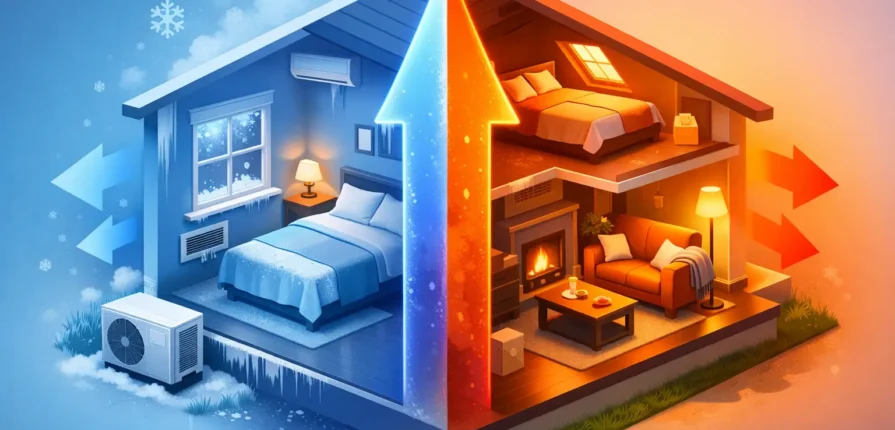
A cold bedroom while the living room feels fine is more than a small annoyance. It can lead to higher thermostat settings, uneven comfort, and arguments over the temperature. If you have been asking, why are some rooms colder than the rest of the house, the answer is usually not that your furnace is simply too small. Airflow, insulation, ductwork, room location, and thermostat placement all play a part.
The good news is that uneven temperatures can usually be diagnosed. The right fix depends on what is causing the problem, and guessing can waste money.
Why are some rooms colder than others?
Your HVAC system heats the entire home through a connected system. The furnace produces heat, the blower moves air, ductwork carries it to each room, and return vents bring air back to be reheated. When one part of that chain is restricted, leaking, poorly designed, or out of balance, certain rooms get less warm air than they need.
Some temperature differences are normal. A room over a garage, a second-floor bedroom, or a space with several exterior walls may run a few degrees cooler during an Ohio cold snap. A major difference, such as one room that is 8 to 10 degrees colder than the thermostat setting, points to a problem worth checking.
The thermostat may not represent the whole house
Most homes have one thermostat, often located in a central hallway or living area. That location may heat up quickly from sunlight, cooking, electronics, or a nearby supply vent. The thermostat reaches its target temperature and turns the system off while rooms farther away are still cold.
This is especially common in two-story homes. Heat naturally rises, but upstairs rooms can still feel cold if they have poor insulation, limited return airflow, or long duct runs. A smart thermostat with remote sensors can help in some homes, but it will not correct a duct or insulation problem on its own.
Restricted airflow keeps warm air from reaching the room
Start with the simple things. A dirty furnace filter limits airflow through the entire system. Closed or blocked supply vents, furniture covering a return grille, and a blower that is not operating correctly can also leave certain rooms short on heat.
Walk through the house while the heat is running. Each supply register should be open and delivering noticeable warm air. Return grilles need clear space around them so air can circulate back to the furnace. Do not close multiple vents in unused rooms hoping to force heat elsewhere. That can increase pressure in the ducts, strain equipment, and create more uneven heating.
A clean filter is a practical first step, but it is not a cure-all. If the filter is clean and one room still has weak airflow, the issue may be farther inside the system.
Duct leaks, disconnected ducts, and poor duct design
Ductwork often runs through attics, crawl spaces, basements, and wall cavities. If a duct has separated, been crushed, or developed a leak, heated air may never reach the intended room. In an unconditioned attic or crawl space, that lost heat can be significant.
Long duct runs can also be hard to balance. A room at the end of the line may receive less airflow than a room close to the furnace. Older homes sometimes have duct systems that were added or modified over the years without proper sizing. A home addition may be tied into an existing system that was never designed to handle the extra space.
A trained HVAC technician can measure airflow, inspect accessible ducts, and check static pressure. Those readings help separate a duct issue from an equipment issue. The solution might be sealing a leak, reconnecting a duct, adjusting dampers, improving returns, or redesigning part of the duct system. The right repair should follow a diagnosis, not a guess.
Your room may be losing heat faster than it receives it
Cold rooms are not always an HVAC problem. A room with drafty windows, poor attic insulation, gaps around doors, or exterior walls with limited insulation loses heat quickly. Rooms above garages are a common example because the floor may sit over a cold, unheated space.
On a windy day, hold your hand near window frames, exterior doors, baseboards, and electrical outlets on outside walls. Noticeable drafts deserve attention. Weatherstripping and caulk can help with small air leaks. Insulation improvements may be needed when the issue is an attic, exterior wall, or floor above a garage.
Window coverings can reduce nighttime heat loss, but they are not a substitute for proper air sealing and insulation. If the room gets cold only during severe weather, the building envelope may be the bigger issue. If it is cold every day the furnace runs, airflow should be checked too.
Check these common causes before scheduling service
A few observations can give an HVAC professional useful information and may reveal an easy fix. First, make sure the thermostat is set to heat and the fan is set to Auto rather than On. Then replace a dirty filter with the correct size and type recommended for your system.
Next, confirm that supply registers are open and not covered by rugs or furniture. Keep doors open during the test if possible. A closed door can restrict the path back to a central return vent, causing air pressure problems in bedrooms and other closed-off spaces.
Pay attention to when the room feels cold. Is it cold only overnight? Only on the windiest days? Only when the door is shut? Does it have weak airflow, or does it get warm air but cool down quickly? Those details help pinpoint whether you are dealing with a control issue, duct issue, or insulation issue.
Avoid blocking returns, taping over vents, or trying to repair gas furnace components yourself. If you smell gas, hear loud banging, see soot, notice a yellow burner flame, or your carbon monoxide alarm activates, leave the area and call for professional help right away.
When an HVAC inspection is the smart move
Call for service when basic checks do not solve the problem, when several rooms are uneven, or when your furnace is running longer than usual without keeping the home comfortable. A professional inspection is also a good idea if uneven temperatures started after a remodel, duct work, a new furnace installation, or changes to insulation.
During a proper heating diagnostic, the technician should look beyond the thermostat. They may inspect the filter and blower, test temperature rise, verify furnace performance, examine accessible ductwork, check dampers, and measure airflow. If the equipment is aging or undersized, they can explain the options clearly instead of pushing a replacement that may not address the root cause.
For larger homes, zoning can be worth considering. Zoned HVAC systems use separate thermostats and controlled dampers to manage different areas independently. They can improve comfort in multi-level homes or homes with additions, but zoning is not necessary for every cold room. It works best when the duct system and equipment can support it.
A dependable fix starts with the real cause
No homeowner should have to avoid a bedroom, office, or nursery because it is always cold. In central Ohio, minor comfort problems have a way of becoming bigger during the coldest part of winter. Professional Trade Service can inspect your heating system, ductwork, and airflow to identify what is actually behind the uneven temperature.
A warmer room may come from a simple airflow correction, a duct repair, better insulation, or a larger system adjustment. The useful next step is not turning the thermostat higher. It is finding out where the heat is being lost and getting that problem fixed right.
Recent Comments