
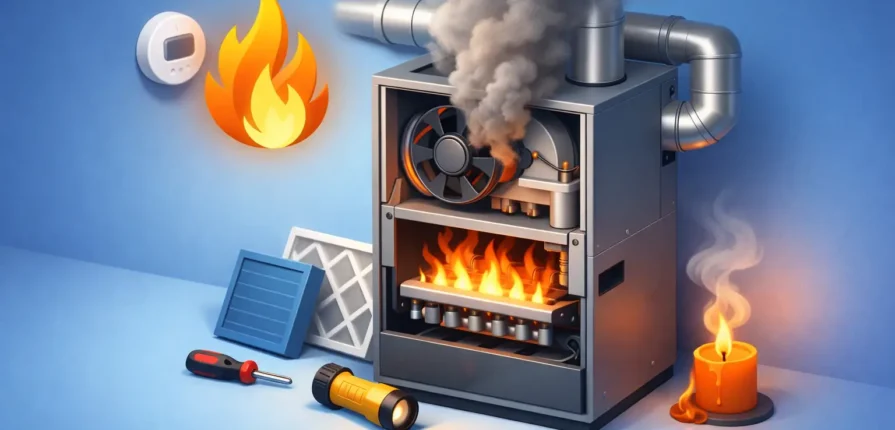
You turn on the heat, and instead of warm air, you get that sharp, dusty, burning smell through the vents. If you’re asking, why does my furnace smell burning, the answer depends on when the smell started, how strong it is, and whether it goes away quickly or keeps getting worse.
Some furnace smells are normal for a short time. Others are a warning sign that something is overheating, clogged, or failing. The key is knowing the difference before a minor issue turns into a repair call in the middle of a cold Ohio night.
Why does my furnace smell burning when I first turn it on?
The most common reason is simple dust. When a furnace sits unused through warmer months, dust settles on internal components like the heat exchanger, burners, and blower assembly. The first few times the system runs, that dust burns off and creates a dry, stale burning odor.
In many homes, this smell lasts anywhere from a few minutes to a couple of hours of operation spread over the first day or two of the heating season. It should gradually fade. If it does, that is usually normal.
What is not normal is a smell that gets stronger, smells like melting plastic, or sticks around every time the furnace runs. That points to a problem that needs attention.
Common reasons your furnace smells like something is burning
A clogged air filter is one of the biggest culprits. When airflow is restricted, the furnace has to work harder to push air through the system. That extra strain can cause components to run hotter than they should, and the heat can create a burning smell. A dirty filter can also let dust build up in the system over time, which adds to the problem.
Electrical issues are another possibility. Wiring, capacitors, blower motors, and control boards can overheat and give off a sharp burning or metallic odor. This type of smell usually does not resemble plain dust. It tends to smell harsher and more concerning, and sometimes it comes with other signs like buzzing, tripped breakers, or a furnace that shuts down unexpectedly.
A failing blower motor can also produce a burning odor. If the motor is aging, struggling, or not properly lubricated, it may overheat during operation. In some cases, the smell comes from the motor itself. In others, the belt or surrounding insulation may be affected.
Plastic or foreign material near the heat source can create the smell too. Sometimes a toy, piece of packaging, construction debris, or stored item ends up too close to the furnace cabinet or flue pipe. Even if the furnace itself is fine, nearby materials can heat up and smell like they are burning.
Dirty burners and internal buildup can contribute as well. Furnaces need clean combustion and proper airflow. If soot, debris, or residue builds up inside the unit, the smell may show up along with performance issues like uneven heating or short cycling.
When a burning furnace smell is probably normal
There is some room for context here. If this is the first cold snap of the season and the furnace has been off for months, a brief burning dust smell is common. The same goes for a system that has not run much and is suddenly being asked to work hard.
A normal smell should be mild, temporary, and limited to startup. It should not fill the house for hours on end. It should not make your eyes water, cause headaches, or smell like rubber, plastic, or electrical insulation.
If you recently had remodeling work done, a little extra dust in the ductwork or around the furnace can also create a stronger startup odor than usual. Even then, it should fade after the system runs.
When the smell means you should shut the system off
If the odor is strong and persistent, do not keep testing the furnace to see if it clears up. Turn the system off and pay attention to what else is happening.
A burning smell paired with smoke, sparking, breaker trips, unusual noises, or weak airflow is not a wait-and-see issue. The same is true if the smell resembles burning wires or melting plastic. That can point to an electrical problem or overheating component, and those problems can get expensive fast if they are ignored.
If anyone in the building feels dizzy, lightheaded, or sick, leave the area and address safety first. While a typical burning smell does not always mean a combustion gas issue, any furnace problem that affects indoor air quality deserves caution.
What you can check yourself before calling for service
Start with the air filter. If it is dirty, replace it with the correct size and type for your system. A clean filter improves airflow and reduces stress on the furnace.
Next, look around the furnace area. Remove any boxes, paint cans, cleaning supplies, or stored items that are too close to the unit or venting components. Furnaces need clear space around them for safety and proper operation.
Check the supply and return vents inside the home. If several vents are closed or blocked by furniture, airflow can suffer, and heat can build up where it should not.
You can also pay attention to timing. Does the smell happen only at startup, or every time the furnace runs? Does it fade quickly, or linger? Those details help narrow down whether you are dealing with seasonal dust or a mechanical problem.
What you should not do is open panels, handle wiring, or try to diagnose internal electrical parts on your own. Furnaces combine electricity, moving parts, and fuel-burning components. That is not the place for guesswork.
Why does my furnace smell burning every time it runs?
If the smell comes back cycle after cycle, that usually means it is more than dust. Repeated odor often points to restricted airflow, an overheating blower motor, dirty internal parts, or an electrical issue. In an older furnace, wear and age can make these problems more likely.
This is where a professional inspection matters. A trained HVAC technician can check temperature rise, motor amperage, burner condition, wiring, capacitors, and overall system performance. That tells you whether the repair is minor, whether maintenance was overdue, or whether the furnace is showing signs of bigger trouble.
For homeowners and property managers, this matters for more than comfort. A furnace that overheats or runs with poor airflow can wear out faster, drive up utility bills, and leave you with a no-heat emergency when you least need one.
How maintenance helps prevent burning smells
A lot of furnace odor complaints come down to maintenance that got skipped. Seasonal tune-ups help remove buildup, catch worn parts early, and make sure the system is operating safely. That includes checking filters, burners, blower components, electrical connections, and airflow.
No furnace lasts forever, and not every smell means replacement. Sometimes the fix is straightforward. A filter change, motor repair, cleaning, or electrical correction can solve the problem. Other times, especially with older equipment, recurring smells are one more sign the system is nearing the end of its service life.
That is why it pays to have the unit looked at before the problem turns urgent. A good inspection gives you a clear answer instead of a guess, and that helps you make a smart call on repair versus replacement.
When to call a furnace professional
If the smell lasts more than a short startup period, gets worse, or comes with noise, poor airflow, or shutdowns, it is time to schedule service. The same goes if you have replaced the filter and cleared the area around the furnace but the odor keeps coming back.
In central Ohio, where furnaces can go from barely running to working around the clock in a hurry, small issues do not stay small for long. A prompt service visit can protect the system, the home, and your peace of mind.
Professional Trade Service helps homeowners and property managers track down furnace odors, overheating issues, airflow problems, and hard-to-pinpoint heating concerns without wasting time. If your furnace smells like something is burning and you are not sure whether it is normal, trust your nose. A quick check now is a lot easier than an emergency repair later.
If the smell disappears after the first run of the season, you are probably fine. If it lingers, changes, or makes you uneasy, it is worth getting a real answer before colder weather settles in.
Recent Comments