
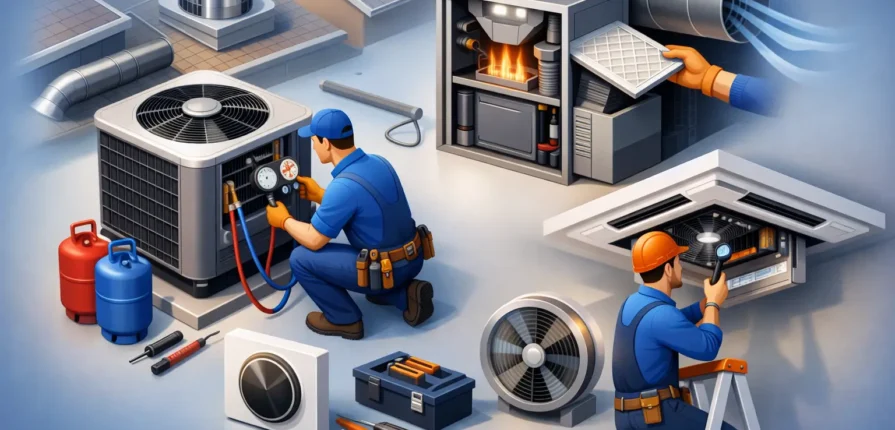
If your furnace quits on the first cold night of the season or your AC starts blowing warm air in July, the first question usually comes fast – could this have been prevented? In a lot of cases, yes. That is why homeowners ask what does HVAC maintenance include before they decide whether a tune-up is really worth it.
The short answer is this: HVAC maintenance is a full system checkup designed to catch wear, improve efficiency, reduce breakdowns, and make sure your heating and cooling equipment is operating safely. It is not just changing a filter and calling it good. A proper visit should involve inspection, cleaning, testing, and adjustments based on the equipment in your home or building.
What does HVAC maintenance include for most systems?
For most homes, HVAC maintenance includes a detailed inspection of the air conditioner, furnace or heat pump, thermostat, electrical connections, moving parts, airflow, drainage, and safety controls. The exact checklist depends on the type of system you have and the season, but the goal stays the same – keep the equipment reliable and catch problems early.
A spring AC tune-up will focus on cooling performance, refrigerant components, condenser condition, and drainage. A fall furnace tune-up will focus more on burners, ignition, heat exchangers, gas pressure, venting, and carbon monoxide safety. If you have a heat pump, maintenance may overlap because one system handles both heating and cooling.
That is also why a real maintenance visit takes more than a quick glance. If a technician is in and out in a few minutes, chances are they did not do much beyond the basics.
The core parts of HVAC maintenance
Air filter inspection and replacement
This is the part most people know, but it is only one piece of the job. A dirty filter can choke airflow, make your system work harder, and shorten equipment life. During maintenance, the technician will inspect the filter and either replace it or tell you whether it still has usable life left.
The trade-off is simple. Replacing filters on time is inexpensive. Ignoring them can lead to poor airflow, frozen coils, overheating, and higher utility bills.
Thermostat check and calibration
Your thermostat tells the system when to run, so if it is off, comfort and efficiency both suffer. Maintenance usually includes checking thermostat settings, making sure it responds properly, and confirming that the heating or cooling cycle starts and stops when it should.
If you have an older thermostat, this is often where hidden issues show up. Sometimes the HVAC equipment is fine, but the control is not reading temperature correctly.
Electrical inspection
Loose electrical connections can cause hard starts, short cycling, component damage, and safety risks. A maintenance visit should include checking wiring, tightening connections when needed, and testing voltage and amperage on key components.
This matters more than many homeowners realize. Capacitors, contactors, relays, and motors often show signs of trouble before they fail completely. Catching a weak capacitor during maintenance is a lot better than finding out during a heat wave.
Cleaning coils and components
Dirt is one of the biggest enemies of HVAC performance. Evaporator and condenser coils need to transfer heat efficiently. When they are coated with dust, debris, or grime, the system loses efficiency and works harder to keep up.
What gets cleaned depends on access and system condition. Outdoor condenser coils often need attention because they collect grass, cottonwood, dirt, and leaves. Indoor components may also need cleaning if buildup is affecting airflow or performance. Blower parts can be checked and cleaned as needed too.
Lubrication of moving parts
Some motors and moving parts require lubrication, depending on the equipment. If that applies to your system, maintenance should include it. Too much friction increases wear and can eventually lead to motor failure.
Newer systems may have sealed components that do not need lubrication, so this is one of those areas where it depends on your equipment.
Drain line and condensate check
Air conditioners and high-efficiency furnaces produce condensation. If the drain line clogs, water can back up and cause leaks, water damage, or system shutdowns. A maintenance visit should include checking the condensate drain, drain pan, and any pumps tied to that setup.
This step is easy to overlook until there is water on the floor.
What does HVAC maintenance include on the heating side?
Heating maintenance is where safety becomes a bigger part of the conversation. A furnace tune-up should do more than confirm the unit turns on.
Burner and ignition inspection
For gas furnaces, technicians inspect burners for proper ignition and flame appearance. They also check the igniter or pilot assembly, depending on the system. Delayed ignition, dirty burners, or ignition failure can lead to poor performance and added wear.
Heat exchanger and safety controls
The heat exchanger is one of the most important parts of a furnace. If it is cracked or damaged, it can create serious safety concerns. During maintenance, technicians look for signs of damage, corrosion, or improper operation and test key safety controls.
This is one reason annual furnace maintenance is not something to skip. Comfort matters, but safe operation matters more.
Gas pressure and venting
A proper heating tune-up may also include checking gas pressure, verifying venting, and making sure combustion gases are being exhausted correctly. If airflow or venting is off, performance can drop and safety risks can increase.
Not every issue is visible to a homeowner. A furnace may seem to be heating fine while still operating inefficiently or unsafely.
What does HVAC maintenance include on the cooling side?
Cooling maintenance focuses heavily on efficiency, system pressures, and airflow.
Refrigerant and coil performance
Technicians check operating conditions to see whether the system is cooling as it should. That may include checking refrigerant pressures or temperatures, depending on the service procedure and system design. Low refrigerant is not part of normal operation, so if levels are off, that usually points to a leak or another problem that needs repair.
A tune-up is not the same as a repair. Maintenance can identify refrigerant-related trouble, but fixing it is a separate step.
Condenser unit inspection
The outdoor unit takes a beating from weather and debris. Maintenance should include inspecting the fan, coil, cabinet condition, and overall operation. If the area around the condenser is blocked by weeds, mulch, or storage items, airflow drops and the system loses capacity.
Blower and airflow testing
Good cooling depends on proper airflow across the indoor coil. If the blower is dirty or weak, rooms may cool unevenly and the system can run longer than it should. This is one of the common reasons people complain that the AC never seems to shut off.
What HVAC maintenance does not include
This is where confusion happens. Maintenance is preventive service, not a blanket fix for every issue. If a technician finds a failed capacitor, a leaking coil, a cracked heat exchanger, or a bad inducer motor, that usually turns into a repair recommendation.
Maintenance also does not mean your system will never break down. It lowers the odds, improves performance, and gives you a better chance of avoiding surprise failures. But older equipment, neglected systems, and heavily used units can still need repair even with routine service.
Why regular maintenance actually pays off
For most homeowners and property managers, the value comes down to fewer surprises. Routine service helps catch worn parts before they fail, keeps the system cleaner, and gives you a better shot at lower operating costs.
It can also help you plan ahead. If a technician finds that your furnace is still safe but showing age, you have time to budget and think through replacement options instead of making a rushed decision during an emergency call.
For property managers and small business owners, that planning matters even more. One breakdown can affect tenants, customers, inventory, or daily operations.
How often should HVAC maintenance be done?
Most systems should be serviced twice a year – once before cooling season and once before heating season. If you have a heat pump, regular service is especially important because it runs year-round. Homes with pets, older systems, high dust levels, or heavy use may need closer attention.
The right schedule depends on the equipment, its age, and how hard it works. A newer system in a lightly used home may have fewer issues. An older furnace and AC in an Ohio home that sees temperature swings all year needs a more watchful eye.
Choosing the right maintenance visit
Not all tune-ups are equal. A real maintenance appointment should feel thorough, not rushed. You should get clear communication about what was checked, what looks good, and what may need attention soon.
That is especially important if you are comparing service companies. Low-price specials can be useful, but only if the work behind them is solid. Experience, honest recommendations, and a technician who explains what they found in plain language make a big difference.
Professional Trade Service sees this firsthand with homeowners across central Ohio. Most people are not looking for a sales pitch. They want to know whether their system is safe, whether it will make it through the season, and what can be done now to avoid a more expensive problem later.
If you have been putting off service, the best time to schedule maintenance is before your system is under stress. A quiet spring day or early fall appointment is a lot easier than dealing with a no-heat or no-AC call when the weather turns and everyone else is calling too.
Recent Comments