
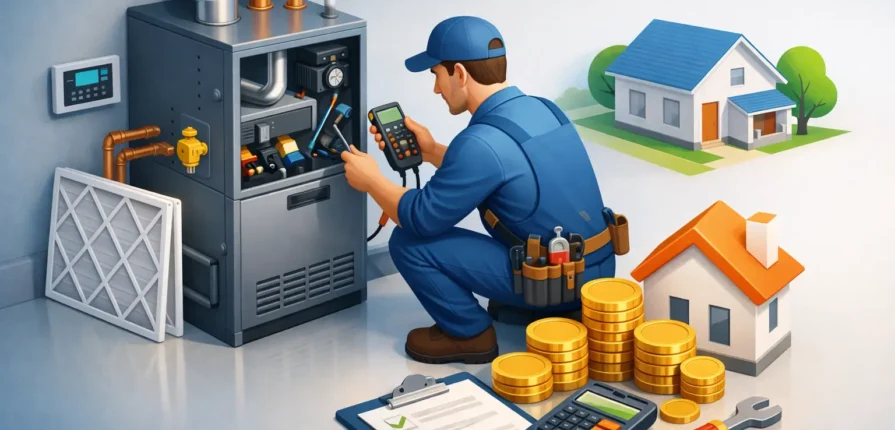
A furnace that kicks on the first cold night without trouble usually did not get there by luck. For most homeowners, furnace tune up cost is a lot easier to handle than a no-heat call in the middle of winter, especially when small issues have been building for months.
If you are trying to budget for heating service, the short answer is that a standard furnace tune-up is usually one of the more affordable HVAC visits you can schedule. The exact price depends on the system, what is included, and whether your furnace is running normally or already showing signs of trouble. A basic preventive visit is not the same thing as a repair call, and that difference matters when you are comparing prices.
What furnace tune up cost usually includes
A proper tune-up is more than a quick look at the thermostat. A technician should inspect the system, clean key components, test operation, and look for wear that could turn into a breakdown later. On a gas furnace, that often means checking the burners, flame sensor, ignition system, heat exchanger condition, safety controls, gas pressure, electrical connections, filter condition, blower performance, and thermostat response.
On many service calls, the value is not just in cleaning and adjusting the furnace. It is in catching the loose wire, dirty flame sensor, weak capacitor, or airflow issue before it turns into a bigger repair. That is why furnace tune up cost can vary from one company to another. Some are pricing a true maintenance service. Others are pricing a very limited inspection.
If a company advertises a low special, ask what is actually covered. A tune-up that only checks a few boxes may cost less upfront, but it may not do much to improve reliability or efficiency.
Average furnace tune up cost in real terms
In many markets, homeowners can expect furnace tune up cost to fall somewhere around $80 to $200 for a standard residential visit. Promotional pricing may come in lower, especially during slower shoulder seasons, while more detailed maintenance visits or specialty systems can run higher.
That range is broad for a reason. A newer, standard-efficiency furnace in good condition takes less time than an older unit with heavy dust buildup, access issues, or signs of wear. Some companies also bundle filter checks, safety testing, and system performance measurements into the visit, while others charge separately if they find something outside the basic scope.
For commercial properties or larger residential systems, pricing may increase because the equipment is larger, the inspection takes longer, and service access can be more involved.
What affects furnace tune up cost
The first factor is the type of furnace. A high-efficiency condensing furnace has more components and venting considerations than an older standard unit. That can change the time needed for proper maintenance.
The second factor is condition. If the furnace has not been serviced in years, the technician may need more time to clean sensors, remove buildup, and inspect areas that have been running under stress. A neglected system can still be tune-up eligible, but it may be closer to needing repairs than routine maintenance.
Timing also matters. If you schedule service before the heating rush, you may have access to seasonal specials or more flexible appointment options. Waiting until the first hard freeze often means tighter scheduling and more emergency calls in the queue.
Your service plan status can also change pricing. Many HVAC companies offer maintenance agreements that lower the cost of seasonal visits and may include priority scheduling or discounts on repairs. For homeowners who plan to stay in the house and keep the system maintained, that can be a practical option.
Tune-up vs. repair call: know the difference
One of the biggest pricing misunderstandings happens when a furnace is already acting up. If your system is short cycling, blowing cold air, making loud noises, tripping breakers, or not turning on at all, you may not be looking at a tune-up anymore. You may need diagnostics and repair.
A tune-up is preventive service on a working system. A repair call is meant to find and fix a problem. The visit may start with maintenance, but if the technician discovers a failed part or unsafe condition, additional work and cost can follow.
That does not mean the tune-up was not worth it. In many cases, the inspection is exactly what prevents a sudden failure later. It just means homeowners should be careful about expecting a flat tune-up price to cover parts, major troubleshooting, or after-hours emergency service.
Why the cheapest option is not always the best deal
A low advertised furnace tune up cost gets attention, and that is understandable. Everyone wants to save money. But a furnace is not something you want checked in a rushed, bare-minimum visit.
If the price seems unusually low, ask a few direct questions. Will the technician clean the flame sensor? Will they test safety controls? Will they inspect for airflow issues and signs of wear? Will they provide clear recommendations if they find a problem? Those answers tell you more than the ad does.
Good maintenance is supposed to reduce risk. If a bargain visit skips the important steps, you may still end up paying for avoidable repairs, higher utility bills, or a breakdown on the coldest weekend of the year.
When a tune-up saves money
Not every furnace tune-up produces dramatic savings on the next utility bill, and it is better to be honest about that. If your system is newer, clean, and already operating efficiently, the financial benefit may be more about reliability and peace of mind than a major drop in energy use.
But there are plenty of cases where maintenance pays off. Dirty burners, restricted airflow, weak blower performance, and sensor issues can all make a furnace work harder than it should. Correcting those problems can improve operation and reduce strain on parts.
The bigger savings often come from avoiding repairs. Catching a worn ignitor, loose connection, or drainage issue early is usually cheaper than dealing with a full no-heat call later. For property managers and busy homeowners, avoiding tenant complaints or emergency scheduling problems is part of the value too.
Is annual maintenance really necessary?
For most furnaces, yes. An annual checkup is a practical standard, especially in Ohio where systems work hard through long heating seasons. Even if the furnace seems fine, wear can build quietly over time.
Safety is one reason not to skip it. Gas furnaces involve combustion, venting, and electrical components. A yearly inspection helps identify problems that are easy to miss from the outside. Performance is the other reason. Small issues rarely stay small forever.
If your furnace is older, runs often, or has had repairs in the past few seasons, annual maintenance becomes even more worthwhile. Aging equipment can keep running reliably, but it usually needs closer attention.
What homeowners should ask before booking
When comparing service companies, ask what the tune-up includes, whether pricing is flat-rate, and whether repairs are quoted separately. It is also smart to ask if the technician works on your furnace brand and whether the company handles emergency heating service if a problem is found.
Clear communication matters just as much as price. You want a technician who explains what they found in plain language, shows you what needs attention, and does not push replacement if maintenance or repair still makes sense.
That is especially true if you have an older furnace and want a realistic second opinion. Sometimes a tune-up is all the system needs. Other times, the visit confirms that repeated repairs are adding up and replacement should be part of the conversation.
The bottom line on furnace tune up cost
For most homeowners, furnace tune up cost is a manageable preventive expense that helps control bigger heating costs later. The exact number depends on the system, the scope of service, and whether your furnace is truly in maintenance condition or already heading toward repair.
A good tune-up should leave you with more than a receipt. You should know how your furnace is operating, whether anything needs attention, and whether your system is ready for the heating season ahead. If you live around Delaware, Lewis Center, Powell, or nearby central Ohio communities, that kind of peace of mind is worth having before winter settles in.
If your furnace has been running louder, cycling harder, or simply has not been checked in a while, now is a good time to get ahead of it before a small issue picks your coldest day to become a big one.
Recent Comments