
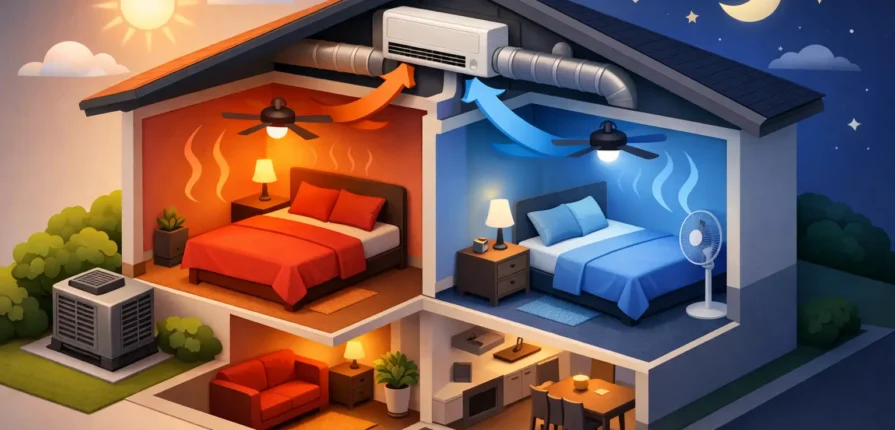
You notice it first in the back bedroom. The living room feels fine, but one side of the house is warm, the upstairs is sticky, and someone is already arguing over the thermostat. If your AC is not cooling house evenly, the problem usually is not the thermostat setting alone. Uneven cooling points to an airflow issue, a system problem, or a house layout challenge that needs more than guesswork.
Some uneven cooling problems are simple. Others are early warning signs that your air conditioner is working harder than it should, driving up electric bills and wearing down parts faster. The right fix depends on why certain rooms stay hot while others cool off normally.
Common reasons an AC is not cooling house evenly
The most common cause is restricted airflow. Your air conditioner can only cool rooms that get enough conditioned air, and it also needs enough return airflow to keep circulation balanced. When either side of that process gets blocked, comfort drops fast.
A dirty air filter is one of the first things to check. If the filter is clogged, airflow gets choked down across the whole system. Some rooms may still feel decent because they are closer to the indoor unit or have shorter duct runs, while rooms farther away start getting less cool air.
Closed or blocked vents can create the same kind of imbalance. Furniture over a register, rugs covering floor vents, or dampers set incorrectly in the ductwork can all reduce airflow to part of the house. In some homes, homeowners close vents in unused rooms thinking it will save money. In reality, that can throw off system pressure and make cooling less even.
Duct issues are another major reason. Leaky ducts in an attic, crawl space, or wall cavity can send cooled air into spaces that do not need it. By the time air reaches the rooms at the end of the run, there is not enough left to do the job. If one room is always hot no matter how low the thermostat is set, duct leakage or poor duct design moves up the list quickly.
Why upstairs rooms are often hotter
If the second floor is uncomfortable while the main level feels fine, that is a very common complaint. Heat rises, and upper floors take more sun through the roof and windows. Even a properly working AC system can struggle if insulation is weak, attic temperatures are extreme, or the duct system was never designed well for the upper level.
This is where it depends on the age and layout of the home. Older homes often have ductwork that was added or modified over time, not designed for balanced airflow from the start. Newer homes can still have trouble if the system was sized for square footage on paper but not for real-world heat load in upstairs rooms.
A single-zone system with one thermostat downstairs can also be part of the problem. The thermostat shuts the system off once the first floor reaches the set temperature, even though the upstairs still needs more cooling. That does not always mean you need a full system replacement, but it may mean you need airflow adjustments, zoning, or a closer look at the duct layout.
Thermostat and system sizing problems
Sometimes the issue starts with the thermostat location. If it is near a cool hallway, supply vent, or shaded part of the house, it may satisfy too early. The AC shuts off while warmer rooms still have not caught up. A badly placed thermostat can make a good system look inconsistent.
System size matters too, but not always in the way people expect. An undersized AC can struggle to cool the house during peak summer heat, especially rooms farthest from the air handler. But an oversized system can cause uneven cooling too. If it cools the thermostat area too quickly and short cycles, it may not run long enough to circulate air evenly through the house or remove enough humidity.
That is why replacing equipment without proper diagnosis can turn into an expensive mistake. Bigger is not automatically better. The system has to match the home, the ductwork, and the way the house gains heat.
What you can check before calling for service
Start with the basics. Check the air filter and replace it if it is dirty. Make sure supply vents and return vents are open and not blocked by furniture, curtains, or storage. Look at the thermostat settings and confirm the fan is set the way you want it. Some homeowners get better air circulation by switching the fan from auto to on for part of the day, though that can slightly raise energy use.
Walk from room to room and feel the airflow at each vent. If one room has very weak airflow compared to the rest of the house, that helps narrow the issue. If multiple rooms are warm on one side of the home, the problem may be tied to a specific branch of ductwork.
Also check around windows and doors. Sometimes the AC gets blamed for a room that is actually gaining too much heat because of poor sealing, direct afternoon sun, or failing insulation. The cooling system and the house shell work together. If one is weak, comfort suffers.
Signs the problem is more than a quick fix
If your AC not cooling house evenly has been getting worse over time, that usually points to wear, buildup, or a mechanical issue. Low refrigerant, a struggling blower motor, frozen evaporator coil, dirty outdoor condenser, or failing components can all affect how consistently the system cools.
Watch for warning signs such as higher electric bills, longer run times, weak airflow throughout the house, warm air from some vents, ice on refrigerant lines, or unusual noises when the system starts up. These are signs that the problem may not stay a comfort issue for long. It can turn into a repair call at the worst time, usually during the hottest week of summer.
A professional inspection matters here because uneven cooling is often a symptom, not the root problem. A technician should look at airflow, static pressure, duct condition, refrigerant performance, coil cleanliness, thermostat operation, and equipment condition as a full system. That gives you an answer based on testing, not guessing.
Repair or upgrade? It depends on the cause
Not every uneven cooling issue calls for major work. Sometimes a filter change, duct sealing, damper adjustment, blower repair, or coil cleaning gets the house comfortable again. If the core system is still in good shape, targeted repairs can make a big difference without a major investment.
But there are cases where upgrades make more sense. If the duct system is poorly designed, the equipment is aging, and comfort issues have been there for years, patching one part at a time may not solve it. Homes with persistent hot and cold spots may benefit from zoning, duct modifications, insulation improvements, or equipment replacement sized correctly for the property.
That is especially true for homeowners dealing with repeat service calls on older systems. Paying for the same kind of fix every summer gets expensive fast. A straight answer from an experienced HVAC company can help you decide whether to repair what you have or put that money toward a better long-term solution.
When to call for help
If you have already changed the filter, checked vents, and confirmed the thermostat settings, but rooms are still unevenly cooled, it is time to bring in a technician. The same goes for homes with one hot floor, weak airflow in specific rooms, or sudden comfort problems that were not there before.
For homeowners in central Ohio, uneven cooling is not something to ignore once summer humidity settles in. A system that cannot distribute air properly will run longer, cost more, and put more stress on every major component. Professional Trade Service handles AC diagnostics, repair, and airflow issues with the kind of direct, practical service homeowners expect when comfort is on the line.
The best next step is not guessing which room to sacrifice. It is finding out why your system is out of balance and fixing it before a small comfort problem turns into a full breakdown.
Recent Comments