
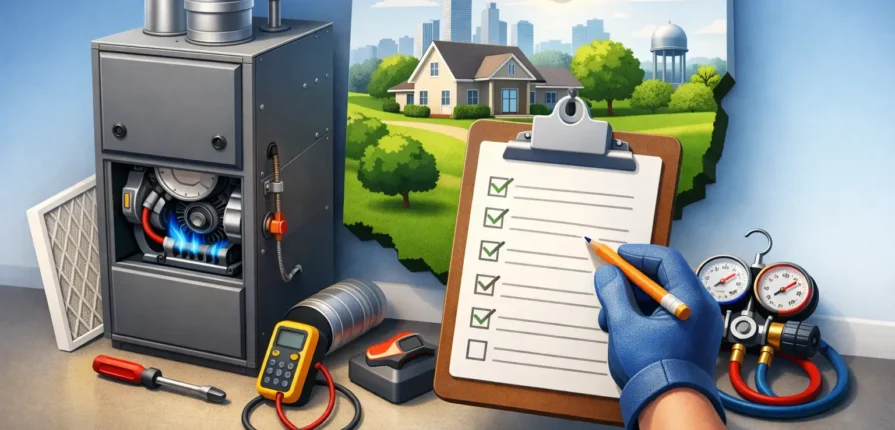
A furnace rarely quits at a convenient time. It usually fails during the first hard freeze, on a weekend, or when the whole family is home. This furnace tune up checklist helps you understand what should happen before heating season, what you can safely check yourself, and when it is time to call a qualified HVAC technician.
A yearly tune-up is not just about getting more heat. It is about catching worn parts, airflow problems, gas or electrical concerns, and safety issues before they turn into a no-heat call. For homeowners and property managers, a little preventive work can mean fewer surprises when central Ohio weather turns cold.
What a Professional Furnace Tune-Up Should Include
A proper furnace visit should be more than swapping a filter and calling it done. A trained technician should inspect the system, test its operation, clean key components when needed, and explain any concerns in plain language.
The exact work depends on whether you have a gas furnace, electric furnace, heat pump with backup heat, or an older system with known issues. A newer furnace may need only routine adjustment and cleaning. An aging unit may need closer attention to ignition parts, blower performance, venting, and heat exchanger condition.
Here is the working furnace tune up checklist a professional should cover:
- Inspect the furnace cabinet, wiring, burners, blower compartment, and visible duct connections for damage, loose components, corrosion, dust buildup, or signs of water.
- Test thermostat operation, startup sequence, safety controls, limit switches, ignition, flame sensor, blower operation, and the full heating cycle.
- Check the air filter, blower wheel, evaporator coil area where accessible, return vents, and supply airflow for restrictions that make the system work harder.
- Inspect gas piping, shutoff connections, burner flame, flue pipe, venting, and carbon monoxide risks on gas-fired equipment.
- Measure electrical connections and operating performance, then lubricate applicable moving parts and tighten connections where the equipment design allows.
A good technician also listens. If you mention uneven rooms, a strange smell, loud cycling, or a rising utility bill, that information matters. Those symptoms can point to a duct issue, thermostat setting, failing blower motor, dirty filter, oversized equipment, or a problem inside the furnace itself.
Homeowner Checks Before Scheduling Service
There are a few simple checks worth making before your appointment. They can help you spot obvious issues and give the technician a clearer picture of what has been happening. Keep the area around the furnace open and clear of storage, paint, gasoline, cardboard, and other combustible materials. The technician needs safe access, and your furnace needs room to operate properly.
Start with the thermostat. Set it to heat and raise the temperature a few degrees above the room temperature. Listen for the furnace to start, then confirm warm air comes from several supply vents. If the display is blank, check the batteries if your thermostat uses them. Do not keep resetting breakers or repeatedly cycling the furnace if it will not start. That can hide a developing problem and may cause additional wear.
Next, check the filter. A clogged filter is one of the most common causes of poor airflow, hot and cold rooms, and avoidable strain on a heating system. The replacement schedule depends on the filter type, the number of pets in the home, household dust, and how often the system runs. Many homes need a check every month and replacement every one to three months, but follow the filter manufacturer’s guidance and your technician’s recommendation.
Walk through the house and make sure supply registers and return grilles are open and not blocked by furniture, rugs, or curtains. Closing off too many vents does not usually save money. It can restrict airflow and create comfort problems. If one room is consistently cold while the rest of the home is comfortable, mention it during the tune-up instead of assuming the furnace is the only issue.
Safety Items That Should Never Be Skipped
For gas furnaces, safety is the first priority. A furnace should produce a steady, mostly blue burner flame. Yellow or flickering flames, soot around the unit, a burning smell that does not go away, or moisture and rust around vent piping deserve prompt attention. Do not remove furnace panels or attempt gas adjustments on your own.
Every home with fuel-burning equipment should have working carbon monoxide alarms. Install them according to the manufacturer’s instructions, test them regularly, and replace batteries as needed. Carbon monoxide has no color or odor, so an alarm is a necessary layer of protection, not an optional extra.
If you smell natural gas, leave the building right away. Do not operate switches, use a phone inside, light a flame, or try to find the leak yourself. Once you are safely away from the home, contact your gas utility or emergency services, then arrange for qualified HVAC service.
A cracked heat exchanger is another concern people often hear about. It is a serious condition, but it cannot be diagnosed by guesswork. Cracks, corrosion, or exhaust-related issues need a trained inspection and proper testing. If a technician recommends a major repair or replacement, ask for a clear explanation of the finding, your options, and the expected cost. Honest recommendations should make sense, especially on an older furnace where repair costs can begin to compete with replacement value.
What Tune-Ups Can and Cannot Prevent
Routine maintenance reduces the odds of a surprise breakdown, but it cannot make a worn-out part new again. A furnace can pass a seasonal check and still have a component fail later in the winter. Age, heavy use, power issues, and normal wear all matter.
What a tune-up does well is give you a better chance to address trouble on your schedule. A weak igniter, dirty flame sensor, loose electrical connection, restricted filter, or noisy blower can often be found before it leaves you without heat. It can also help the furnace operate closer to its intended efficiency, provided the ductwork, insulation, thermostat settings, and equipment sizing are also in good shape.
If your furnace is 15 years or older, the conversation may be different. A tune-up is still worthwhile for safety and reliability, but it may also reveal whether you should start planning for replacement. There is no single age when every furnace must be replaced. The better question is whether repairs are becoming frequent, comfort is slipping, utility costs are climbing, and the equipment is still safe to operate.
Signs You Should Not Wait for a Tune-Up
Schedule service sooner if your furnace runs but does not keep up, turns on and off repeatedly, makes banging or scraping sounds, blows cool air, trips a breaker, or has a pilot or ignition issue. A burning electrical odor, visible water around the furnace, repeated error codes, or a carbon monoxide alarm are also reasons to act quickly.
For landlords and commercial property managers, fast attention matters even more. A no-heat issue can affect tenants, inventory, plumbing, and business operations. Keeping a record of maintenance dates, filter changes, repairs, and equipment age makes it easier to make sound decisions when a system needs work.
Get Your Furnace Ready Before the Cold Sets In
The best time for a furnace tune-up is before you need the furnace every day. Fall appointments are common, but any time you notice performance changes is the right time to schedule service. Have the make and model available if possible, note any unusual sounds or error messages, and clear access to the equipment before the technician arrives.
Professional Trade Service helps homeowners and property managers handle routine furnace maintenance, repairs, and urgent heating problems with straightforward answers and experienced service. A clean filter and a quick visual check are good homeowner habits. The detailed inspection, combustion checks, electrical testing, and repairs belong in trained hands. Taking care of them now can make the next cold Ohio night a lot less stressful.
Recent Comments