
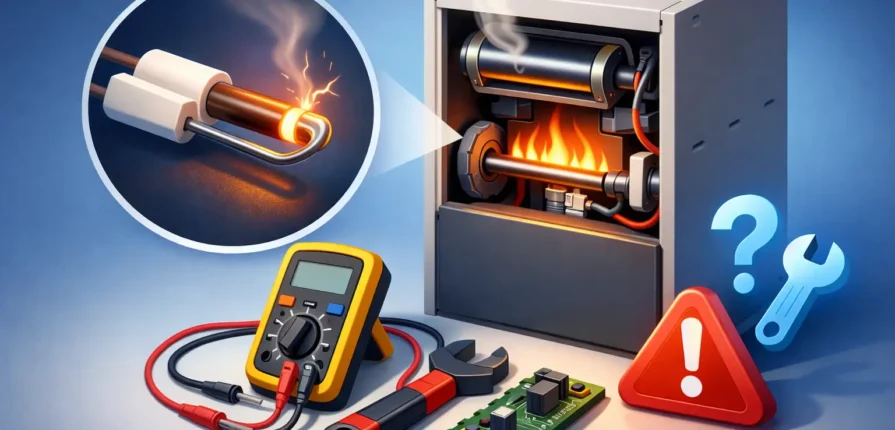
A furnace can sound like it is starting normally, then shut down before the burners ever light. That is often when homeowners search for how to troubleshoot furnace ignitor problems. The ignitor is a small part, but it has a big job: it starts the heating cycle safely. A dirty sensor, weak airflow, bad control board, or failed ignitor can all create similar symptoms, so a careful process matters.
Before removing a panel or ordering a replacement part, start with the simple checks. Many no-heat calls come down to a thermostat setting, tripped breaker, clogged filter, or furnace door that is not fully latched. If those basics check out, it is time to look more closely at what the furnace is doing during its startup sequence.
How to Troubleshoot Furnace Ignitor Issues Safely
Begin by setting the thermostat at least five degrees above the current room temperature and switching the system to Heat. Listen and watch through the furnace access panel window, if your unit has one. A typical modern gas furnace starts by calling for heat, running the inducer motor, proving venting through a pressure switch, heating or sparking the ignitor, opening the gas valve, and then confirming flame.
The point where that sequence stops offers a useful clue. If nothing happens at all, the problem may be thermostat, power, wiring, or a control board issue rather than the ignitor. If the inducer starts but the ignitor never glows or clicks, an ignitor-related fault becomes more likely. If burners light briefly and then go out, the flame sensor is often the better suspect.
Turn off electrical power to the furnace at the service switch or breaker before opening any access panel. Gas appliances use line voltage, fragile components, and safety controls that should not be bypassed. Never jumper a pressure switch, safety switch, or rollout switch just to see whether the furnace will run. Those switches are there to protect your home and family.
Check the thermostat, power, and furnace door
Make sure the thermostat has fresh batteries if it uses them, is set to Heat, and has a temperature setting high enough to call for heat. Confirm the furnace breaker has not tripped. Then check the service switch near the furnace. It often looks like an ordinary light switch and can be turned off by accident.
Next, inspect the blower compartment door. Most furnaces have a door safety switch that prevents operation when the panel is loose or out of position. Reinstall the panel firmly and make sure it is seated correctly. This is a simple step, but it can save a needless service call.
Replace a severely dirty air filter
A plugged filter does not usually burn out an ignitor directly, but restricted airflow can cause overheating and safety shutdowns that look like an ignition failure. Pull out the filter and hold it up to a light. If little light passes through it, replace it with the correct size and airflow rating.
Do not run the furnace long-term without a filter. It may seem like a quick test, but it allows dirt into the blower and heat exchanger. If a clean filter does not solve the issue, put the access panel back on before trying another heating cycle.
Read the furnace diagnostic light
Most newer furnaces have an LED diagnostic light visible through a small sight glass or after removing the front panel. The light may flash a coded pattern that points toward an open pressure switch, ignition lockout, flame-sensing problem, limit switch, or control board fault. The code chart is usually attached inside the furnace cabinet.
Write down the exact flash pattern before resetting anything. A code does not always identify the failed part by itself, but it gives a technician a solid starting point. Repeatedly turning power off and on can clear a lockout temporarily while hiding a recurring problem.
Identify the Type of Furnace Ignitor
Not every furnace uses the same ignition system. Knowing what you have helps you understand what you are hearing and seeing.
Most furnaces installed in the last couple of decades use a hot surface ignitor. It is a small ceramic-based element that glows bright orange or yellow-white just before the gas valve opens. These ignitors are effective, but they are brittle. Age, voltage problems, cracks, and simple wear can cause them to fail.
Some systems use an intermittent pilot or direct spark ignitor. Instead of glowing, the unit makes a fast clicking sound and produces a spark to light the burners. A spark system can fail because of a worn electrode, damaged wire, poor ground, or a faulty ignition control.
Older furnaces may have a standing pilot flame. If the pilot is out, homeowners should follow the lighting instructions printed on the furnace. If it will not stay lit, do not keep trying to relight it. The thermocouple, pilot assembly, gas supply, or another safety component may need professional service.
Signs the Ignitor May Be Bad
A failed hot surface ignitor commonly creates a specific pattern. The furnace starts its inducer motor, you may hear a relay click, but no orange glow appears. After a short wait, the furnace shuts down or tries again. It may eventually enter lockout mode and stop responding until reset.
If you can safely see the ignitor with the panel removed and power off, look for obvious damage such as a broken element, white spots, chipped ceramic, or a loose connector. Do not touch the ignitor surface with bare fingers. Oils from skin can create hot spots and shorten its life. Do not scrape, sand, or attempt to clean a hot surface ignitor.
A visual inspection has limits. An ignitor can look normal and still be electrically open or too weak to light reliably. Proper diagnosis may require checking resistance, voltage, wiring, and the sequence commanded by the control board. That work is best left to a trained HVAC technician, particularly on an older furnace where several components may be contributing to the failure.
Do Not Confuse an Ignitor Problem With a Flame Sensor Problem
The difference is timing. An ignitor problem happens before the burners light. A flame sensor problem usually allows the burners to light for a few seconds, then shuts them off. The furnace may repeat this cycle several times before going into lockout.
Flame sensors can collect residue over time and may be cleaned by a professional during a tune-up. But a burner that lights and drops out can also point to grounding issues, gas pressure concerns, venting trouble, or a failing control board. Replacing the ignitor in that situation may not fix anything.
When to Stop Troubleshooting and Call for Service
A homeowner can safely check settings, breaker power, filters, panels, and diagnostic codes. Beyond that, furnace repair can involve gas piping, combustion, high voltage, and safety circuits. Calling early is usually less expensive than replacing the wrong part or causing further damage.
Shut the furnace off and request service right away if you smell gas, see soot, notice a yellow or lazy burner flame, hear a boom when burners light, or have a carbon monoxide alarm activate. Leave the building and contact the gas utility or emergency services if you suspect a gas leak. Do not operate switches, use a phone inside the home, or try to locate the leak yourself.
Service is also the right call when an ignitor keeps failing. A replacement ignitor should not be treated as a permanent fix until the technician checks voltage, furnace grounding, airflow, burner condition, and control operation. The part may be the victim, not the cause.
For homeowners in Sunbury and nearby central Ohio communities, Professional Trade Service can diagnose no-heat problems, explain what failed in plain language, and make the repair without guesswork. During a cold spell, prompt service matters because a furnace that is cycling unsuccessfully can leave a home cold fast.
A furnace does not need to be making a dramatic noise to need attention. If it starts, stops, and never produces heat, turn it off after a few failed attempts and have the ignition sequence checked before a small problem becomes a no-heat emergency.
Recent Comments