
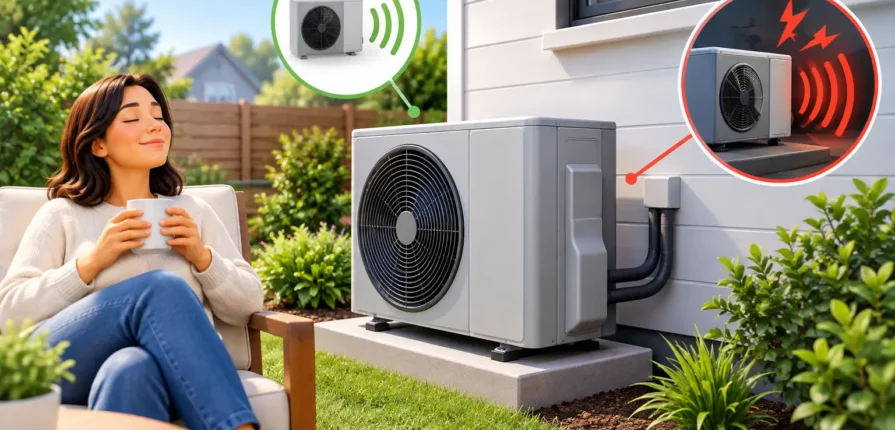
A heat pump does not run silently, especially during an Ohio winter. You may hear the outdoor unit start, the fan move air, or a brief change in sound when the system switches modes. Normal heat pump noise is usually steady, short-lived, and not loud enough to disrupt the room. Sudden banging, sharp squealing, grinding, or rattling that keeps getting worse is different. That is your system telling you it needs attention.
Knowing the difference can help you avoid an unnecessary emergency call while also preventing a small repair from turning into a major breakdown. Here is what homeowners and property managers should listen for.
Normal Heat Pump Noise You May Hear
Most heat pumps make some operating sounds. The key is whether the sound is familiar, brief, and consistent with the system turning on or off.
A low hum from the outdoor unit is normal. The compressor and fan motor both create a steady running sound, much like a central air conditioner. You may also hear a soft rush of air through indoor vents when the blower starts.
In heating mode, a heat pump may make a noticeable whooshing sound as it changes from heating to defrost mode. During cold, damp weather, frost can build up on the outdoor coil. The system periodically reverses operation for a few minutes to melt that frost. A short whoosh or change in compressor sound during this process is usually expected.
Some homeowners also hear light ticking or popping from ductwork. Metal ducts expand and contract as temperatures change. This is common when a system first starts after sitting idle. It should be occasional, not loud enough to sound like something is loose or striking the ductwork.
Heat Pump Noise That Needs a Service Call
The sound matters, but so does the timing. If the noise begins suddenly, happens every time the system runs, or comes with weak heating, poor airflow, ice buildup, or a higher utility bill, do not ignore it.
Banging or Clanking
A loud bang or clank can mean a loose part inside the outdoor unit. Fan blades, mounting hardware, compressor components, or damaged panels can all create this kind of noise. Debris such as a stick, stone, or loose piece of insulation may also be contacting the fan.
Turn the system off if the banging is severe or continuous. Running a unit with a loose fan blade or internal component can cause more damage quickly. Do not reach into the outdoor unit or remove panels yourself. Electrical components and moving parts should be handled by a trained HVAC technician.
Grinding or Metal-on-Metal Sounds
Grinding is not a normal operating sound. It may point to failing motor bearings, a damaged fan motor, or a serious compressor issue. The longer the equipment runs in this condition, the greater the chance of turning a repair into a replacement-level problem.
If you hear grinding, shut the heat pump down and schedule service as soon as possible. If outdoor temperatures are low and you need heat right away, a technician can assess whether the system can safely use auxiliary heat while repairs are made.
Squealing or Screeching
A high-pitched squeal often involves a motor or blower problem. Depending on the system, the cause may be worn bearings, a failing blower motor, or a component that is beginning to bind. Older systems may have belt-driven equipment indoors, and a worn belt can also squeal.
Squealing may start only when the system first turns on, but that does not make it harmless. A motor that is struggling can fail without much warning, leaving you without heating or cooling when you need it most.
Rattling That Does Not Stop
A light rattle can be as simple as a loose access panel, vibration against a line set, or leaves caught around the outdoor unit. But persistent rattling can also indicate loose electrical components, damaged fan hardware, or a failing compressor mount.
You can safely check for obvious outdoor debris after turning the system off at the thermostat. Keep branches, leaves, snow, and stored items away from the unit. Do not cover the unit or block its airflow. If the rattle remains after the area is clear, have it inspected.
Hissing or Bubbling
A brief hiss during a defrost cycle can be normal. Constant hissing, bubbling, or gurgling is worth checking. These sounds can sometimes indicate a refrigerant leak or an issue with refrigerant flow.
A heat pump needs the proper refrigerant charge to heat and cool efficiently. Low refrigerant can lead to longer run times, poor comfort, frozen coils, and compressor damage. Refrigerant work is not a do-it-yourself repair. It requires proper testing, leak repair, and charging procedures.
Why Your Heat Pump May Be Louder in Winter
Cold weather puts more demand on a heat pump. The unit may run longer, enter defrost mode more often, and use supplemental electric heat when temperatures drop. More operating time means more opportunities to notice sounds you may not hear during mild weather.
Ice can also contribute to heat pump noise. A light coating of frost that clears during defrost is usually normal. Heavy ice that stays on the coil, fan guard, or base of the unit is not. It may indicate drainage trouble, a defrost control problem, restricted airflow, or low refrigerant.
Snow deserves attention as well. Gently clear snow away from the unit so it can breathe, but do not chip ice off the coil or pour hot water over it. You can bend delicate coil fins or create an electrical hazard. If the unit is frozen solid or the fan is striking ice, turn it off and call for service.
What to Check Before Calling for Heat Pump Service
A few basic checks can provide useful information and may solve a simple problem. Start by confirming the thermostat is set to heat and the temperature setting is above the current indoor temperature. Make sure the air filter is clean and properly installed. A clogged filter restricts airflow and can create performance issues that make the system work harder.
Then look at the outdoor unit from a safe distance. Check for leaves, branches, snow buildup, or anything stored too close to the equipment. Listen for whether the sound comes from the outdoor unit, the indoor air handler, the vents, or the ductwork.
Pay attention to what happens with your comfort. Is the system heating the building? Is the airflow weak? Does the noise happen only in defrost mode, only when the fan starts, or all the time? Those details help a technician diagnose the issue faster.
Do not keep resetting breakers or repeatedly cycling the thermostat if the unit is making severe noise. A tripped breaker, burning odor, smoke, or loud electrical buzzing calls for immediate professional help. Shut the system off if you can do so safely.
Preventing Unnecessary Heat Pump Noise
Regular maintenance is the best way to catch noise-producing problems early. During a professional tune-up, a technician can inspect electrical connections, check fan motors and blades, clean coils, verify refrigerant performance, examine the defrost system, and look for loose panels or vibration points.
Maintenance does not eliminate every repair, especially on an aging system. It does give you a better chance of finding worn parts before they fail on the coldest night of the year. It also helps protect efficiency, which matters when heating costs rise during long winter stretches.
For rental homes and commercial properties, routine service is especially valuable. A noisy system can become a comfort complaint, a tenant issue, or an unexpected interruption to business operations. Addressing it early is usually easier to schedule and easier on the budget.
When Fast Help Makes Sense
Call for prompt service when heat pump noise is loud, new, worsening, or paired with poor heating or cooling. Grinding, repeated banging, electrical buzzing, burning smells, and a fan that will not spin freely should not wait. If the system stops heating during extreme weather, emergency service may be the right call.
Professional Trade Service helps central Ohio homeowners and property managers identify the cause without guesswork. A proper diagnosis looks beyond the sound itself to check airflow, electrical components, refrigerant performance, and the condition of the full system.
Your heat pump should be heard working, not heard struggling. If a sound makes you stop and wonder whether something is wrong, trust that instinct and get it checked before the problem gets louder.
Recent Comments