
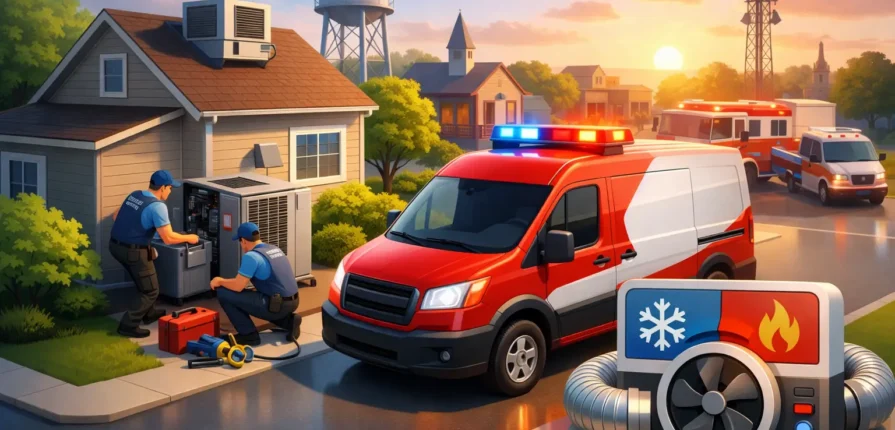
A furnace that quits at 2 a.m. in January is not a minor inconvenience. Neither is an AC system that fails during a sticky Ohio heat wave when the house is full of kids, pets, or tenants. When people search for Sunbury Ohio emergency HVAC, they usually are not browsing. They need answers fast, they need someone to show up, and they need the problem handled the right way.
That is what emergency HVAC service is really about. It is not just after-hours availability. It is knowing which problems can wait until morning, which ones should be shut down immediately, and how to get your comfort system back online without wasting time or money.
What counts as a Sunbury Ohio emergency HVAC call?
Not every HVAC issue is a true emergency, but some clearly are. If your furnace stops working when outdoor temperatures are dangerously low, that is an emergency. If your AC fails during extreme heat and someone in the home is elderly, very young, or medically vulnerable, that can be an emergency too.
Gas smells, burning odors, tripped breakers that keep tripping, loud banging from a furnace, smoke, or a system that will not shut off are all situations that deserve immediate attention. Water leaking around HVAC equipment can also move from nuisance to emergency quickly if it threatens ceilings, flooring, or electrical components.
There are also gray areas. A weak airflow problem on a mild spring afternoon might wait until regular business hours. But the same issue during a weekend cold snap, in a home with frozen pipes at risk, becomes much more urgent. That is why experience matters. A good HVAC company helps you sort out the difference instead of pushing every service call into the same bucket.
What to do before you call for emergency service
A few quick checks can save time and may even solve the problem. Start with the thermostat. Make sure it is set to heat or cool as needed, the temperature setting is correct, and the batteries are not dead. Then check the breaker panel. If the HVAC breaker has tripped once, reset it one time. If it trips again, stop there. Repeated breaker trips usually point to a deeper electrical or equipment issue.
Next, look at the filter. A badly clogged filter can choke airflow, overheat a furnace, freeze an AC coil, and cause shutdowns that look worse than they are. If the filter is dirty, replace it. For air conditioning problems, check the outdoor unit and make sure it is not blocked by debris, snow, or heavy vegetation.
If you smell gas, see smoke, or hear electrical buzzing combined with a burning smell, do not keep troubleshooting. Shut the system down and call for help right away. In a possible gas leak situation, leave the area and follow proper safety steps first.
Why emergency HVAC problems happen at the worst times
Most emergency calls do not come out of nowhere. They usually build over time and show up when the system is working hardest. In Sunbury and across central Ohio, that means furnaces fail on the coldest nights and AC systems give up during the hottest, most humid stretches.
Parts wear down under stress. Capacitors weaken, blower motors run hot, ignitors fail, drain lines clog, contactors stick, and aging systems lose the margin they once had. A unit may seem fine during mild weather, then fail as soon as it has to run for hours at a time.
Skipped maintenance adds to the risk. Dirty coils, low refrigerant, loose wiring, neglected filters, and minor ignition issues can sit quietly for months. Then one hard-weather weekend turns a manageable repair into an after-hours breakdown. That does not mean every emergency was preventable, but many are. Routine tune-ups do not eliminate all failures, yet they often catch the kind of problems that become expensive at inconvenient times.
What a good emergency HVAC visit should look like
When you need urgent service, speed matters, but so does clarity. A reliable technician should do more than rush in and swap a part. The right approach starts with a real diagnosis. That means checking system operation, safety controls, airflow, electrical components, and the condition of the equipment instead of guessing.
You should also get straight answers. If the issue is a failed ignitor, clogged drain, bad capacitor, or faulty blower motor, the explanation should be plain and practical. If the repair will get you safely through the season, say so. If the system is on borrowed time and replacement should be discussed soon, say that too.
This is especially important with older equipment. Emergency service is about restoring heat or cooling now, but it should also help you make a smart next decision. Sometimes that means repairing a unit because the problem is isolated and the system still has life left. Other times it means avoiding repeated repair bills on equipment that is nearing the end.
Repair or replace during an HVAC emergency?
This is one of the hardest calls homeowners and property managers make under pressure. Nobody wants to replace a furnace or AC system unexpectedly. At the same time, nobody wants to keep paying for emergency repairs on a unit that keeps failing.
The answer depends on age, condition, repair cost, parts availability, and how dependable the system has been. If a repair is reasonable and the rest of the system is solid, repair often makes sense. If the equipment is older, inefficient, and starting to stack up service calls, replacement may be the more cost-effective move.
Emergency situations also bring timing concerns. If a key part is not readily available and the home or building cannot go without heating or cooling, replacement may become the faster path back to normal. A no-nonsense contractor should walk you through the trade-offs clearly, not pressure you into the biggest ticket.
Why local experience matters in Sunbury
Emergency HVAC service is not just about technical skill. It is also about knowing the area, the weather swings, and the kinds of systems commonly installed in local homes and small commercial buildings. Older furnaces in established neighborhoods, newer high-efficiency systems in expanding developments, rooftop equipment on light commercial properties – each one brings different failure points and repair needs.
Response time matters too. When a company already serves Sunbury and nearby communities regularly, it is better positioned to get help moving without the delays that come from dispatching from far outside the area. That local coverage also helps when HVAC issues overlap with other problems, like a condensate leak near electrical components or a comfort complaint tied to ventilation or thermostat wiring.
For many customers, having one trusted company that can handle HVAC, plumbing, and electrical work is a practical advantage. Problems in real homes do not always stay neatly separated.
How to lower the odds of another emergency
The best emergency call is the one you never have to make. The simplest way to reduce risk is regular maintenance before peak season starts. A furnace tune-up in the fall and an AC check in the spring gives technicians a chance to catch weak parts, airflow restrictions, safety issues, and performance problems before the weather gets severe.
Filter changes matter more than most people realize. So does paying attention to warning signs. Short cycling, uneven temperatures, rising utility bills, strange odors, rattling, delayed ignition, and weak airflow are all worth addressing early.
Property managers and business owners should be especially proactive. One HVAC failure can affect multiple tenants, employees, or customers at once. Preventive service costs less than scrambling during an outage, and it gives you a better shot at scheduling repairs before they become urgent.
Professional Trade Service has built its reputation around that kind of practical, responsive work – fixing urgent problems fast while helping customers avoid the next one.
When your heat or AC goes down unexpectedly, the goal is simple. Stay safe, do the basic checks you can do without risk, and call for help when the problem is beyond a quick fix. A good emergency HVAC team will not waste your time, talk in circles, or leave you guessing. They will find the problem, explain it clearly, and get your system back on track so your home or building feels normal again.
Recent Comments