
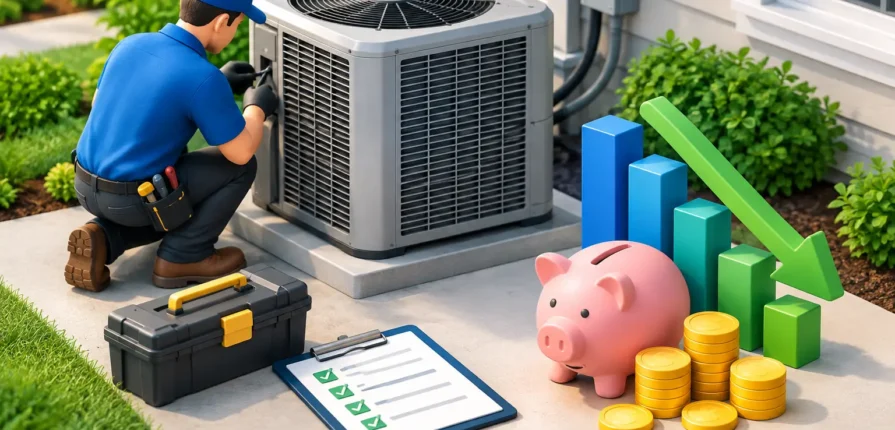
A maintenance plan is not magic, and it will not make an old furnace or air conditioner run forever. What it can do is catch the small problems that turn into expensive calls when central Ohio temperatures are at their worst. This HVAC maintenance plan savings example puts real-world numbers around the decision, so you can judge whether routine service makes sense for your home or property.
For homeowners, the value is usually not one huge discount. It is the combination of fewer surprise repairs, lower energy waste, a better chance of avoiding premature replacement, and priority help when the system does need attention. For a property manager, those same benefits can mean fewer tenant complaints and less disruption to daily operations.
HVAC Maintenance Plan Savings Example for a Typical Home
Consider a Delaware County homeowner with a 12-year-old central air conditioner and a 10-year-old gas furnace. Both systems still heat and cool the house, but neither is new enough to ignore. The homeowner enrolls in a maintenance plan that includes seasonal checkups, cleaning, safety inspections, and reminders to schedule service before the busy season.
During a spring A/C visit, the technician finds a weak capacitor and a dirty outdoor coil. The system is still cooling, so it would be easy to put off the repair. But a failing capacitor can leave the homeowner without air conditioning on the first 90-degree weekend, and a dirty coil makes the unit work harder than it should.
Replacing the capacitor during the scheduled visit might cost roughly $200 to $350, depending on the equipment and repair needed. Cleaning the coil and addressing the issue early helps prevent an emergency no-cool call, which can add after-hours charges and may uncover additional strain on the compressor. A compressor replacement can run into the thousands, and on an older unit, replacement may become the smarter option.
Now add the furnace check in the fall. The technician finds a worn igniter and a partially blocked condensate drain. Replacing an igniter before it fails may cost a few hundred dollars. Waiting until the first freezing night could mean a no-heat call, a cold house, and a repair that cannot wait until regular business hours.
In this example, the homeowner may spend several hundred dollars on planned repairs and annual maintenance. That is still far less painful than an emergency breakdown combined with major component damage. The savings come from controlling the problem early, rather than hoping it holds together through another season.
Where the Savings Actually Come From
A good maintenance plan should provide more than a quick look at the equipment. It should give a trained technician time to inspect operation, identify wear, clean critical components, and explain what needs attention now versus what can be planned for later. The financial benefit generally shows up in four places.
Fewer emergency repairs
Emergency repairs are expensive because the problem is usually more advanced by the time it becomes obvious. A blower motor that has been making noise for months may finally fail on the coldest night of the year. A clogged drain may become a water leak. A loose electrical connection can cause intermittent problems that are harder to diagnose after a complete shutdown.
Maintenance does not prevent every failure. Parts can fail without warning, especially on older equipment. But inspections create a better chance of finding warning signs before comfort is lost. Many plans also provide priority scheduling, which matters when every HVAC contractor is busy during a heat wave or cold snap.
Lower monthly energy use
Heating and cooling are among the largest energy costs in most homes. A system with restricted airflow, dirty coils, weak electrical components, or incorrect refrigerant charge often runs longer to do the same job. That wasted runtime shows up on the utility bill.
The exact savings depend on the equipment, the home, thermostat habits, insulation, ductwork, and electric or gas rates. A homeowner should be cautious about anyone promising a guaranteed percentage without inspecting the system. Still, keeping filters changed, coils clean, drains clear, and moving parts checked gives the equipment a fair chance to operate as designed.
Even a modest reduction in seasonal energy waste can help offset part of the maintenance cost. More importantly, efficient operation reduces the strain that leads to avoidable wear.
Longer equipment life
An air conditioner or furnace is a major home investment. Replacing one years earlier than necessary can turn a manageable repair decision into a major budget hit. Regular maintenance cannot erase age, corrosion, or outdated efficiency. It can help prevent neglect from shortening the life you should reasonably expect from the system.
For example, a furnace that overheats because of a dirty filter or airflow issue can repeatedly trip safety controls and stress internal components. An air conditioner with a dirty condenser coil may run hot and put extra pressure on the compressor. Correcting those conditions is less exciting than buying new equipment, but it is often much cheaper.
Better budgeting and fewer surprises
The best maintenance visits give you information. If a technician sees a part beginning to fail, or notices that an aging system is becoming less reliable, you can make a plan before you are forced into a same-day decision.
That matters for families and businesses alike. You may decide to repair the equipment and keep it running another year. Or you may choose to start budgeting for replacement before the next major failure. Either choice is easier when you are not making it in a freezing house or a hot office.
A Simple Annual Cost Comparison
Here is a practical way to look at the numbers. Say an annual maintenance plan and two seasonal visits cost $250 to $500, depending on the plan and equipment. During the year, the technician catches a weak capacitor and worn furnace igniter. Planned repairs total $500.
The homeowner’s maintenance-related cost for the year is then roughly $750 to $1,000. That may sound like a lot until you compare it to a worst-case year without preventive service: an emergency A/C call, a failed major component, higher utility use from a neglected system, and the possibility of replacing equipment before you were ready.
No honest contractor can promise that maintenance will save a fixed dollar amount every year. Some years, the system may need little more than cleaning and inspection. Other years, maintenance reveals a repair that was already developing. The point is not to spend money for the sake of spending it. The point is to find issues while the repair is usually simpler, less urgent, and easier to schedule.
When a Maintenance Plan Makes the Most Sense
Maintenance plans are especially useful for systems that are five years old or older, homes with pets or heavy filter use, properties with tenants, and households that cannot afford a no-heat or no-cool surprise. They also make sense for homeowners who want a technician to keep a record of the equipment’s condition over time.
If you have a brand-new system, maintenance still matters. Manufacturer warranties often require proper care, and the first few years are the right time to establish good filter and service habits. If your system is near the end of its expected life, a plan can help you decide whether continued repairs are worthwhile or whether replacement is becoming the better financial move.
The trade-off is straightforward: a plan is an ongoing expense, and it cannot guarantee that nothing will break. Its value is highest when the service is thorough, the technician explains findings plainly, and you use the information to make timely decisions.
What to Expect From a Useful Plan
Before signing up, ask what the visits actually include, whether repairs receive any plan-related savings, and how priority scheduling works. A real seasonal checkup should cover safety, system performance, airflow, electrical connections, filters, drainage, and visible signs of wear. For furnaces, combustion and carbon monoxide safety checks are particularly important.
Avoid plans that feel like a rushed sales visit. You should receive clear recommendations, honest answers, and no pressure to replace equipment that can still be repaired safely and sensibly. A dependable contractor will tell you when a repair is worth making and when it is time to discuss replacement options.
For homeowners and property managers in the Sunbury and Lewis Center area, Professional Trade Service can help keep heating and cooling equipment on a sensible maintenance schedule. The goal is simple: address small issues before they become urgent, protect your comfort through Ohio’s toughest weather, and give you a clear picture of what your system needs next.
Recent Comments