
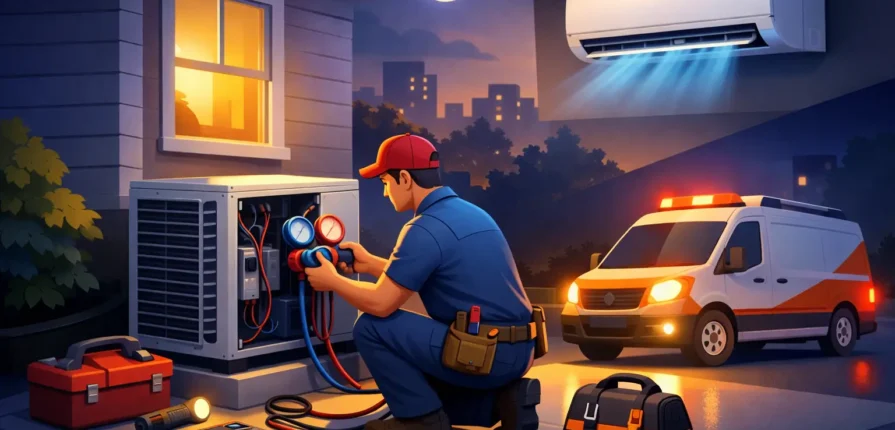
When your air conditioner quits at 10 p.m. on a July night, it stops feeling like a small inconvenience fast. Emergency AC repair after hours becomes a real priority when the house won’t cool down, the kids can’t sleep, an older family member is at risk from the heat, or a business can’t keep customers and staff comfortable until morning.
Not every AC problem needs a midnight service call. Some do. The key is knowing the difference, taking a few safe steps at home, and calling a company that can actually respond when the temperature is still climbing inside.
When emergency AC repair after hours makes sense
A system that is blowing air but not cooling may be urgent, but it is not always an emergency. A system that has completely shut down during extreme heat is a different story. If someone in the home has health concerns, if indoor temperatures are rising quickly, or if the property includes heat-sensitive equipment or tenants, waiting until normal business hours may not be the best option.
There are also signs that go beyond comfort. If you smell something burning, hear loud electrical buzzing, see water pooling around the unit, or notice the breaker keeps tripping, the issue may involve electrical risk or the chance of more expensive damage if the system keeps trying to run. In those cases, turning the unit off and calling for after-hours service is the safer move.
For commercial spaces and rental properties, the decision is often tied to liability as much as comfort. Restaurants, offices, retail stores, and occupied rentals can all be affected by a loss of cooling after hours. A fast response can help prevent complaints, protect equipment, and reduce the chances of a larger repair the next day.
What you should check before you call
A good HVAC company will want you to stay safe first, not play technician in the dark. Still, there are a few simple things worth checking because they can save time and, in some cases, solve the problem.
Start with the thermostat. Make sure it is set to cool and that the temperature is lower than the current room temperature. It sounds basic, but thermostat settings get changed by accident all the time, especially in busy households or commercial buildings.
Next, check the air filter. A severely clogged filter can restrict airflow enough to cause cooling problems and even freeze the evaporator coil. If the filter looks packed with dust, replace it. If you see ice on the indoor line or near the air handler, turn the system off and let it thaw. Running a frozen unit can make the problem worse.
Take a look at the breaker panel too. If the AC breaker has tripped once, you can reset it one time. If it trips again, stop there. Repeated tripping usually points to a deeper electrical or mechanical problem, and that is not something to keep testing.
Finally, inspect the outdoor unit. If it is packed with leaves, grass clippings, or debris, airflow may be restricted. Clear away obvious buildup, but do not open the equipment or start pulling panels off. After-hours service calls go more smoothly when the technician arrives to a system that has not been taken apart by a frustrated homeowner.
Signs the problem is bigger than a quick fix
Some AC issues show up slowly. Others make it obvious right away that something is wrong. Warm air from the vents, weak airflow, short cycling, strange odors, and loud grinding or banging noises usually mean more than a thermostat adjustment is needed.
Refrigerant-related problems are one example. If your system is low on refrigerant, adding more is not a real fix unless the leak is found and repaired. If the evaporator coil is frozen, there may be an airflow issue, a refrigerant issue, or both. That is why quick internet advice does not always help much in the middle of the night. The symptom is visible, but the cause still needs proper diagnosis.
Capacitor failures are another common reason for after-hours AC calls. When a capacitor fails, the system may hum, try to start, or stop cooling altogether. It can look like a complete system failure even though one part caused it. The same goes for contactors, blower motors, condensate drain problems, and failing compressors. Some repairs are straightforward. Some are not. You do not know which one you have until a trained technician checks it.
What to expect from an after-hours AC service call
The best emergency service is simple and clear. You call, explain what is happening, and get an honest response about timing and next steps. A technician arrives, checks the system, identifies the failure, and explains the repair in plain terms before work begins.
You should expect real diagnostics, not guesswork. That matters even more after hours, because nobody wants to pay for a rushed repair that does not solve the actual problem. A dependable company will tell you whether the issue can be repaired that night, whether a temporary solution makes sense, or whether replacement should be discussed if the unit is beyond practical repair.
This is also where experience matters. Older systems can be unpredictable, and emergency calls often happen at the worst possible time – during a heat wave, on weekends, or on holidays when equipment is working its hardest. An experienced technician can usually sort out the likely cause faster, which helps get cooling restored sooner.
The trade-off between waiting and calling now
There is no single answer for every situation. If it is a mild evening, the home is staying reasonably comfortable, and nobody is at elevated health risk, waiting until morning may be perfectly reasonable. If the house is pushing into unsafe temperatures, that changes things.
The age and condition of the system matter too. If your AC has been struggling for weeks, making noise, or cycling on and off before finally quitting, an after-hours breakdown is often the end result of a larger problem. In that case, emergency service can restore cooling, but it may also confirm that the better long-term decision is repair planning or replacement.
Budget is part of the equation as well. After-hours service is valuable because it brings immediate help when most shops are closed. That said, homeowners and property managers should still ask clear questions about the diagnostic process, repair options, and whether the fix is expected to hold or simply get the system through the night.
How to reduce the odds of a late-night breakdown
Most emergency calls do not come out of nowhere. Many systems give warnings first. Airflow gets weaker. Energy bills creep up. Rooms cool unevenly. The outdoor unit starts sounding rough. Then a hot day pushes the system over the edge.
Seasonal maintenance helps catch those problems before they become after-hours failures. A tune-up can identify weak capacitors, dirty coils, drainage issues, worn electrical components, and refrigerant concerns before they leave you without cooling when you need it most. It is not a guarantee against every emergency, but it does stack the odds in your favor.
Regular filter changes matter just as much. So does keeping the outdoor unit clear and paying attention when the system starts acting differently. Small changes in performance are easy to ignore until they turn into a no-cooling call at the worst possible hour.
For property managers and small business owners, having a service relationship in place before an emergency happens can save a lot of stress. When tenants call late, or cooling fails after business hours, you want a number you trust – not a random search result and a gamble.
Choosing the right company for emergency AC repair after hours
Fast service matters, but so does competence. You need a company that answers the phone, shows up prepared, and explains the repair without a sales pitch getting in the way. That is especially true when people are tired, hot, and trying to make a good decision quickly.
Look for a contractor with real experience, emergency availability, and a track record of straightforward service. If the company also handles plumbing and electrical work, that can be useful when the issue crosses trades, such as a drain backup, power problem, or related system fault. In central Ohio, that kind of one-call convenience can make a long night a lot easier.
Professional Trade Service has built its reputation around that kind of response – practical help, honest communication, and technicians who know how to find the problem and get to work.
When your AC goes down after hours, you do not need a complicated process. You need a calm plan, a safe first check, and a reliable team that can get your comfort back on track without wasting time.
Recent Comments