
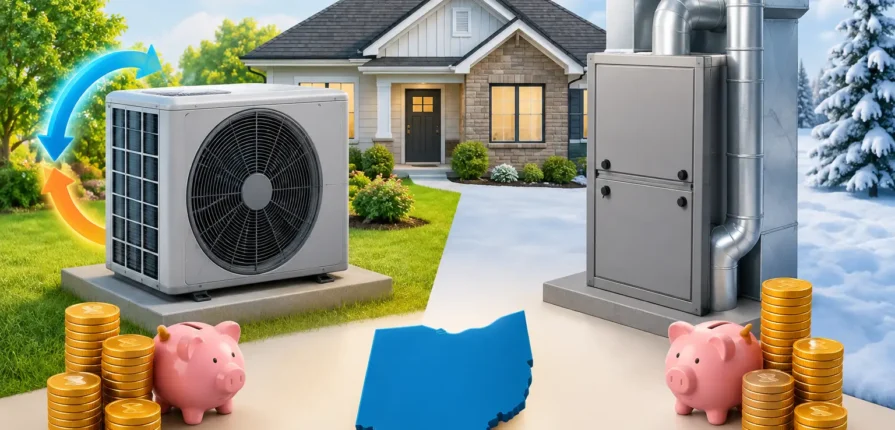
A failed heating system rarely waits for a convenient time. When the house is cold and replacement quotes are on the table, heat pump versus furnace costs become more than a research topic – they are a decision that affects your comfort, monthly bills, and budget for years.
For central Ohio homeowners, there is no one-size-fits-all winner. A furnace often costs less to install and delivers powerful heat during our coldest stretches. A heat pump can cost more upfront but may reduce heating and cooling costs because it moves heat instead of creating it. The right choice comes down to your current equipment, fuel source, insulation, electrical setup, and how long you plan to stay in the home.
Heat Pump Versus Furnace Costs: The Upfront Price
Installation cost is usually the first number homeowners see, but it should not be the only one they use to make a decision. The equipment is only part of the price. Proper sizing, ductwork condition, thermostat compatibility, electrical work, permits, labor, and removal of old equipment all matter.
A new gas furnace installation commonly falls in the range of about $3,500 to $8,500 for many homes. High-efficiency equipment, complex installations, zoning work, or duct repairs can raise that number. If a new air conditioner is also needed, a furnace and A/C replacement package will naturally cost more than replacing the furnace alone.
A standard air-source heat pump installation often runs roughly $5,000 to $12,000 or more. The range is broad because heat pumps are available in several efficiency levels and configurations. Replacing both an older A/C unit and furnace with a heat pump system may make financial sense, particularly when the home already needs cooling equipment.
A dual-fuel system, which pairs a heat pump with a gas furnace, is another option for Ohio homes. The heat pump handles much of the mild and moderately cold weather, while the furnace takes over when outdoor temperatures drop far enough that gas heat is the better performer. It costs more initially than installing one heating source, but it can provide a practical balance of efficiency and cold-weather reliability.
What Changes the Installation Quote?
Two homes of the same size can receive very different replacement estimates. That is normal. A professional estimate should look beyond square footage and account for the condition of the whole system.
An older home may need duct sealing or return-air improvements before a new system can perform correctly. A heat pump may require electrical upgrades, especially if the home has an older panel or if electric backup heat is part of the design. Refrigerant line replacement, a new pad, condensate drainage, smart thermostat wiring, and access challenges can also affect the total.
Equipment efficiency matters, too. A basic unit costs less, but higher-efficiency models may use less energy and provide better comfort features. The key is not simply buying the highest-rated system available. It is choosing equipment that fits the home and provides a reasonable payoff for how long you expect to own it.
Monthly Heating Costs in an Ohio Winter
The biggest difference between a heat pump and a furnace shows up after installation, on the utility bill. But the answer depends heavily on whether your furnace uses natural gas, propane, or electric resistance heat.
A gas furnace burns fuel to make heat. Modern high-efficiency furnaces can convert a large share of that fuel into usable heat, making them a dependable and often cost-effective choice where natural gas is available. In central Ohio, gas heat remains popular because it produces warm air quickly during freezing weather.
A heat pump uses electricity to transfer heat from outside air into your home. Even when it is cold outside, there is heat energy available for the system to collect. Since it moves heat rather than generating it through combustion, it can deliver more heating energy than the electrical energy it uses during many outdoor conditions.
That does not mean a heat pump is automatically cheaper every month. When temperatures drop well below freezing, its efficiency falls and it may need backup heat. If that backup is electric resistance heat, operating costs can rise quickly. A properly designed cold-climate heat pump or dual-fuel setup can reduce that concern, but the system needs to be sized and configured correctly.
Utility rates also matter. A homeowner with low natural gas prices may see a smaller heating-cost advantage from a heat pump than someone who relies on propane or an older electric furnace. This is why a good contractor should consider your actual energy source and usage, not make promises based on a generic national average.
Cooling Costs Can Change the Decision
A furnace cannot cool your house by itself. It needs a separate air conditioner or an A/C coil and outdoor condenser to provide summer comfort. A heat pump provides both heating and cooling in one outdoor system, which changes the comparison.
If your air conditioner still works well and only the furnace has failed, replacing the furnace may be the lower-cost and more practical move. If both the furnace and air conditioner are near the end of their service life, a heat pump deserves a serious look because it replaces the cooling function too.
For homeowners replacing an aging A/C system, the price difference between a new central air conditioner and a heat pump may be smaller than expected. In that situation, the added heating capability can make the heat pump a stronger value, especially if you want to reduce propane use or have concerns about future fuel costs.
Repair, Maintenance, and Lifespan Costs
Neither option is maintenance-free. A gas furnace should receive annual service to check combustion, safety controls, venting, the heat exchanger, burners, and airflow. Those checks help catch safety issues and small repair needs before they become a no-heat emergency.
A heat pump also benefits from regular maintenance, ideally before the heating and cooling seasons. Technicians inspect refrigerant performance, electrical components, coils, drainage, airflow, and defrost operation. Because a heat pump works year-round, it can accumulate more operating hours than a furnace that only runs in winter.
A well-maintained gas furnace may last around 15 to 20 years, while a heat pump often lasts about 10 to 15 years. Actual lifespan depends on installation quality, maintenance, runtime, and whether the equipment is properly sized. An oversized system can short-cycle, while an undersized system can run too hard. Neither is good for comfort or long-term reliability.
When a Furnace Is Usually the Better Value
A furnace can be the sensible choice when natural gas is available, the existing central A/C is relatively new, and the home needs dependable high-output heat for winter. It may also be the easier replacement if your current ductwork, thermostat, venting, and electrical setup already support a compatible furnace.
For property owners focused on the lowest immediate replacement cost, a standard-efficiency or mid-efficiency furnace can offer a straightforward path back to reliable heat. The lowest quote is not always the best deal, though. Cheap installation work can lead to comfort problems, premature repairs, and lost efficiency.
When a Heat Pump Makes More Sense
A heat pump is worth considering when both heating and cooling equipment are aging, when the home uses propane or electric heat, or when reducing electricity and fuel use is a priority. It can also be a good fit for homes that have improved insulation, sealed air leaks, and upgraded windows, since a tighter home puts less demand on the heating system.
Cold-climate heat pumps have improved significantly, but homeowners should still ask how the system will perform during an Ohio cold snap. Ask what backup heat will be used, when it will turn on, and how that affects operating costs. Clear answers are more valuable than broad claims that one system is always cheaper.
Get a Cost Comparison Built Around Your Home
The best way to compare options is to request an estimate that shows the installed price, projected operating considerations, efficiency rating, warranty coverage, and any needed electrical or ductwork improvements. If rebates, tax credits, or utility incentives are available, ask how they apply to the exact equipment being quoted. Those programs can change, so confirm details before making a final decision.
Professional Trade Service can inspect your existing system, explain the real trade-offs, and provide a straightforward recommendation for your home. Whether you need fast furnace replacement or want to explore a heat pump, a properly planned installation gives you a better chance of staying comfortable when Ohio weather turns.
Recent Comments