
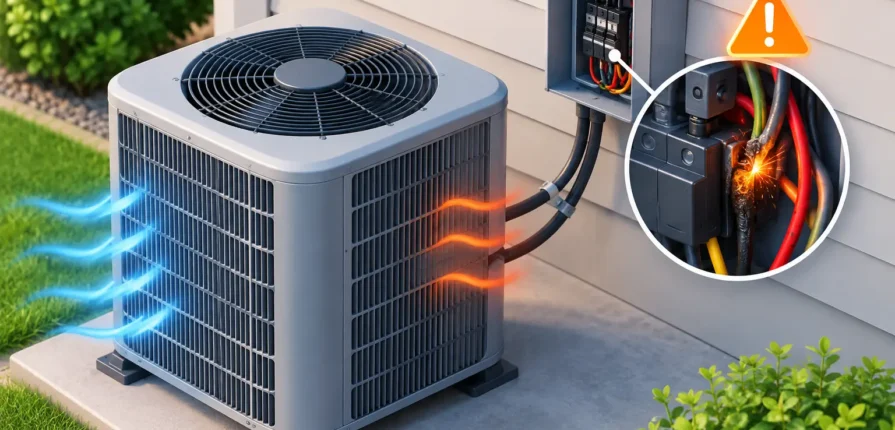
A thermostat calling for cool air but getting nothing, a furnace that starts and stops, or an AC unit that trips a breaker during the first hot stretch of summer can look like an HVAC failure. Often, the real problem is electrical. Electrical issues affecting HVAC performance can leave your home uncomfortable, drive up utility costs, and, in some cases, create a real safety concern.
Your heating and cooling system relies on more than the equipment outside or in the basement. It needs the right voltage, secure wiring, properly sized breakers, safe connections, and working controls to do its job. When one of those pieces fails, the symptoms can be confusing. A trained technician can sort out whether you need an HVAC repair, an electrical repair, or both.
How Electrical Problems Affect Heating and Cooling
Modern HVAC equipment is an electrical system as much as it is a heating and cooling system. The thermostat sends a signal. Control boards tell motors and safety switches what to do. Capacitors help motors start. The blower, condenser fan, compressor, igniter, and circulating pump all depend on reliable power.
That means a small electrical fault can have a large effect on comfort. A loose connection may create enough resistance to heat up and fail under load. Low voltage may keep a motor from starting correctly. A weak capacitor may make an air conditioner hum without cooling. In each case, the unit may appear to be failing mechanically when the root cause is electrical.
The trade-off is that not every power-related symptom points to a wiring problem. A dirty filter can make a blower work harder. A frozen evaporator coil can make an air conditioner run poorly. A failing compressor can also trip a breaker. Good diagnostics matter because replacing parts based on a guess wastes time and money.
Common Electrical Issues Affecting HVAC Performance
Tripped breakers and overloaded circuits
Your HVAC system should have dedicated electrical circuits sized for the equipment. If a breaker trips once during a severe storm or a power surge, reset it only if there is no burning smell, visible damage, or repeated tripping. If it trips again, leave it off and call for service.
A breaker that repeatedly trips is doing its job by protecting the circuit. The problem could be a shorted wire, failing motor, damaged compressor, loose connection, or an overloaded circuit. Continuing to reset the breaker can damage the equipment and increase the risk of overheated wiring.
This is especially common in older homes that have been updated over time. An older electrical panel may not be equipped for added HVAC loads, electric heat, a heat pump, or other major appliances. An inspection can determine whether the issue is inside the unit or in the home’s electrical supply.
Failing capacitors and contactors
Air conditioners and heat pumps use capacitors to provide the electrical boost needed to start and run certain motors. When a capacitor weakens, you may hear humming, notice delayed starts, or find that the outdoor unit runs intermittently. The system may still cool for a while, but it is working harder than it should.
A contactor is another common trouble spot. This electrical switch sends power to the outdoor unit when the thermostat calls for cooling. Pitted or worn contacts can prevent the compressor or fan from starting consistently. These parts are relatively small, but they can shut down the whole system when they fail.
Capacitors can retain an electrical charge even after power is turned off. This is not a do-it-yourself repair. A technician can safely test the component, check the cause of the failure, and make sure another issue is not shortening the life of the replacement part.
Loose, corroded, or damaged wiring
Wiring connections expand and contract with temperature changes. Over years of operation, vibration from motors can also loosen terminals. Corrosion can develop at outdoor disconnects and electrical connections exposed to moisture. Rodents may damage low-voltage thermostat wiring in attics, basements, crawl spaces, or utility areas.
These problems can cause intermittent operation, which is one reason they are frustrating for homeowners and property managers. The system might work during a service visit, then quit later when it is under a heavier load. Signs worth taking seriously include a burning odor, buzzing sounds, flickering lights when the unit starts, scorched insulation, or a disconnect box that feels unusually hot.
Turn the system off and request service if you notice any of these signs. Electrical damage does not improve on its own.
Thermostat and low-voltage control problems
Not every electrical issue involves high voltage. Your thermostat and control wiring use low voltage to communicate with the heating and cooling equipment. A loose thermostat wire, drained thermostat batteries, damaged control board, or incorrectly installed smart thermostat can keep the system from responding properly.
You may see a blank thermostat screen, inconsistent temperatures, a blower that will not shut off, or heating and cooling that will not start. Before assuming the thermostat is bad, check that the breaker is on and the thermostat is set to the correct mode. Beyond that, testing the control circuit is best left to a professional. A crossed wire or incorrect setting can damage sensitive controls.
Blower motor, condenser fan, and compressor electrical faults
Motors pull more electrical current when they are struggling. A blower motor may overheat because of worn bearings, a failed module, a weak capacitor, or restricted airflow. An outdoor fan motor can fail and cause the air conditioner to overheat. A compressor with an electrical fault may cause frequent breaker trips or leave the outdoor unit loud and nonfunctional.
These repairs depend on the age and condition of the system. Replacing a capacitor or fan motor can make sense on an otherwise sound unit. If an older air conditioner has a failing compressor and several other worn components, replacement may be the more practical long-term decision. An honest diagnosis should explain both options, the expected cost, and what each choice means for reliability.
Signs You Should Call for HVAC and Electrical Service
A system that will not turn on is not always an emergency, but certain symptoms should not wait. Call for help promptly if you smell burning plastic or electrical insulation, see smoke or sparking, hear loud buzzing from the electrical panel or HVAC equipment, or have a breaker that trips repeatedly.
Other warning signs include unusually high electric bills, short cycling, weak airflow, lights dimming when the AC starts, warm air from the vents, or a thermostat that loses power. For commercial properties, do not ignore intermittent shutdowns. A small electrical issue can turn into lost business, uncomfortable tenants, or damaged equipment during extreme weather.
If there is smoke, fire, or an active electrical hazard, move away from the area and contact emergency services first. Do not touch damaged equipment, exposed wires, or standing water near electrical components.
What You Can Check Safely Before Calling
Homeowners can handle a few basic checks without opening electrical panels or removing equipment covers. Confirm that the thermostat is set to heat or cool and that its batteries are fresh if it uses them. Make sure the air filter is clean and that supply vents are open. Check whether the HVAC breaker has tripped, but do not repeatedly reset it.
For an air conditioner, look at the outdoor disconnect only for obvious exterior damage. Do not remove the cover or reach inside. Clear leaves and debris from around the outdoor unit, but keep water away from electrical boxes and connections.
These simple observations give the technician useful information. Note when the problem started, whether it happens during heating or cooling, any noises or odors you noticed, and whether the breaker trips immediately or after the system runs for a few minutes.
Preventing Electrical Problems Before Peak Season
Seasonal maintenance is one of the best ways to catch electrical issues before they interrupt your comfort. During a proper HVAC tune-up, a technician can inspect wiring, test capacitors, check amperage draw, tighten electrical connections where appropriate, inspect contactors, and look for signs of overheating or worn components.
Maintenance does not prevent every failure, particularly on aging equipment. It does give you a clearer picture of what is wearing out and whether a repair is likely to hold. For property managers, scheduled inspections can reduce surprise calls and help plan for equipment replacement instead of reacting during a no-heat or no-cooling emergency.
Professional Trade Service helps homeowners and businesses in the Sunbury area diagnose HVAC and electrical concerns without sending them from one contractor to another. When your comfort system is acting up, the goal is simple: find the real cause, explain the repair clearly, and get the equipment running safely.
If your system is tripping breakers, making electrical noises, or failing when you need it most, do not wait for the next heat wave or cold night to make the problem obvious. A timely inspection can protect your equipment, your budget, and your peace of mind.
Recent Comments