
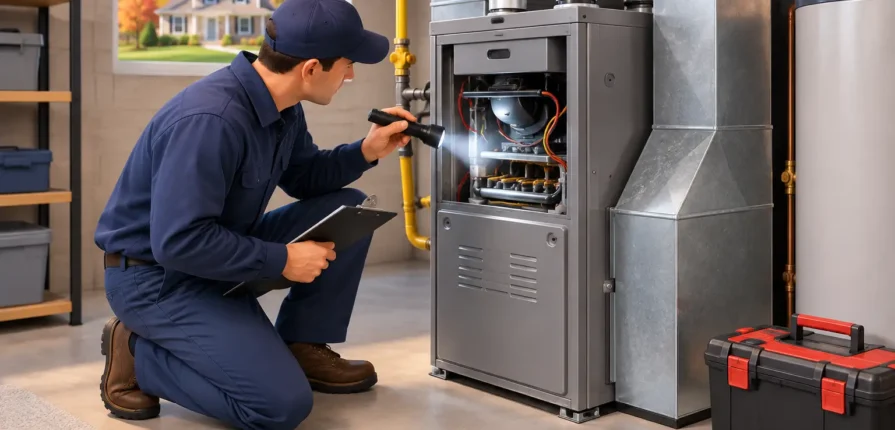
When your furnace starts on the first cold night of the season, you expect heat – not a strange smell, a tripped breaker, or a carbon monoxide alarm. A furnace safety inspection is designed to catch the problems you cannot always see before they put your family, tenants, or property at risk.
For central Ohio homeowners, that work matters most before the weather turns hard. Furnaces often sit unused for months, then run for long stretches once winter arrives. A small issue with combustion, wiring, drainage, or venting can become a no-heat emergency or a genuine safety concern when the system is under that kind of demand.
What a Furnace Safety Inspection Checks
A proper inspection goes beyond replacing a filter and confirming that warm air is coming from the vents. A trained HVAC technician looks at how the entire heating system operates, including the furnace itself, the thermostat, the electrical connections, the fuel supply, and the path combustion gases take out of the home.
For gas furnaces, combustion and venting are the main safety priorities. The technician checks the burners, ignition system, heat exchanger, flue pipe, gas connections, and vent termination. The goal is to confirm the furnace is burning fuel correctly and that exhaust gases are leaving the house as intended.
A cracked heat exchanger deserves special attention. This metal component separates the combustion process from the air moving through your ductwork. Cracks can allow combustion gases to mix with household air. Not every crack is visible during a basic visual look, which is why experienced diagnosis and the right testing equipment matter.
Electrical safety is also part of the job. Loose wiring, damaged insulation, overheating components, failing capacitors, and worn blower motors can create reliability problems and, in some cases, fire hazards. The technician should inspect accessible electrical components, test operation, and look for signs of stress or overheating.
The inspection should also cover the condensate drain on high-efficiency furnaces. A blocked drain can cause water damage, shut down the furnace, or lead to corrosion over time. It is not as immediately dangerous as a gas leak, but it can still turn into an expensive repair when ignored.
Furnace Safety Inspection vs. a Tune-Up
Homeowners often use the terms interchangeably, and there is plenty of overlap. A furnace tune-up usually focuses on cleaning, testing, adjusting, and maintaining the equipment for efficient operation. A safety inspection focuses more directly on risks involving combustion, gas, venting, electrical parts, and safe shutdown controls.
In practice, a thorough seasonal maintenance visit should include both. The technician may clean burners, inspect the flame sensor, replace or recommend replacing a dirty filter, test temperature rise, check blower performance, and verify safety controls while also looking for hazards.
The difference matters when you are comparing service options. A quick low-cost check may be useful for basic maintenance, but it may not provide the same level of testing as a detailed diagnostic visit. Ask what the visit includes, especially if your furnace is older, has had repeated repairs, or has shown any warning signs.
Warning Signs That Should Not Wait
Some furnace problems can wait for a scheduled appointment. Others call for prompt professional service. If you smell natural gas, leave the building immediately, avoid switches and open flames, and contact your gas utility or emergency services from a safe location. Do not try to find or repair the leak yourself.
Call for furnace service quickly if you notice any of these issues:
- A carbon monoxide alarm sounds, or household members experience unexplained headaches, dizziness, nausea, or confusion
- The furnace flame is yellow, lazy, or flickering instead of mostly steady blue
- You notice soot around the furnace, registers, or vent pipe
- The furnace repeatedly shuts off, trips a breaker, blows a fuse, or will not stay running
- A burning smell, hot electrical odor, banging, booming, or grinding sound comes from the unit
- Water is collecting around a high-efficiency furnace or its drain line
A brief dusty smell when the heat first runs after a long break can be normal. A persistent burning odor is not. The same goes for occasional operational sounds versus loud new noises. If the system is acting differently from the way it normally does, it is worth getting it checked before a minor repair becomes a weekend breakdown.
Why Carbon Monoxide Protection Needs More Than One Step
A furnace inspection is one layer of protection, not the only layer. Every home with fuel-burning equipment should have working carbon monoxide alarms. Place them according to the manufacturer instructions and local code requirements, typically near sleeping areas and on each level of the home.
Test alarms monthly, replace batteries as needed, and replace the entire device at the end of its rated service life. An alarm cannot diagnose the furnace or prevent a problem, but it can provide a critical warning if carbon monoxide reaches unsafe levels.
Do not assume a newer furnace eliminates the need for alarms or inspections. Newer equipment is generally more efficient, but it still relies on correct installation, clear venting, safe electrical connections, and regular care. Even a good system can develop a problem from a blocked intake, a failing part, storm damage, pest activity, or simple wear.
How Often Should You Schedule Service?
For most homes, annual professional furnace maintenance before heating season is the right schedule. Early fall is ideal because it gives you time to address repairs before the first sustained cold spell. That said, the best time to have your furnace checked is before you need to depend on it every day.
Older furnaces may need more attention. If your system is 15 years old or more, has a history of repairs, or is heating unevenly, a technician may recommend closer monitoring. This does not automatically mean replacement is the only answer. Some older units can operate safely with the right repairs and maintenance. The decision depends on the condition of the heat exchanger, repair history, efficiency, and the cost of keeping the equipment reliable.
Property managers should take a proactive approach. Schedule inspections before tenant complaints start, document the service, and make sure tenants know whom to contact if they smell gas or a carbon monoxide alarm activates. Waiting until a furnace fails in occupied housing creates more disruption, more risk, and often a higher repair bill.
What Homeowners Can Do Between Inspections
There are a few simple tasks that help your furnace operate safely, but homeowners should leave gas, combustion, electrical, and internal repairs to licensed professionals. Start by checking the filter monthly during heavy heating use. A clogged filter restricts airflow, makes the blower work harder, and can cause overheating or limit switches to trip.
Keep the area around the furnace clear. Do not store paint, gasoline, cardboard, cleaning products, laundry, or other combustible materials near the equipment. Maintain open access for service and avoid blocking supply or return vents throughout the house.
Outside, look at the furnace intake and exhaust pipes if they are accessible. Snow, leaves, nests, and debris can block them. Clear loose obstructions carefully from the exterior opening, but do not dismantle venting or make changes to the pipe configuration. If you see corrosion, separation, damage, or recurring blockage, call a technician.
You can also pay attention to performance. Write down new sounds, error codes, short cycling, cold rooms, unusual utility bills, and how often the system turns on and off. Those details help the technician diagnose the real problem faster.
Choose a Technician Who Explains the Findings
A safety visit should leave you with clear answers. You should know what was inspected, what was found, what needs attention now, and what can be monitored. If a repair or replacement is recommended, ask to see the problem when practical and request an explanation in plain language.
Be cautious with anyone who uses fear without evidence. Safety concerns are serious, but a trustworthy contractor will explain the issue, discuss options, and tell you if shutting the system down is necessary. For problems involving a failed heat exchanger, gas leak, unsafe venting, or carbon monoxide, the safe recommendation may be immediate shutdown. For other concerns, such as a worn igniter or dirty flame sensor, you may have reasonable repair choices.
Professional Trade Service helps homeowners and property managers in the Delaware-area communities get clear answers, dependable repairs, and prompt help when a heating problem cannot wait. A scheduled check is usually easier and less expensive than dealing with a no-heat call during a freezing night.
If your furnace has not been inspected since last heating season, do not wait for the first major cold snap to find out whether it is ready. A straightforward service visit now can protect your comfort when your home needs heat the most.
Recent Comments