
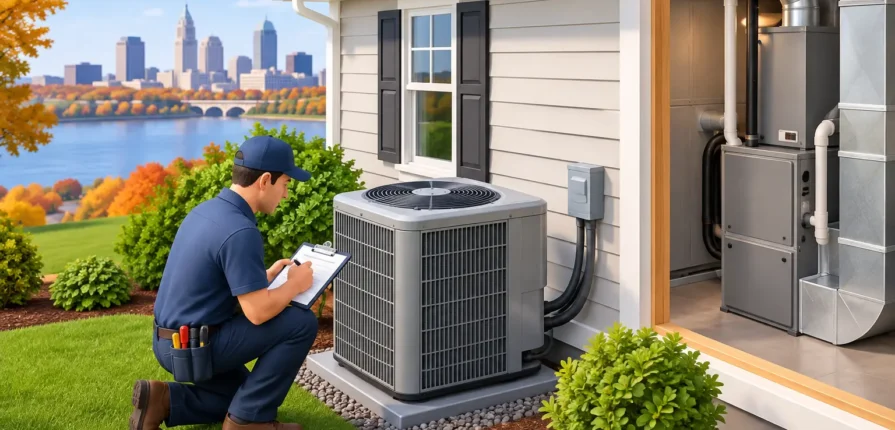
A furnace that starts making noise on the first cold night or an air conditioner that quits during a July heat wave rarely fails without warning. This home HVAC inspection guide helps you recognize those warnings, handle the simple checks safely, and know when it is time to bring in a trained technician.
A good inspection is not about taking apart equipment you do not work on every day. It is about protecting comfort, catching small problems before they turn into expensive repairs, and making sure your heating and cooling system is operating safely. For Ohio homeowners, that matters twice a year: before the heating season and before air conditioning season.
What a home HVAC inspection should cover
Your HVAC system moves a lot more than hot and cold air. It uses electricity, moving parts, drainage, refrigerant, combustion components in many homes, and a network of ducts and controls. A professional inspection looks at how those parts work together, not just whether the thermostat turns on.
For a homeowner, the first pass should focus on visible conditions and performance. Look for changes in airflow, temperature, noise, odor, utility bills, and run time. If one room is always uncomfortable, the system runs constantly, or the equipment has begun cycling on and off repeatedly, those are useful details for a service technician.
A professional inspection goes further. It may include checking electrical connections and safety controls, testing capacitors and motors, inspecting burners and heat exchangers, verifying refrigerant operation, cleaning components, checking drain lines, and measuring temperature performance. The exact scope depends on whether you have a furnace, heat pump, central air conditioner, boiler, ductless system, or a combination of equipment.
Start with the easy homeowner checks
Before calling for service, take a few minutes to inspect the parts you can safely access. These steps will not replace maintenance, but they can prevent a basic issue from becoming an unnecessary emergency call.
First, check the thermostat. Make sure it is set to the right mode – heat or cool – and that the temperature setting calls for the system to run. If the screen is blank, replace the batteries if your thermostat uses them. A tripped breaker, a power switch near the furnace that was accidentally turned off, or a loose thermostat setting can all stop a system from operating.
Next, inspect the air filter. A clogged filter restricts airflow, makes the blower work harder, and can contribute to frozen air-conditioning coils or an overheated furnace. Hold the filter up to a light. If you cannot see light through it, replace it. Most standard filters need attention every one to three months, though pets, renovations, allergies, and heavy system use can shorten that schedule.
Then walk through the house and check supply and return vents. Supply vents deliver conditioned air; return vents pull air back to the system. Keep furniture, rugs, boxes, and curtains from blocking either one. Closing too many supply vents in unused rooms may seem like a way to save money, but it can create airflow and pressure problems in a system designed to serve the whole home.
Outside, look at the air-conditioning or heat-pump unit. Remove leaves, grass clippings, mulch, and other debris around it. Keep shrubs and stored items clear so air can move freely around the equipment. Do not use a pressure washer on the coil, and do not bend or scrape the delicate metal fins. If the unit is running loudly, vibrating heavily, or sitting in standing water, schedule an inspection.
Inspect your heating system before cold weather
A heating inspection deserves extra attention because combustion equipment can create safety concerns. If your home uses a gas furnace, do not remove burner covers or attempt to adjust gas connections yourself. Your job is to watch for warning signs and act quickly when they appear.
Pay attention to the flame if it is visible through the furnace viewing window. A steady blue flame is generally what you want to see. Yellow, flickering, or irregular flames can point to a combustion issue and should be checked by a professional. Soot around the furnace, rust on vent piping, moisture near the unit, or a persistent burning smell also deserve prompt service.
Test every carbon monoxide detector in the home, especially those near sleeping areas. Replace batteries as needed and check the expiration date on the device itself. Carbon monoxide has no odor, so a detector is not optional protection in a home with gas appliances, fireplaces, or an attached garage.
When you first turn on heat for the season, a light dusty smell may be normal as settled dust burns off. The smell should fade quickly. Shut the system down and call for help if you smell gas, electrical burning, strong chemical odors, or anything that causes headaches, dizziness, or nausea. If you smell gas, leave the home, avoid switches and open flames, and contact your gas utility or emergency services from a safe location.
Check air conditioning before the first hot stretch
Cooling problems often become obvious when the first humid days arrive, which is the worst time to find out an aging part is failing. A spring inspection gives you a better chance of handling repairs on your schedule instead of waiting through a hot house.
Turn on the cooling system early in the season and let it run long enough to evaluate it. Air should feel noticeably cooler at the supply vents, and the outdoor unit should start without hard buzzing, repeated clicking, or excessive rattling. Listen for changes from previous seasons. A system does not need to be silent, but new noises are worth checking.
Look for water around the indoor unit. Your air conditioner removes humidity, and that moisture needs a clear path through the condensate drain. A backed-up drain can cause water damage, shutdowns, or musty odors. If you see pooling water or notice a damp smell near the furnace or air handler, do not ignore it.
Ice on refrigerant lines, weak airflow, warm air from vents, and frequent short cycling are not problems to solve by adding refrigerant yourself. Refrigerant levels are not a routine homeowner adjustment. A trained technician needs to find the cause, which could range from airflow restrictions to a leak or a failing component.
Signs you should schedule a professional HVAC inspection
Some problems are clear calls for service, even when the system is still running. Waiting can turn a repairable issue into a breakdown, especially during high-demand weather.
Schedule an inspection if you notice:
- Uneven temperatures between rooms that were previously comfortable
- Utility bills that rise without a clear change in weather or usage
- Loud banging, grinding, squealing, or repeated clicking from equipment
- A system that runs constantly, starts and stops often, or fails to reach the thermostat setting
- Water leaks, ice buildup, unusual odors, or excessive dust around vents
- A furnace, air conditioner, or heat pump that is 10 to 15 years old and showing new performance issues
Age alone does not mean replacement is the right answer. A well-maintained system may have useful life left, while a neglected newer unit may need major work. The practical question is whether the repair is reliable, cost-effective, and likely to restore efficient operation. An honest inspection should give you clear options, not pressure you into a decision.
What to expect from a professional inspection
A thorough technician should ask about your comfort concerns before opening the equipment. Tell them about rooms that stay too hot or cold, noises you have heard, recent changes in bills, water leaks, and whether the issue happens all the time or only in certain weather.
During the visit, the technician should inspect the equipment condition, verify safe operation, test key components, and explain findings in plain language. You should understand what needs immediate attention, what can be monitored, and what maintenance will help prevent future trouble. Ask for the reason behind a recommended repair and the expected impact if you wait. That is especially helpful when comparing a repair to replacing older equipment.
For homes with electrical, plumbing, or drainage concerns tied to HVAC performance, working with a full-service trade provider can simplify the process. A condensate problem, for example, may involve both HVAC equipment and a drain issue. One coordinated team means less time spent tracking down separate contractors.
Make inspections part of your seasonal routine
The most useful time to schedule maintenance is before extreme weather arrives. Plan heating service in early fall and cooling service in spring, before repair schedules fill up. Between visits, keep filters changed, outdoor equipment clear, vents open, and carbon monoxide detectors working.
Professional Trade Service helps homeowners across central Ohio stay ahead of heating and cooling problems with straightforward inspections, maintenance, repairs, and emergency service when a problem cannot wait. A quick check today can be the difference between a comfortable season and a long night without heat or air conditioning.
Recent Comments