
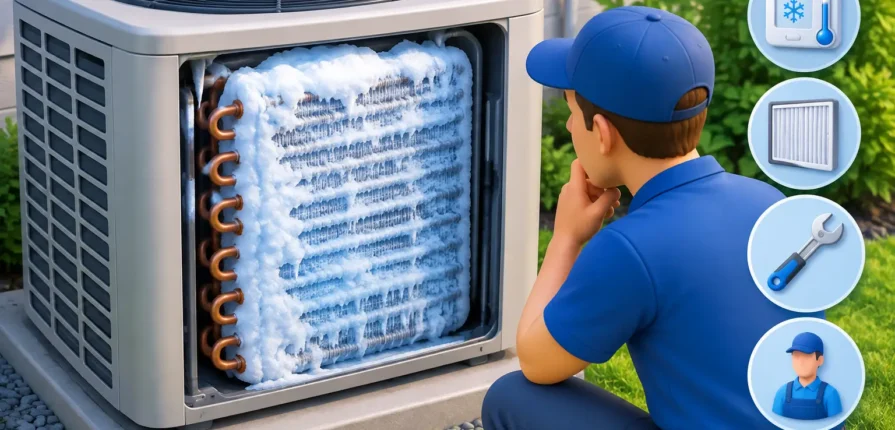
Your air conditioner should remove heat from your home, not build a block of ice inside the system. AC coil freezing is a common summer breakdown that can leave your home warm, drive up system strain, and lead to water damage when the ice finally melts. If you see frost on refrigerant lines, ice on the indoor unit, or weak airflow from your vents, turn the cooling off and address the problem before it gets worse.
A frozen coil is not usually the root problem. It is a warning that something is keeping the system from moving heat correctly. In many cases, the repair is straightforward when it is caught early. Running an air conditioner while the coil is frozen, however, can put unnecessary stress on the compressor, which is one of the most expensive parts to replace.
Why AC Coil Freezing Happens
Your indoor evaporator coil holds cold refrigerant. Warm air from the house must pass across that coil so the refrigerant can absorb heat. When airflow is too low or the refrigerant pressure is not right, the coil temperature can drop below freezing. Moisture in the air then freezes on the coil and continues building into a layer of ice.
The ice makes the airflow problem worse. Less air reaches the coil, more moisture freezes, and the system loses its ability to cool your home. That is why a unit may run for long periods while the rooms never feel comfortable.
Restricted airflow is the most common cause
A clogged air filter is often the first thing to check. A filter packed with dust, pet hair, or construction debris limits the amount of warm air moving through the air handler. The evaporator coil gets too cold and can freeze.
A dirty filter is not the only airflow issue. Closed supply vents, blocked return vents, a dirty indoor coil, damaged ductwork, or a failing blower motor can all reduce airflow. Property managers may see this in homes where furniture has been moved in front of returns or where filters have not been changed between tenants.
Start by checking the filter. If it is dirty, replace it with the correct size and type. Do not install an extra-restrictive filter simply because it sounds like a better upgrade. Some high-density filters can create airflow problems in systems that are not designed for them. A qualified technician can recommend a filter that protects indoor air quality without choking the equipment.
Low refrigerant can freeze the coil
Low refrigerant is another frequent cause of AC coil freezing. Refrigerant does not get used up during normal operation. If the level is low, there is usually a leak that needs to be found and repaired.
When refrigerant pressure drops, the evaporator coil can become colder than it should be. Ice forms, cooling performance falls, and the compressor may be at risk. Adding refrigerant without repairing the leak is only a temporary patch and may leave you paying for the same problem again.
This is not a do-it-yourself repair. Refrigerant work requires proper tools, training, and testing. A professional should check pressures, inspect likely leak points, repair the issue when practical, and verify that the system is operating correctly afterward.
Other issues that can lead to a frozen AC coil
Some causes are less obvious. A thermostat set extremely low on a mild or cool evening can make a system run longer than conditions allow. A malfunctioning blower motor or control board may keep the fan from moving enough air. A dirty evaporator coil can act like a blanket, preventing proper heat transfer.
Drainage problems do not usually cause the ice, but they can create trouble once the system thaws. A clogged condensate drain can overflow when several pounds of ice melt. If your indoor unit is in an attic, basement, closet, or above finished space, that water can damage ceilings, flooring, and belongings.
What to Do When You Notice AC Coil Freezing
The right first steps can protect your equipment and give a technician a clearer picture of the problem.
- Turn the thermostat from Cool to Off. Do not keep running the air conditioner in hopes that it will push through the ice.
- Set the thermostat fan to On if air is moving normally through the vents. Room-temperature air can help thaw the coil. If the blower is not running or airflow is very weak, turn the system fully off instead.
- Check and replace a dirty air filter. Make sure supply registers and return grilles are open and clear of rugs, boxes, or furniture.
- Give the system time to thaw completely. Depending on the amount of ice, this can take several hours. Place towels around the unit if water may drip, and keep an eye on the drain pan area.
- Call for service if the coil freezes again, the unit will not cool after thawing, you hear unusual noises, or you suspect a refrigerant leak.
Do not chip ice off the coil, pour hot water into the equipment, or try to bend refrigerant lines. Coils and fins are easy to damage, and a small puncture can turn a repair into a larger expense.
When a Frozen Coil Needs Professional Repair
If changing the filter and fully thawing the equipment gets your cooling back, keep a close eye on it. If ice returns, there is still a problem that needs diagnosis. Repeated freezing is not normal, even if the system seems to recover for a day or two.
A trained HVAC technician will look beyond the ice itself. That includes checking blower operation, static pressure and airflow, the condition of the indoor coil, refrigerant pressures, electrical components, drain performance, and thermostat operation. The goal is to identify why the coil froze in the first place, not just get it cold again for a few hours.
For homeowners in Sunbury, Lewis Center, Powell, and nearby central Ohio communities, fast service matters during a heat wave. Professional Trade Service provides experienced HVAC diagnostics and emergency support when a frozen coil has left your home without dependable cooling. You should get a plain answer about what failed, what it will take to fix it, and whether a repair makes sense for the age and condition of your system.
Preventing AC Coil Freezing Before Summer Gets Busy
Preventive maintenance is the best way to catch the problems that cause frozen coils. A seasonal tune-up gives a technician a chance to inspect the filter, blower, evaporator coil, refrigerant operation, condensate drain, electrical connections, and overall airflow before a minor restriction becomes a no-cooling call.
At home, change filters on a schedule that fits your household. Homes with pets, smokers, heavy dust, or frequent summer use may need more frequent changes than homes with lighter use. Keep outdoor equipment clear of leaves and grass clippings, and do not close off large sections of the home by shutting multiple vents.
If your system is older and has needed refrigerant repairs more than once, ask for an honest assessment. Repair can be the right choice, especially for a newer system with an isolated issue. But recurring leaks, costly compressor concerns, and poor efficiency may change the math. A good contractor will explain both options without pushing equipment you do not need.
A frozen coil is your air conditioner asking for attention. Shut the cooling down, let the ice melt, check the simple airflow issues, and get help if the problem returns. Acting early can protect your comfort now and help you avoid a much bigger repair when Ohio summer temperatures are at their highest.
Recent Comments