
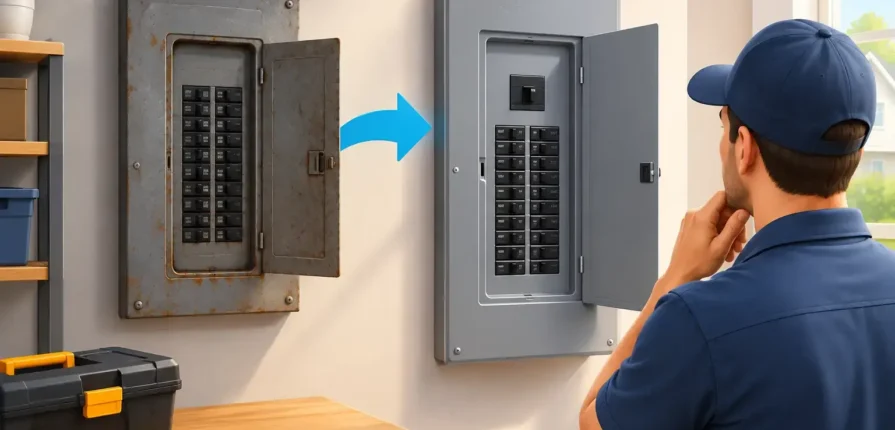
Your electrical panel works quietly until it does not. A breaker that keeps tripping, lights that dim when the microwave starts, or a panel that feels warm are not annoyances to ignore. Knowing when to replace electrical panel equipment can help protect your home, your appliances, and the people inside it.
For many homeowners, the panel is out of sight in a basement, garage, utility room, or closet. But it is the control center for every circuit in the house. When it can no longer safely handle your electrical needs, a repair may only be a temporary fix. A licensed electrician can determine whether you need a simple correction, a new breaker, or a full panel replacement.
When to Replace an Electrical Panel
Electrical panels do not have one fixed expiration date. Some can serve a home for decades when they are properly installed, correctly sized, and kept in good condition. The decision depends on the panel’s age, brand, condition, capacity, and the demands your household now places on it.
If your home has an older 60-amp or 100-amp panel and you have added central air conditioning, an electric vehicle charger, a hot tub, a finished basement, or major kitchen appliances, the panel may be undersized. Modern homes often need 150-amp or 200-amp service, but the right capacity depends on a professional load calculation, not a guess.
Replacement is also the smart call when safety concerns show up. An electrical panel should never buzz, spark, smell like burning plastic, or feel hot to the touch. Shut off power if you can do so safely, stay clear of the panel, and call a qualified electrician right away.
Warning Signs Your Panel Needs Attention
A tripped breaker now and then is normal. Breakers are designed to cut power when a circuit is overloaded or there is a fault. The problem is repeated tripping, especially on the same circuit or after ordinary daily use.
Watch for these signs that your panel may be overloaded, damaged, or no longer suited to the home:
- Breakers trip frequently or will not reset.
- Lights flicker or dim when larger appliances turn on.
- You rely on extension cords and power strips because outlets are limited.
- The panel makes crackling, buzzing, or popping sounds.
- You notice rust, moisture, scorch marks, corrosion, or a burning odor.
- Breakers feel hot, the panel cover is warm, or outlets are discolored.
- Your home still uses fuses instead of circuit breakers.
- You are planning a large electrical upgrade or home addition.
Each of these issues has more than one possible cause. Flickering lights, for example, may be related to a loose connection, a failing fixture, or a utility-side issue. That is why an inspection matters. The goal is to find the real source of the problem rather than replacing parts blindly.
Old or Problematic Panel Brands
Age alone does not automatically make a panel unsafe, but some older equipment has a history of performance concerns. Federal Pacific Electric panels, commonly called FPE or Stab-Lok panels, and certain Zinsco panels are often flagged during inspections because breakers may fail to trip properly under overload conditions. Older fuse boxes can also be difficult to insure and may not provide the capacity a modern household needs.
If you see one of these names on your panel, do not panic or try to remove the cover yourself. Schedule an evaluation with a licensed electrician. A professional can inspect the equipment, identify immediate hazards, and explain your replacement options in plain language.
A Panel Upgrade Is Often About Capacity
Many panel replacements happen because the home has changed. What worked when the house was built may not work after years of renovations and new technology.
An electric range, heat pump, electric water heater, dryer, workshop tools, pool equipment, or EV charger can add substantial demand. Even if nothing trips today, a crowded panel with no open spaces can make future repairs and upgrades more difficult. Installing tandem breakers may be appropriate in certain panels, but it is not a universal answer and should not be used to hide an overloaded service.
A licensed electrician will calculate the expected electrical load for the home and inspect the service entrance, grounding, wiring, and panel condition. In some cases, you may only need additional circuits or a subpanel. In others, the main panel and electrical service need to be upgraded together.
Do Not Ignore Water, Damage, or Heat
Water and electricity are a bad combination. A panel in a damp basement, a garage with water intrusion, or an area affected by a plumbing leak needs prompt attention. Rust and corrosion can damage connections and breakers over time, even after the area appears dry.
Physical damage matters, too. A dented panel cabinet, missing knockout covers, exposed wiring, loose breakers, or signs of rodents can create real safety risks. If a breaker will not stay on, do not force it. It may be responding to a dangerous fault in the circuit.
Heat is another clear warning. A warm panel can point to loose or overloaded connections that need immediate professional diagnosis. Never remove the panel cover to investigate. There are live components inside, even when the main breaker is switched off.
What Happens During an Electrical Panel Replacement
A proper panel replacement is more than swapping one metal box for another. The electrician will first inspect the existing system, discuss your electrical needs, and determine whether the existing service can support the new panel.
The work may include replacing the panel, installing correctly sized breakers, labeling circuits, improving grounding and bonding, and coordinating with the utility if a service upgrade is needed. Depending on the scope, permits and inspections may also be required. These steps protect you and help ensure the work meets current electrical code requirements.
Expect a planned power outage while the panel is being changed. For a straightforward replacement, power may be off for part of the day. If the job involves a service upgrade, damaged wiring, or utility coordination, the timeline can be longer. A good contractor will explain the scope before work begins and provide clear pricing instead of leaving you to guess.
Replacement Versus Repair: What Makes Sense?
Not every electrical concern calls for a new panel. A single faulty breaker, loose connection, or damaged circuit may be repairable. Replacing a panel that is in good shape and appropriately sized would not be the right use of your budget.
On the other hand, repeated repairs on an outdated, crowded, corroded, or unsafe panel can cost more over time without solving the underlying problem. Replacement can provide more capacity, better circuit protection, room for future upgrades, and confidence that your electrical system is ready for daily use.
The best choice comes down to an honest inspection. Ask the electrician what problem they found, whether repair is safe, what capacity your home needs, and whether the quote includes permits, inspection coordination, and any necessary service work.
Plan Ahead Before a Major Home Upgrade
If you are considering a new HVAC system, electric heat pump, finished basement, remodeled kitchen, or EV charger, bring up the electrical panel early. Waiting until installation day can create delays and unexpected costs.
For homeowners across central Ohio, this is especially useful when replacing aging heating and cooling equipment. Modern high-efficiency systems may have different electrical requirements than the equipment they replace. Having one trusted trade professional assess both the comfort system and electrical capacity helps prevent surprises when the work is underway.
If your breakers are tripping, your panel is showing heat or damage, or you are adding major electrical equipment, do not wait for a complete failure. Professional Trade Service can help you get a clear answer from an experienced electrician, so you can make the right repair or replacement decision before a small warning turns into a larger problem.
Recent Comments