
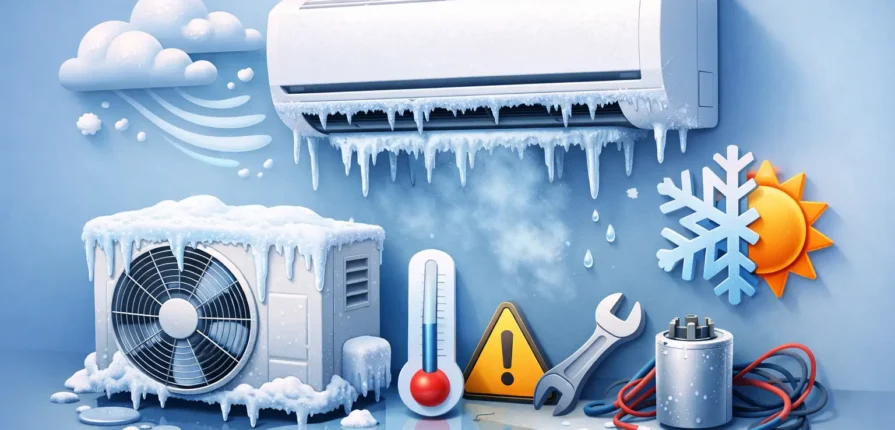
You set the thermostat lower because the house feels warm, but instead of cooling better, your system starts struggling. Then you spot ice on the indoor unit, the copper line, or even around the outdoor equipment. If you’re asking, why does my AC freeze up, the short answer is usually one of two problems – poor airflow or a refrigerant issue.
A frozen air conditioner is never a good sign. Ice may look harmless, but it means your system is operating outside normal conditions. The longer it runs that way, the greater the chance of compressor damage, water leaks, weak cooling, and a higher repair bill.
Why does my AC freeze up in the first place?
Your air conditioner cools by pulling heat out of the air inside your home. For that process to work, warm household air has to move steadily across the evaporator coil. If airflow drops too low, or if refrigerant pressure is off, the coil temperature can fall below freezing. Moisture in the air then turns to ice, and that ice keeps building.
That is why a frozen AC often starts as a small issue and turns into a bigger one. A dirty filter, a blocked return, a failing blower motor, or low refrigerant can all start the same chain reaction. Once ice forms, airflow gets even worse, which causes even more freezing.
The most common causes of a frozen AC
Dirty air filter
This is the first thing to check because it is also the most common. A clogged filter restricts airflow, which can cause the evaporator coil to get too cold. Even a system in otherwise decent shape can freeze if the filter is packed with dust and pet hair.
If your filter looks gray, matted, or overdue, replace it before doing anything else. In many homes, especially with pets, remodeling dust, or heavy summer use, filters need attention more often than people expect.
Closed or blocked vents
Supply vents and return vents both matter. If too many vents are shut, or furniture, rugs, and curtains are blocking airflow, your system may not move enough air to keep the coil at the right temperature.
Homeowners sometimes close vents in unused rooms thinking it will save money. Sometimes that works against the system instead. Most residential HVAC systems are designed to move a certain amount of air, and choking that airflow can create pressure and temperature problems.
Dirty evaporator coil
If the coil is coated with dust and grime, heat transfer drops. That means the refrigerant inside the coil can get colder than it should, which encourages freezing. This is not always visible from the outside, and cleaning the coil usually takes more than a quick wipe-down.
A dirty coil often shows up along with weak airflow, uneven cooling, or higher electric bills. It is one of those issues that builds slowly until the system finally gives you a clear warning sign.
Blower problems
Your blower motor, wheel, and related components are responsible for moving conditioned air through the system. If the blower is running weak, cutting in and out, or not moving enough air, freezing can follow.
This can be caused by motor wear, electrical issues, a bad capacitor, or dirt buildup inside the air handler. In some cases, the blower is technically still running, but not at full performance. That can make the problem easy to miss until the ice shows up.
Low refrigerant
Low refrigerant is one of the most serious reasons an AC freezes up. When refrigerant charge drops because of a leak, system pressure changes. That can lower the coil temperature enough to create ice.
This is not a maintenance item like changing a filter. Refrigerant does not get used up like fuel. If your system is low, there is usually a leak that needs to be found and repaired. Simply adding more refrigerant without fixing the leak is usually a temporary patch.
Refrigerant line or metering issues
Sometimes the problem is not low charge alone. A restricted metering device, a damaged line, or another refrigerant-side issue can throw off pressures and temperatures inside the system. The result can look similar from the homeowner’s point of view – ice, poor cooling, and long run times.
This is where proper diagnosis matters. Different refrigerant problems can produce similar symptoms, but the repair path is not the same.
Running the AC when outdoor temperatures are too low
Air conditioners are designed for warm-weather operation. If you run central AC during unusually cool outdoor conditions, especially at night or in shoulder seasons, system pressures may drop enough to cause freezing.
This does not happen in every setup, but it is a real possibility. If you are trying to cool a hot upstairs room in mild weather, the system may not behave the way it does in July.
What you should do if your AC is frozen
First, turn the cooling off. If you keep running a frozen system, you can make the damage worse. Set the thermostat to off for cooling and switch the fan to on if the blower is still working. That can help thaw the ice faster.
Second, check the filter. If it is dirty, replace it. Then make sure vents and returns are open and not blocked by furniture or other items.
Third, give it time to thaw completely. Depending on how much ice has built up, this can take several hours. You may also need to watch for water around the indoor unit as the ice melts.
After the ice is gone, you can try running the system again. If it cools normally and continues working, the problem may have been airflow-related. If it freezes again, blows warm air, or struggles to keep up, it is time for a professional diagnosis.
What not to do
Do not chip away at the ice with tools or sharp objects. You can easily damage the coil, fins, or refrigerant lines. That can turn a manageable repair into a much more expensive one.
Do not keep lowering the thermostat hoping the system will catch up. If the coil is already freezing, asking for more cooling usually makes the problem worse.
And do not assume adding refrigerant is a quick fix. If refrigerant is low, there is a reason. The real repair is finding the leak or component problem behind it.
When freezing points to a bigger repair
Sometimes a frozen AC is a one-time issue caused by a badly clogged filter. Other times, it is your warning before a more expensive failure. If you have noticed weak airflow for a while, hot and cold spots in the house, rising energy bills, short cycling, or water around the unit, the freeze-up may be part of a larger system problem.
Older systems deserve extra attention here. Wear on motors, coils, electrical parts, and refrigerant components tends to stack up over time. At a certain point, repeated repairs may cost more than they are worth, especially if comfort is still inconsistent.
That does not mean every frozen system needs replacement. It means a proper inspection matters. A good technician should be able to tell you whether you are looking at a simple airflow correction, a refrigerant repair, or signs that the equipment is nearing the end of its useful life.
How to reduce the chances of it happening again
Most freeze-ups do not come out of nowhere. Regular filter changes, seasonal maintenance, and early attention to weak airflow go a long way. Keeping the outdoor unit clear, making sure vents stay open, and addressing small performance changes early can prevent a lot of trouble in peak summer weather.
Routine maintenance also gives technicians a chance to catch issues before they shut your system down. Dirty coils, blower wear, drain problems, and refrigerant concerns are much easier to deal with before the system is covered in ice and your house is heating up.
For homeowners and property managers in central Ohio, that matters most when temperatures climb and service calls stack up fast. If your unit is freezing, thawing, and freezing again, it is not going to sort itself out.
At Professional Trade Service, this is the kind of problem we see every summer. Sometimes the fix is simple. Sometimes it takes a deeper repair. Either way, the right move is to stop the strain on the system, get a clear diagnosis, and handle the cause before a frozen coil turns into a full breakdown.
If your AC is freezing up, treat it like the warning sign it is. A little ice usually means a bigger issue is starting, and the sooner you deal with it, the better your chances of keeping the repair straightforward.
Recent Comments