
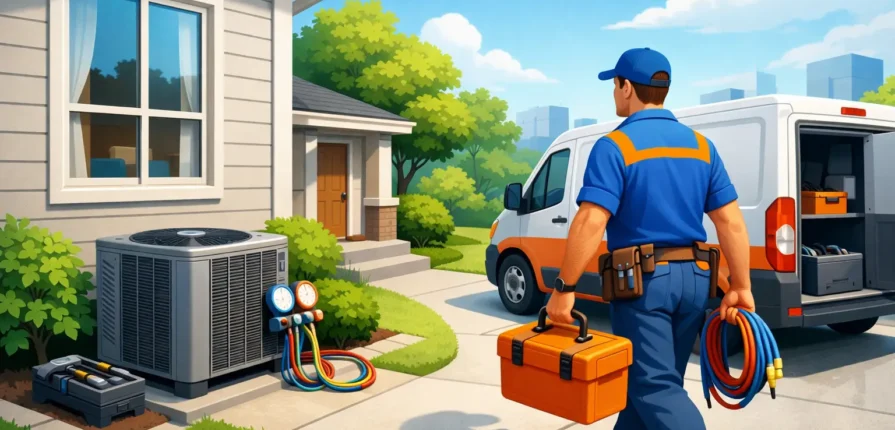
When your house is 78 degrees at bedtime and the AC is running without catching up, you are not looking for a sales pitch. You are looking for Lewis Center ac repair service that answers the phone, shows up on time, and fixes the problem without wasting your day.
That is usually what matters most to homeowners and property managers – speed, clear answers, and a repair that actually holds. In the middle of an Ohio heat wave, nobody wants a vague diagnosis or a temporary patch that turns into another service call next week. You want to know what failed, what it will take to correct it, and whether the repair makes sense for the age and condition of the system.
What good Lewis Center AC repair service should look like
A reliable AC repair visit starts with diagnosis, not guessing. Air conditioners can fail for a lot of reasons that look similar from the thermostat. Warm air from the vents might mean a bad capacitor, low refrigerant, a frozen coil, a blower issue, a clogged drain, a dirty condenser, or a thermostat problem. The symptom may be obvious. The cause often is not.
That is why experience matters. A trained technician should check system operation as a whole, not swap parts and hope for the best. That includes airflow, electrical components, refrigerant pressures, temperature split, drain condition, filter status, and how the outdoor and indoor units are working together. If one issue caused another, that should be explained clearly.
Good service also means honest communication. Sometimes the fix is straightforward and affordable. Sometimes the repair solves the immediate problem, but the system still has age-related wear that may lead to more breakdowns. Homeowners deserve both answers. If a unit is repairable, you should hear that. If it is becoming a money pit, you should hear that too.
Common AC problems in Lewis Center homes
In this area, summer cooling problems usually fall into a few familiar categories. Systems that have not had seasonal maintenance often struggle with dirty coils, restricted airflow, and electrical wear. Capacitors and contactors take a beating during heavy summer use. Condensate drains clog up. Filters get ignored longer than they should. Any of those issues can reduce cooling or shut the unit down completely.
Refrigerant problems are another big one, but this is where homeowners need straight talk. Refrigerant does not get “used up” like gas in a car. If levels are low, there is a leak somewhere. Topping off refrigerant without addressing the source may get the unit running again, but it may not be the best long-term answer. It depends on the age of the equipment, the size of the leak, and the condition of the rest of the system.
Older systems can also develop intermittent problems that are harder to pin down. The AC may cool fine in the morning, then stop keeping up by late afternoon. That can point to weak electrical components, a motor overheating, or a system that is simply losing capacity under peak demand. Those calls are frustrating for homeowners because the issue feels inconsistent. They are also exactly the kind of problem that needs a methodical technician, not a rushed appointment.
Why fast response matters more than people think
When an AC starts failing, waiting usually makes the situation worse. A unit that short cycles may put added strain on motors and controls. A frozen evaporator coil can lead to water issues once the ice melts. Poor airflow can affect indoor comfort room by room, which becomes a bigger problem for families with young children, older adults, or anyone working from home.
For property managers, response time matters even more. Tenant complaints escalate fast when cooling fails, especially during weekends or after normal business hours. Delays can mean uncomfortable residents, potential lease issues, and added stress trying to coordinate access and repairs. Quick dispatch and clear communication go a long way.
That is why 24/7 availability is not just a marketing line. Emergency service matters when a system fails outside normal hours or when indoor temperatures are climbing quickly. Not every AC problem is a true emergency, but some definitely are.
Repair or replace? The honest answer depends
This is one of the biggest questions on any service call, and there is no one-size-fits-all answer. If your system is relatively new and the repair is limited to a common wear component, fixing it is usually the practical move. A capacitor, contactor, drain issue, or thermostat problem does not automatically mean the equipment is on its last leg.
If the system is older, uses outdated refrigerant, has a history of repeated breakdowns, or needs a major repair, replacement may be worth discussing. That does not mean every older unit should be condemned. It means the full picture matters – repair cost, energy efficiency, operating condition, and how much confidence you want going into the rest of the season.
A trustworthy technician will explain the trade-off. A repair may be cheaper today but lead to more service calls over the next year or two. A replacement costs more upfront but may improve comfort, lower electric bills, and reduce the chance of another midsummer breakdown. The right decision depends on your budget, your timeline, and how long you plan to stay in the property.
What to expect from a professional service call
A solid repair appointment should feel organized from the first phone call. You should know when the technician is coming, what kind of issue they are preparing for, and whether any basic troubleshooting is worth trying before dispatch. In some cases, a tripped breaker or incorrect thermostat setting can save you a service call. In others, it is clear right away that a technician is needed.
Once on site, the technician should listen to what the system has been doing, inspect the equipment, test key components, and explain the findings in plain language. No jargon. No pressure. Just a clear description of the problem, the recommended repair, and what happens next.
Flat-rate pricing helps here because homeowners want predictability. Surprises on the invoice do not build trust. Neither does pushing extra work that has nothing to do with the immediate issue. If other concerns are found during the inspection, they should be pointed out honestly and prioritized based on urgency.
Preventing the next breakdown after AC repair
Most emergency calls do not come out of nowhere. There were usually warning signs first – weaker airflow, longer run times, odd noises, uneven cooling, high humidity indoors, or rising utility bills. The system was telling you something before it quit.
After a repair, the next smart step is making sure the rest of the equipment is ready for the season. That might mean replacing a neglected filter, cleaning the outdoor coil, checking drain flow, or scheduling a tune-up if the system has not been inspected recently. Preventative maintenance is not exciting, but it is a lot cheaper than losing cooling on the hottest week of the summer.
For landlords and commercial properties, routine maintenance is even more valuable. It helps reduce nuisance calls, extend equipment life, and catch issues while they are still manageable. One thorough check can often uncover wear before it turns into a no-cool breakdown.
Choosing a contractor for Lewis Center AC repair service
Homeowners have plenty of options, but not all service companies approach repair the same way. Some are built around quick turnovers and heavy sales pressure. Others focus on diagnosis, repair quality, and long-term customer relationships. That difference shows up in how the call is handled.
Look for a company that has real field experience, offers emergency availability, and can service more than just the obvious AC symptom. Comfort problems sometimes overlap with electrical issues, thermostat wiring problems, drainage concerns, or larger system performance issues. A contractor who understands the whole setup saves time and confusion.
Professional Trade Service serves homeowners and property managers in central Ohio with that practical, get-it-done approach. The goal is simple: respond quickly, diagnose the problem correctly, and give customers a fair, useful answer about what comes next.
If your AC is blowing warm air, making noise, freezing up, or just not keeping up, do not wait for a complete failure to force the issue. The best time to call is when the problem first shows up, while the repair is still smaller, faster, and easier to manage. A good fix brings the temperature down, but real peace of mind comes from knowing the problem was handled the right way.
Recent Comments