
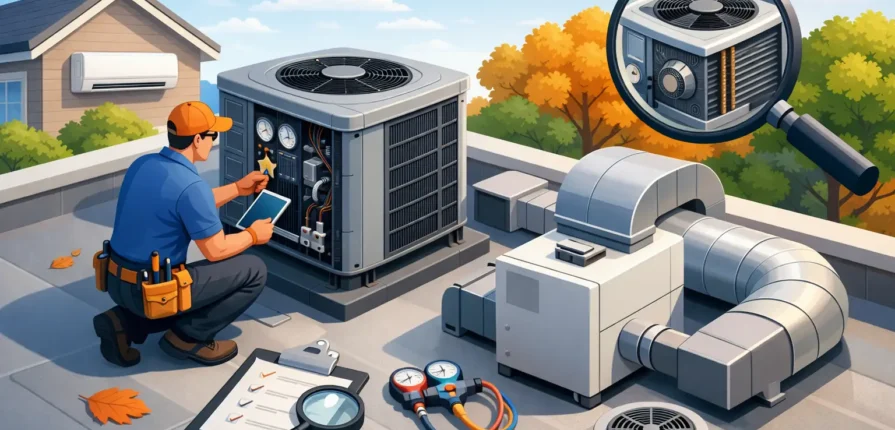
That first really hot day in June or bitter cold snap in January is when a neglected system usually speaks up. It might be weak airflow, a furnace that struggles to start, or an AC unit that runs all afternoon and still leaves rooms sticky. A good guide to seasonal HVAC system inspections helps you catch those issues before they turn into a no-cooling or no-heat call at the worst possible time.
For homeowners and property managers, seasonal inspections are less about checking a box and more about controlling risk. You want fewer breakdowns, steadier utility bills, safer operation, and a system that lasts as long as it should. That is especially true in Ohio, where your equipment has to handle both summer humidity and winter cold without much room for error.
Why seasonal inspections matter
HVAC systems do not usually fail all at once. More often, they give warning signs first. A capacitor starts weakening. A burner gets dirty. Refrigerant performance drops. A blower motor begins drawing more power than it should. None of those problems always shut the system down immediately, but they do put more stress on the equipment.
That is why a guide to seasonal HVAC system inspections should start with timing. Spring and fall are the smart windows for service because your system is between heavy-use periods. If you wait until peak season, you are more likely to be dealing with a breakdown, longer scheduling delays, and higher operating costs you have already paid.
There is also a safety side to this. Heating inspections can identify concerns with ignition, venting, heat exchangers, gas connections, and carbon monoxide risk. Cooling inspections often catch electrical wear, drainage issues, and dirty coils that can lead to frozen systems or water damage. A tune-up is not just about comfort. It is about protecting the home and the people in it.
What happens during spring AC inspections
Spring service is all about getting the cooling side of the system ready before the first long stretch of heat. A proper inspection should go beyond changing a filter and spraying off the outdoor unit. The goal is to verify that the system is clean, operating efficiently, and not showing signs of failure.
A technician will typically inspect the condenser, evaporator components, refrigerant performance, electrical connections, capacitor condition, contactor wear, blower operation, thermostat response, and condensate drainage. Coils may need cleaning, especially if dirt and debris built up over the previous season. Drain lines matter more than many homeowners realize, because a clog can lead to shutdowns or water around the indoor unit.
Airflow is another big piece of spring service. If airflow is restricted by a dirty filter, blocked return, weak blower, or duct issue, the system can lose capacity fast. That means longer run times, uneven temperatures, and higher utility bills. Sometimes the fix is simple. Sometimes it points to a larger issue in the ductwork or equipment sizing. That is where experience matters.
If your AC is older, spring inspection is also the right time to have an honest conversation about repair versus replacement. Not every aging unit needs to be replaced right away. But if the system is struggling, using outdated refrigerant, or requiring repeated repairs, it may make more sense to plan ahead instead of waiting for a midsummer failure.
What happens during fall furnace inspections
Fall inspections focus on safe and reliable heat. A furnace can sit unused for months, then suddenly be expected to run day after day when temperatures drop. If anything is dirty, loose, worn, or out of adjustment, that first cold stretch will expose it.
A solid furnace inspection usually includes checking burners, ignition components, flame sensor condition, gas pressure, venting, electrical connections, blower operation, filter condition, safety controls, and thermostat communication. For gas furnaces, combustion and venting checks are critical. You want to know the unit is firing properly and exhausting safely.
This is also the season when technicians often find small issues that can cause major inconvenience later. A cracked igniter might still be working today but fail next month. A dirty flame sensor can cause intermittent shutdowns that are hard to diagnose without testing. A weak inducer motor may run now but struggle in colder weather.
Heat pumps also need seasonal attention, just in a different way. The inspection should confirm proper refrigerant operation, defrost cycle performance, electrical integrity, and backup heat function if the system uses auxiliary heat. The checklist changes depending on the equipment, which is why one-size-fits-all maintenance is usually not enough.
What homeowners can check between visits
Professional inspections do the heavy lifting, but homeowners are not powerless between service appointments. A few simple checks can help you catch early problems or improve performance.
Start with the air filter. A clogged filter can reduce airflow enough to affect both heating and cooling operation. Check it regularly during peak-use months and replace it as needed. Keep supply and return vents open and unblocked by rugs, furniture, or storage.
Outside, make sure the condenser has room to breathe. Leaves, grass, and overgrowth around the unit can restrict airflow and reduce efficiency. Inside, pay attention to new noises, musty smells, uneven temperatures, short cycling, or unexplained increases in utility use. Those are often early warning signs, not random quirks.
What you should not do is open up electrical panels, handle refrigerant components, or try to clean sensitive internal parts without the right tools. HVAC systems combine power, fuel, pressure, and moving parts. There is a line between helpful homeowner maintenance and creating a bigger repair bill.
Common problems seasonal inspections catch early
A lot of costly HVAC repairs begin as manageable service calls. Seasonal inspections often uncover dirty coils, worn capacitors, failing contactors, loose wiring, blocked drain lines, blower issues, thermostat faults, and ignition problems before they turn into full breakdowns.
The trade-off is simple. Preventative service costs less than emergency service in many cases, but it does require planning ahead. Some property owners skip maintenance because the equipment seems fine. That can work for a while, especially with newer systems. But it is still a gamble, and older systems give you less margin for error.
For rental properties and light commercial spaces, inspections are even more practical. One heating or cooling failure can affect tenants, staff, customers, and schedules all at once. Routine service helps reduce surprise downtime and makes budgeting easier because you are dealing with smaller issues before they become major ones.
How often should inspections happen?
For most homes, twice a year is the right baseline – once before cooling season and once before heating season. Systems that run hard, serve larger homes, or have a history of repairs may benefit from closer monitoring. The same goes for older units, heat pumps, and equipment in properties with pets, dust, or indoor air quality concerns.
Commercial systems often need a more tailored schedule. Usage patterns, occupancy, equipment type, and operating hours all affect how much maintenance is enough. A small office and a busy retail space do not put the same demand on their HVAC equipment.
If you are unsure how often your system should be inspected, that usually means it is time to ask a pro rather than guess. Maintenance should match the equipment and the way the building is used.
Choosing the right company for seasonal HVAC inspections
Not all inspections are equal. Some are quick visual checks. Others are thorough service visits that actually test operation, clean key components, and flag problems honestly. When you hire a company, you want clear communication, real diagnostics, and no runaround.
Look for a provider that can explain what they found in plain language and tell you what needs immediate attention versus what can be monitored. That matters because not every issue is urgent, and not every recommendation means replacement. Good service is about accuracy, not pressure.
For homeowners in Delaware and nearby central Ohio communities, local experience matters too. Climate, housing stock, and system age all shape what technicians see in the field. A company that handles repairs, tune-ups, installations, and emergency calls every day will usually have a better read on what your system needs than someone offering a rushed seasonal special with little follow-through.
Professional Trade Service has built its reputation around that kind of straightforward work – finding the problem, explaining the options, and getting the system back where it should be without wasting your time.
A better way to think about inspections
Seasonal HVAC service is not just maintenance for maintenance’s sake. It is a way to stay ahead of expensive surprises, reduce strain on your equipment, and make better decisions about repairs or replacement before you are forced into one. If your system has been making noises, running longer, or simply has not been checked in a while, the smartest time to deal with it is before the weather does it for you.
Recent Comments