
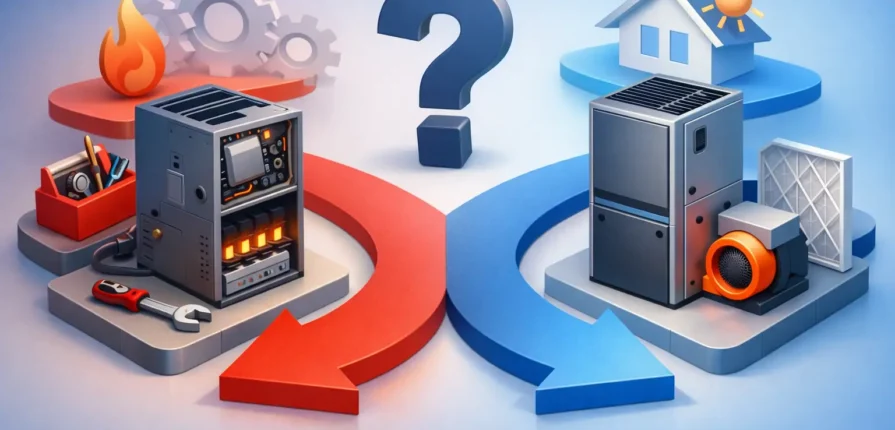
When your furnace quits on a cold Ohio night, the question gets real fast: furnace repair or replace? Most homeowners are not trying to become HVAC experts. They just want heat back, a fair price, and confidence they are not sinking money into a system that is on its last leg.
That decision usually comes down to three things – age, repair cost, and how well the system has been heating your home lately. A quick fix can absolutely be the right call. But there are also times when another repair only buys you a little time before the next breakdown.
How to decide on furnace repair or replace
A furnace does not need to be brand new to be worth repairing. Plenty of systems run well for years with the right maintenance and an occasional part replacement. If your unit is under 10 years old, the heat exchanger is in good shape, and the repair is straightforward, repair is often the practical choice.
The picture changes when the furnace is older, repairs are stacking up, or the system is no longer heating evenly. If you are calling for service every winter, paying higher utility bills, or hearing new noises every time the unit starts, replacement deserves a serious look.
One rule of thumb some homeowners use is the age-to-repair-cost test. If the repair bill multiplied by the age of the furnace starts getting close to the cost of replacement, it may not make sense to keep putting money into it. That is not a perfect formula, but it helps frame the decision.
When repair makes sense
Repair is usually the better move when the problem is limited and the rest of the system is in solid condition. A bad igniter, worn blower motor capacitor, faulty thermostat, or dirty flame sensor can often be fixed without turning the visit into a major project.
It also makes sense to repair when your furnace has a history of dependable performance. If this is the first meaningful issue in years and the system has been keeping the house comfortable without dramatic energy spikes, a repair can be the smartest use of your money.
Another factor is timing. Sometimes a homeowner needs heat restored quickly in the middle of winter and wants to plan a replacement later under less pressure. That is reasonable, especially if the furnace can be repaired safely and the technician is clear about what to expect next.
That said, a repair only makes sense if it restores reliability. If the fix is temporary and everyone knows another major failure is likely soon, it is better to say that plainly than pretend a patch job solves the problem.
Signs your furnace is still worth fixing
A furnace is often worth repairing if the unit is less than 12 to 15 years old, the repair cost is manageable, and the issue is isolated to one component. It also helps if your utility bills have stayed fairly consistent and your home still heats evenly from room to room.
Good maintenance history matters too. Furnaces that get seasonal tune-ups usually give more predictable performance and fewer surprises. If the equipment has been cared for, one repair does not automatically mean the system is failing overall.
When replacement is the better investment
There is a point where repairing an older furnace stops being the economical choice. If the system is 15 to 20 years old, parts are getting harder to find, and breakdowns are becoming more frequent, replacement can save money and aggravation over the next several seasons.
Rising utility costs are another clue. Older furnaces lose efficiency over time, and some were never as efficient as current models to begin with. If your furnace runs constantly, struggles to keep up, or leaves certain parts of the house cold, you may be paying more each month for less comfort.
Safety matters just as much as cost. Cracked heat exchangers, combustion issues, and carbon monoxide concerns should never be brushed aside. In those cases, replacing the system is often the responsible move, not the expensive extra.
A new furnace can also make sense if you are facing a major repair on a unit that has already had several smaller repairs. Spending a large amount on an aging system that may need another repair next winter is hard to justify.
Signs it is time to replace instead of repair
If your furnace needs frequent service, makes loud banging or rattling noises, cycles on and off constantly, or blows uneven heat, the system may be wearing out. Yellow burner flames instead of steady blue flames can also point to combustion problems that need immediate attention.
Age is still one of the biggest factors. A well-maintained furnace can last a long time, but once it moves into the later years of its expected life, every repair deserves a harder look. At that stage, replacement is often about avoiding repeated disruptions, not just lowering energy bills.
Cost is important, but so is what you get for the money
Homeowners naturally focus on the repair bill versus the cost of a new system. That is the right place to start, but it should not be the only thing you measure.
A lower repair price can feel like the obvious win until the furnace breaks again in a month. On the other hand, replacing a furnace too early can mean spending thousands before you really need to. The better question is not just, “What is cheaper today?” It is, “Which option gives me the better value over the next few years?”
If a repair gets your furnace back to dependable operation for a reasonable cost, that is value. If replacement gives you better efficiency, steadier comfort, warranty protection, and fewer emergency calls, that may be the better value even with a higher upfront price.
For property managers and business owners, downtime matters too. An unreliable heating system affects tenants, staff, and customers. In that setting, replacement may be the more practical business decision even before the old unit fully fails.
The role of efficiency and comfort
Many homeowners start with a breakdown but end up replacing because of comfort issues they have been dealing with for years. Maybe the back bedrooms never warm up. Maybe the furnace is loud enough to wake people up. Maybe the air feels dry and dusty every winter.
A newer system will not fix every comfort problem by itself, but it can improve a lot. Proper sizing, updated controls, and cleaner operation can make the house feel more consistent. If your old furnace has been struggling for a while, replacement can solve more than the immediate failure.
Efficiency also matters in Ohio winters. A furnace that burns more fuel to deliver less heat costs you every month. If your bills have been climbing and the system is aging, replacement can help control operating costs over time.
Get a straight answer, not a sales pitch
The best furnace decisions usually come after a real inspection, not a guess over the phone. A good technician should explain what failed, what the repair includes, what condition the rest of the furnace is in, and whether replacement is worth considering.
That does not mean every service call should turn into a replacement quote. It means you deserve honest information. If the furnace is repairable and still has good life left, you should hear that. If the system is near the end and putting more money into it is hard to justify, you should hear that too.
This is where experience matters. An experienced HVAC company can spot the difference between a furnace with one bad part and a furnace that is wearing out across the board. That kind of guidance helps you avoid rushed decisions and surprise costs.
For homeowners in central Ohio, especially during peak winter weather, speed matters just as much as honesty. When the heat is out, you need a technician who can diagnose the problem, lay out your options clearly, and get the job handled without wasting a day.
What to do if you are on the fence
If you are still unsure whether to repair or replace, ask a few practical questions. How old is the furnace? Is this the first major repair or one of several? Has the system been heating your home reliably? Are your energy bills rising? Most importantly, will this repair restore confidence, or are you just buying a little time?
There is nothing wrong with buying a little time if that is part of the plan. But it should be a decision you make knowingly. If your furnace can be repaired safely and give you another season or two, that may be the right move. If the numbers and the condition of the system point toward replacement, it is better to address it before the next emergency call.
A dependable heating system should not be a guessing game. The right answer is the one that keeps your home safe, warm, and reasonably priced to operate – not just tonight, but through the winters ahead.
Recent Comments