
The first hard cold snap in Ohio has a way of exposing every HVAC problem you meant to deal with back in September. A furnace that sounded “mostly fine” can suddenly start short cycling. Rooms that were a little chilly become impossible to heat. If you’re wondering how to prepare HVAC for winter, the goal is simple – catch small issues before they turn into no-heat calls on the coldest night of the year.
A good winter prep routine is not complicated, but it does need to be thorough. Some tasks are safe and practical for homeowners. Others should be handled by a trained technician, especially when gas heat, electrical components, or older equipment are involved. The right balance saves money, protects your system, and gives you a better shot at getting through the season without surprises.
Why winter HVAC prep matters more than most people think
Your heating system does not ease into winter. Once temperatures drop, it may run for long stretches every day, especially in older homes, drafty buildings, or properties with uneven insulation. That kind of demand puts stress on burners, ignitors, blower motors, belts, capacitors, and safety controls.
The biggest mistake property owners make is waiting for obvious failure. By then, what could have been a tune-up often turns into an emergency repair, and emergency repairs usually happen at the worst time. Winter prep is less about perfection and more about reducing risk. You are checking airflow, fuel delivery, thermostat performance, electrical connections, and system condition before the workload gets heavy.
How to prepare HVAC for winter before the cold sets in
Start with the filter. If it is dirty, replace it. Restricted airflow is one of the most common reasons furnaces lose efficiency, overheat, or struggle to keep up. A clean filter helps the blower move air properly and reduces strain on the system.
Next, check your thermostat settings. Switch the system to heat mode and raise the temperature a few degrees above room temperature. Listen for a normal startup sequence. The furnace should respond within a reasonable time, and warm air should begin moving through the vents. If the system hesitates, clicks repeatedly, or blows cool air for too long, it is worth getting looked at before winter hits full force.
Walk through the house and make sure supply vents and return grilles are open and not blocked by rugs, furniture, or storage. This sounds basic, but blocked airflow can make a healthy system perform poorly. It can also create hot and cold spots that homeowners often mistake for equipment failure.
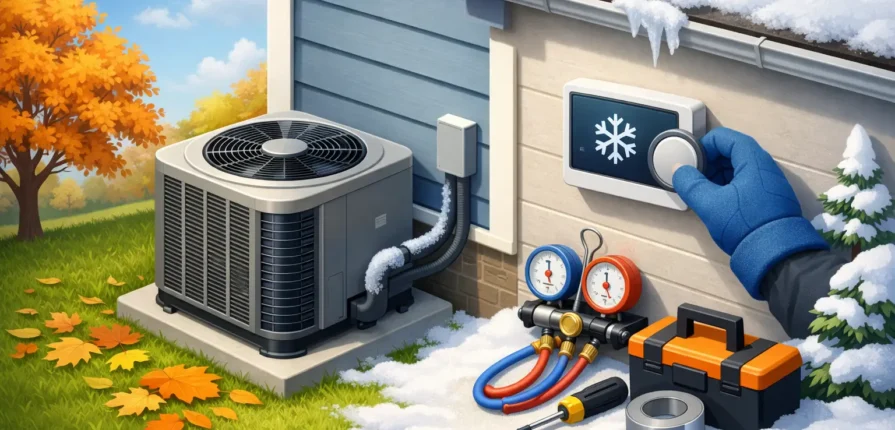
If you have a heat pump, clear leaves, grass, and debris away from the outdoor unit. That unit still works in winter and needs room to breathe. Snow and ice buildup can also cause trouble later, so keeping the area clear matters.
Check the parts of your system that affect safety
Heating equipment should be efficient, but safety comes first. If you have a gas furnace, pay attention to anything unusual – gas odors, delayed ignition, rumbling sounds, soot, or moisture around the unit. Those are not things to ignore.
Carbon monoxide protection is part of winter HVAC prep, too. Test your carbon monoxide detectors and replace batteries if needed. If you do not have detectors near sleeping areas and near the mechanical room, add them. A furnace can seem like it is running normally while still developing a dangerous venting or combustion issue.
Also take a quick look at the flue pipe if it is visible. Rust, gaps, or loose connections can signal venting problems. Homeowners should not try to diagnose combustion issues on their own, but they should know what looks off and call for service when something does.
The outdoor unit and ductwork still matter in winter
A lot of people focus only on the furnace and forget the rest of the system. But your HVAC equipment works as a whole. If the ductwork leaks badly, heated air can end up in the attic, crawl space, or basement instead of your living area. If insulation around ducts is damaged, your system may run longer than it should.
This is especially noticeable in homes with upstairs rooms that never seem to stay warm. The problem might be the furnace, but it might also be airflow loss in the duct system. That is why winter prep should include a basic visual inspection of accessible ducts for disconnected joints, crushed sections, or obvious gaps.
For heat pump systems, the outdoor section deserves close attention before winter. Coils should be reasonably clean, and the base of the unit should be free of heavy debris. You do not want to trap moisture or block drainage when temperatures swing above and below freezing.
What a professional winter tune-up should include
Knowing how to prepare HVAC for winter also means knowing where the do-it-yourself line ends. A professional tune-up goes beyond replacing a filter and testing the thermostat. It gives you a real picture of how the system is operating under load.
A proper heating inspection should include checking the heat exchanger area, testing ignition and safety controls, measuring airflow, inspecting electrical components, verifying temperature rise, checking gas pressure where appropriate, and looking for worn parts that could fail mid-season. On heat pumps, refrigerant-related performance and defrost operation may need attention as well.
This is where experience matters. A trained technician can catch signs of weak performance before they become a breakdown. That could mean spotting a failing inducer motor, a dirty flame sensor, a weak capacitor, or blower issues that are not obvious to the homeowner yet.
For older systems, a tune-up is even more valuable. If your furnace is already past the ten to fifteen-year range, small wear issues tend to stack up faster. That does not always mean replacement is necessary, but it does mean you want honest feedback on condition, efficiency, and repair risk heading into a long Ohio winter.
Signs your HVAC system may not be ready for winter
Some warnings are easy to miss because the system still technically runs. If your utility bills climbed last winter without a clear reason, if certain rooms never warmed up, or if the furnace seemed to run constantly, your system may already be struggling.
Other common signs include frequent cycling, unusual noises, weak airflow, dusty air, dry indoor conditions, or a pilot or ignition system that acts inconsistently. A burning smell at first startup can be normal if dust has settled over the off-season, but that smell should fade quickly. If it lingers, gets stronger, or is paired with poor performance, it needs service.
Property managers and owners of small commercial buildings should be especially careful here. One underperforming unit can quickly turn into tenant complaints, frozen pipes, or lost business if heat fails during a cold stretch.
Winter prep can lower costs, but it is not magic
A common question is whether winter HVAC maintenance will cut heating bills. Usually, yes – but the amount depends on the condition of the system, the age of the equipment, duct leakage, insulation levels, and thermostat habits.
A tune-up helps a system run closer to its intended efficiency. A clean filter and good airflow help too. But if you have an aging furnace with major wear or a home with poor insulation, maintenance alone will not solve everything. That is where a straightforward assessment matters. Sometimes the smart move is repair and maintenance. Sometimes it is budgeting for replacement before you get stuck with an emergency decision.
That honest middle ground is what most homeowners actually need. Not every noise means you need a new unit. Not every old furnace is worth putting more money into. It depends on repair history, safety condition, efficiency, and whether the system can reliably handle another winter.
A few smart habits once winter starts
After the season begins, keep checking the filter on schedule and pay attention to how the system sounds and cycles. Do not close too many vents in unused rooms, since that can affect airflow balance. Keep the area around indoor equipment clear so service is easier if a problem comes up.
If snow piles around a heat pump, clear it carefully. If your home has a humidifier attached to the HVAC system, make sure it is serviced and adjusted properly. Too little humidity makes the house feel colder. Too much can lead to window condensation and other moisture problems.
For homeowners in places like Lewis Center, Powell, and Sunbury, where winter weather can shift fast, the best time to prepare is before you actually need heat every day. Waiting until the first real freeze usually means fewer appointment options and a greater chance that a small issue turns urgent.
If you want the simplest answer to how to prepare HVAC for winter, it is this: get ahead of it. Change the filter, test the system, watch for warning signs, and have it inspected before the cold settles in. A little attention now is a lot cheaper and less stressful than finding out your heat is not ready when the temperature drops overnight.
Recent Comments