
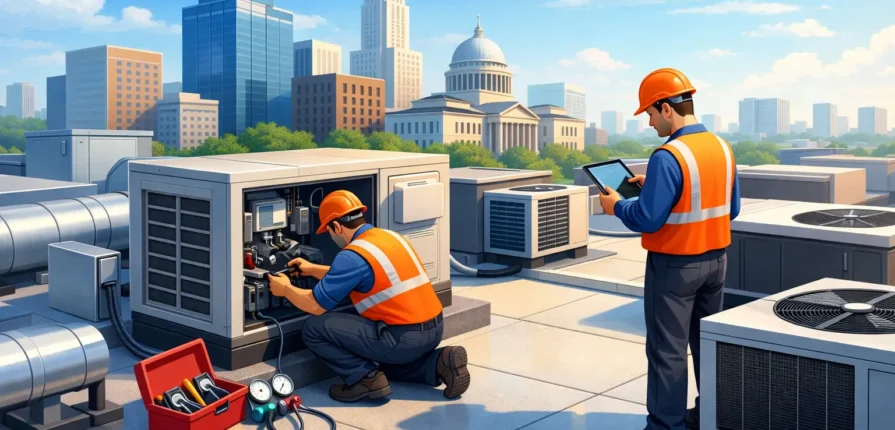
A failed rooftop unit can turn a normal workday into a tenant complaint, a lost sale, or a safety concern fast. When you need Columbus commercial hvac repair, the goal is not just getting air moving again. You need a clear diagnosis, a repair that holds up, and straight answers about what the equipment needs next.
For offices, retail spaces, restaurants, warehouses, and small commercial properties, HVAC trouble has a way of spreading beyond the mechanical room. Staff get uncomfortable, customers leave early, inventory may be at risk, and utility costs can climb while a struggling system works overtime. Fast service matters, but so does finding the real cause of the problem.
When Commercial HVAC Trouble Cannot Wait
Some HVAC issues can be scheduled during normal business hours. Others need immediate attention, especially during an Ohio heat wave or a hard winter cold snap. A unit that is running but not keeping up may be just as disruptive as one that will not start at all.
Call for commercial HVAC service promptly when your building has no heating or cooling, repeated breaker trips, a burning smell, water leaking around equipment, or major temperature differences from one area to another. Unusual banging, grinding, or screeching noises also deserve attention. Continuing to run equipment with a mechanical or electrical problem can turn a repairable issue into a larger failure.
For food service, medical offices, server rooms, and businesses with temperature-sensitive products, the threshold for calling should be even lower. A few degrees can make a real difference. It is better to get a technician involved early than to explain why the building was left without dependable climate control.
Common Columbus Commercial HVAC Repair Problems
Commercial systems work harder than most homeowners realize. Longer operating hours, heavier occupancy, frequent door traffic, kitchen heat, and older controls all put added stress on the equipment. The symptom you notice may not be where the actual problem starts.
The System Runs but the Building Is Still Uncomfortable
When a unit runs constantly without reaching the thermostat setting, the cause might be low refrigerant, a dirty coil, a worn blower component, a failing compressor, or ductwork that is losing conditioned air. In a commercial building, it may also be a zoning issue. One thermostat cannot always manage a space with sunny storefront windows, interior offices, and high-traffic entry doors.
A proper diagnosis looks beyond the thermostat. A technician should check operating pressures, electrical readings, airflow, filters, coils, belts where applicable, drains, and control signals before recommending a repair. Replacing parts based on a guess costs more and does not solve the underlying issue.
Uneven Temperatures Across the Property
Hot and cold spots are common in older buildings and spaces that have changed use over time. A room that was once storage may now have several employees, computers, or equipment producing heat. A system sized for the old layout may struggle with the new demand.
Sometimes the fix is straightforward, such as a failed damper, blocked return, dirty filter, or thermostat issue. Other times, the building needs airflow adjustments, zoning changes, duct repairs, or a conversation about equipment capacity. The right answer depends on the building and how it is used. There is no one-size-fits-all repair for uneven comfort.
Water Around an Air Handler or Rooftop Unit
Water leaks should never be ignored. Cooling equipment naturally produces condensation, but that moisture must drain correctly. A clogged drain line, cracked pan, failed condensate pump, frozen coil, or poor drain pitch can send water into ceilings, walls, flooring, or electrical components.
Shutting down the affected equipment may be necessary if water is near electrical connections or creating property damage. Quick commercial HVAC repair can help protect the unit, but it can also prevent a much bigger restoration bill.
Rising Utility Bills Without a Clear Reason
A sudden increase in energy use is often an early warning sign. Dirty coils, restricted filters, refrigerant problems, worn motors, faulty economizers, and control failures can all make a system run longer than it should. So can a thermostat that is reading incorrectly or a unit that is heating and cooling at the same time because of a control issue.
Higher bills do not automatically mean you need new equipment. But they do mean it is time to inspect the system. Repairing a smaller efficiency problem early can reduce strain on expensive components and help keep monthly operating costs in check.
What a Good Commercial HVAC Repair Visit Should Include
Commercial property owners and managers need more than a quick reset and a vague recommendation. You deserve to know what failed, why it failed, what the repair involves, and whether the equipment has other concerns that could affect operations.
A professional visit begins with listening to what has changed. Is the problem limited to one zone? Does it happen only in the afternoon? Did it start after a storm, renovation, or power outage? Those details help narrow the diagnosis and save time.
From there, the technician should inspect the equipment and test the relevant components. That includes checking electrical connections and safety controls, verifying airflow, examining filters and coils, and measuring system performance. Once the issue is identified, you should receive a plainspoken explanation of the repair options and cost before work begins.
There are times when a repair is clearly the practical choice. A bad capacitor, contactor, thermostat, blower motor, belt, drain issue, or control component can often be repaired without replacing the entire system. If a major component fails in an aging unit, the decision deserves a more careful look. Repair cost, remaining equipment life, efficiency, availability of parts, and the consequences of another breakdown all matter.
Repair or Replace? Make the Decision With Real Numbers
No property manager wants to replace commercial HVAC equipment before it is necessary. At the same time, repeatedly repairing an unreliable system can be expensive in labor, emergency calls, tenant disruption, and energy waste.
Ask for the age and condition of the equipment, the reason for the current failure, and whether the same issue is likely to return. If the system uses an older refrigerant, has a failing compressor or heat exchanger, needs frequent repairs, or cannot keep up with the building load, replacement may be worth considering. A newer system with an isolated part failure usually points toward repair.
The lowest immediate price is not always the lowest cost over the next few years. A good contractor will explain the trade-offs without pressuring you into a replacement that does not fit your property or budget.
Prevent Breakdowns Before They Disrupt Business
Preventive maintenance is one of the most practical ways to control commercial HVAC costs. It does not eliminate every failure, but it gives technicians a chance to catch worn parts, weak electrical connections, dirty coils, drain problems, and airflow restrictions before they become an emergency.
Maintenance needs vary by equipment type and how hard the building uses it. A lightly occupied office may have different needs than a restaurant, retail store, or facility running long hours. Seasonal service should include more than changing filters. Heating and cooling performance, safety controls, electrical components, drains, and moving parts all need attention.
Keeping a simple service record also helps. Note recurring comfort complaints, repairs, filter changes, and unusual utility spikes. That information makes it easier to spot a pattern and plan repairs or replacement on your schedule instead of during a crisis.
Dependable Help for Commercial HVAC Problems
When comfort affects your employees, customers, or tenants, waiting days for answers is not a workable plan. Professional Trade Service brings more than 40 years of industry experience to central Ohio properties, with skilled HVAC diagnostics, repair service, maintenance support, and emergency availability when the situation cannot wait.
If your building has lost heating or cooling, is leaking water, making alarming noises, or driving up energy costs, get it checked before the problem grows. The best next step is a clear diagnosis from a contractor who treats your downtime like it matters.
Recent Comments