
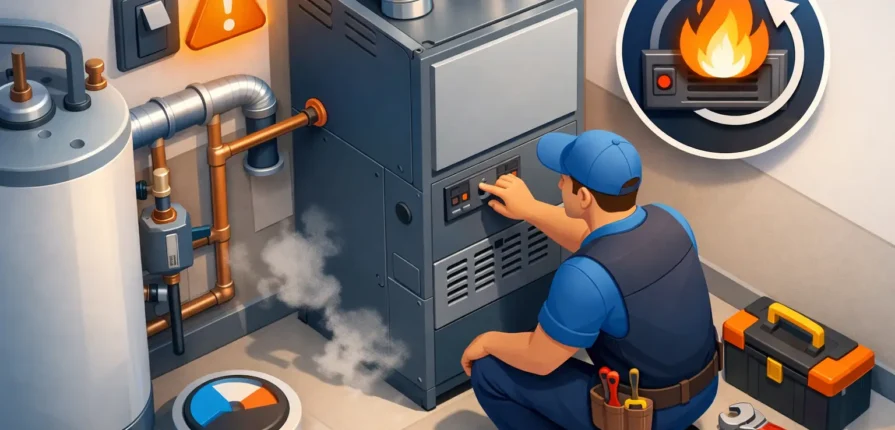
A furnace that suddenly quits on a cold Ohio night can make anyone want to start flipping switches. Slow down first. Knowing how to reset furnace safely can restore heat after a minor interruption, but a reset is not a fix for a furnace that is overheating, leaking gas, or repeatedly shutting itself down. Those safety controls are there for a reason.
For most homeowners, a safe reset means checking the thermostat, power, filter, and furnace switch before cycling power once. It does not mean opening sealed gas components, bypassing a limit switch, or pressing reset buttons over and over. If the furnace does not restart normally, the next step is a professional diagnosis.
Start with the safety checks
Before touching the furnace, stop and look for signs that a reset is not appropriate. Leave the area and call for emergency help if you smell natural gas or propane, hear a strong hissing sound near the gas line, see smoke, or suspect carbon monoxide exposure. Symptoms of carbon monoxide can include headache, dizziness, nausea, confusion, or unusual fatigue. Get everyone, including pets, into fresh air immediately.
Do not try to reset a furnace if a carbon monoxide alarm is sounding. Do not assume it is a bad battery or a false alarm. Call emergency services from outside the home, then have the fuel-burning equipment inspected before using it again.
If there is no gas odor, smoke, or alarm, check whether the furnace area is dry and clear. A wet floor, visible water around the unit, or a tripped breaker that will not stay on can point to an electrical, drainage, or equipment problem. That is a service call, not a homeowner reset.
How to reset furnace safely in 7 steps
The exact controls vary by furnace model, but this process works for many gas furnaces in homes and small commercial spaces. Read the instruction label on your furnace cabinet if it gives different directions. The manufacturer’s instructions always come first.
- Set the thermostat correctly. Set it to Heat and raise the temperature at least 3 to 5 degrees above the current room temperature. Make sure the thermostat has power. A blank screen may mean dead batteries, a tripped breaker, or a wiring issue.
- Check the furnace power switch. Most furnaces have a switch mounted on or near the unit that looks like a regular light switch. Confirm it is in the On position. It is easy for this switch to get bumped off during storage, cleaning, or other work in the utility area.
- Check the electrical panel. Find the breaker marked Furnace, HVAC, Heat, or Air Handler. If it has tripped, move it fully to Off, then back to On once. If it trips again, leave it off and call a technician. Repeated breaker trips can signal a short, failing blower motor, damaged wiring, or another electrical fault.
- Inspect the air filter. A clogged filter can choke airflow and cause the furnace to overheat, triggering a high-limit safety switch. Replace a dirty filter with the correct size and airflow rating. Avoid running the system with no filter in place, even temporarily.
- Make sure vents and returns are open. Check that supply registers are not closed behind furniture and return grilles are not blocked by rugs, boxes, or laundry. Restricted airflow is one of the most common reasons a furnace cycles off before it can heat the house.
- Turn off furnace power for a few minutes. Use the furnace service switch or the circuit breaker to turn the system off. Wait about three to five minutes. This gives the control board time to clear a minor lockout. Do not keep cycling it repeatedly. One controlled reset is enough.
- Restore power and wait for a normal heating cycle. Turn the power back on, keep the thermostat calling for heat, and listen. Many furnaces first start an inducer fan, then ignite, then bring on the main blower. This process may take a minute or two. Check for warm air at a nearby supply vent after the blower starts.
If heat returns and stays on, keep an eye on the system for the next few cycles. A one-time interruption can happen after a power outage or a briefly restricted filter. A furnace that locks out again needs attention, even if it eventually restarts.
What not to do when the furnace will not restart
The temptation to keep trying is understandable when the house is getting cold. But repeated resets can make a small issue worse and can hide an important warning sign. Many modern furnaces will lock out after several failed ignition attempts to prevent unburned gas from building up.
Do not remove burner covers, relight electronic ignition systems by hand, or attempt to bypass a door switch, flame sensor, rollout switch, or limit switch. Those parts protect your home and family from fire, overheating, and combustion problems. A technician may test components during a repair, but they should never be defeated for normal operation.
Also, do not keep resetting the breaker. If a breaker trips once and holds after being reset, monitor the furnace. If it trips again, stop. Electrical issues require proper testing, not a larger breaker or repeated attempts.
Why your furnace may need a reset
A furnace reset can clear a temporary control-board lockout, but it cannot correct the reason the lockout happened. The underlying cause may be simple, such as a clogged filter or thermostat battery. It may also involve a dirty flame sensor, failed igniter, pressure-switch issue, blocked vent pipe, condensate drainage problem, overheating condition, or failing blower motor.
High-efficiency furnaces can also shut down when their outside intake or exhaust pipes become blocked by snow, ice, leaves, or nests. You can visually check accessible outdoor vent terminations and carefully clear loose snow or debris around them. Do not insert tools deep into the pipe or disassemble venting. A blockage farther inside needs professional service.
If your furnace has a small viewing window or diagnostic light, note any blinking pattern before cycling power. The flash code can help a technician narrow down the problem. Take a photo or write down the pattern, then check the service label on the furnace door if one is present. Avoid guessing based on codes from a different model.
When to call for furnace repair right away
Call for professional furnace service if the unit will not restart after one safe reset, blows cool air, runs briefly and shuts off, makes banging or grinding noises, produces a burning smell, or trips the breaker. You should also call if the pilot light is yellow instead of mostly blue on an older standing-pilot furnace. A yellow flame can indicate a combustion issue that should be checked promptly.
For property managers, a no-heat call deserves quick action even if the furnace comes back on. Repeated lockouts can leave tenants without heat at the worst possible time and may lead to frozen pipes. Document what happened, including thermostat settings, breaker status, filter condition, and any furnace error code. That information helps speed up a repair.
Homeowners in Sunbury, Lewis Center, Powell, and nearby central Ohio communities can count on Professional Trade Service for furnace diagnostics, repairs, seasonal maintenance, and emergency no-heat service. An experienced technician can identify whether the issue is a simple airflow problem or a component that needs repair before it creates a larger breakdown.
Prevent the next furnace shutdown
The best reset is the one you never need. Check the filter monthly during heavy heating season and replace it as needed. Keep the area around the furnace clear, keep supply and return vents open, and make sure carbon monoxide alarms are installed and working on every level of the home.
A yearly furnace tune-up is also practical protection, especially for older equipment. A technician can inspect electrical connections, test safety controls, clean critical components, check combustion, and catch weak parts before they fail during a cold spell.
If your furnace needs more than one reset, trust what it is telling you. Turn the focus from getting it to start one more time to getting the real problem fixed safely.
Recent Comments