
A furnace that runs but never seems to warm the house is not necessarily a furnace problem. An air conditioner that blows air without cooling may not need refrigerant. Those distinctions matter because guessing at HVAC repairs can waste money, shorten equipment life, and leave your Powell home uncomfortable when the weather turns severe. Proper Powell Ohio HVAC diagnostics are about finding the actual cause before recommending a repair.
A good service call should give you more than a replacement part and a bill. You should know what failed, why it failed, whether another issue contributed to it, and what your options are moving forward. That is how homeowners and property managers can make sound decisions instead of reacting to the first scary symptom.
What HVAC Diagnostics Should Actually Include
Diagnostics are the testing process used to identify the source of a heating or cooling problem. A technician starts with what you are experiencing, then checks the equipment, controls, airflow, electrical components, and operating conditions that could create that symptom.
For example, a system that will not start could have a failed thermostat, a tripped breaker, a safety switch, a loose electrical connection, a damaged capacitor, or a failed control board. Replacing parts without testing is not a repair strategy. It is a gamble.
A thorough visit usually begins with a conversation. When did the problem start? Does it happen all day or only at certain times? Are there unusual noises, odors, high utility bills, hot or cold rooms, or water near the system? Those details help narrow the search, but the equipment still needs to be tested.
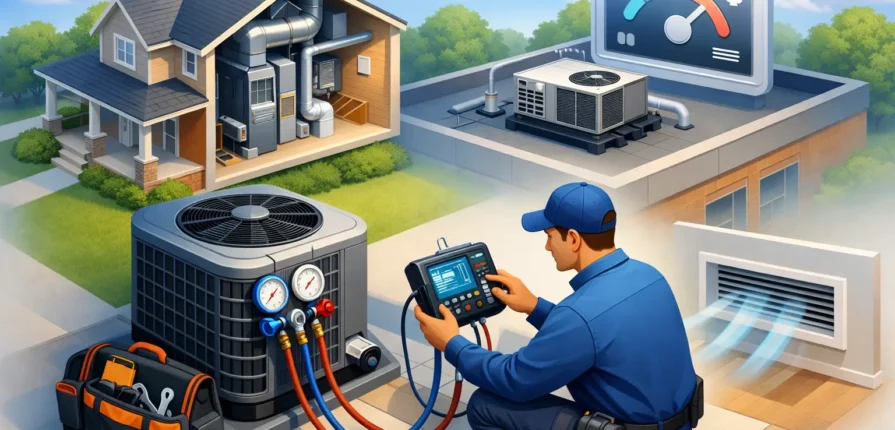
The technician should then inspect the accessible system components and measure how the equipment performs. Depending on the issue, that can include checking thermostat communication, voltage, amperage, capacitors, ignition sequence, safety controls, blower operation, temperature rise, refrigerant pressures, condensate drainage, filters, and duct airflow.
Not every call requires every test. A clear failed part may be found quickly. Other problems take more time because one symptom can have several possible causes. The right approach depends on the equipment, its age, the conditions in the home, and what the testing shows.
Common Problems Found During Powell Ohio HVAC Diagnostics
Central Ohio weather puts real demands on heating and cooling equipment. A system may appear fine during mild weather, then fail when it has to run for hours during a cold snap or a stretch of high summer heat. Many issues are small at first and become obvious only when the system is under load.
Airflow Restrictions
Restricted airflow is one of the most common and overlooked HVAC problems. A dirty filter, blocked return grille, dirty evaporator coil, failing blower motor, or undersized ductwork can reduce comfort and strain the system.
With cooling equipment, poor airflow can contribute to a frozen coil and weak cooling. With a furnace, it can cause overheating and repeated shutdowns. The fix might be as simple as correcting a filter issue, but it could also involve blower repair, coil cleaning, or ductwork improvements. Testing keeps those options from getting confused.
Electrical and Control Failures
Modern HVAC systems rely on electrical parts and safety controls to start, run, and shut down correctly. Capacitors, contactors, relays, circuit boards, pressure switches, limit switches, and thermostats can all create no-start or short-cycling complaints.
A part can look normal and still test bad. Likewise, a tripped safety switch may be doing its job because of another condition that needs attention. Replacing the switch without finding the reason it opened can lead to another breakdown.
Refrigerant and Cooling Issues
If an air conditioner is not cooling well, homeowners often assume it needs more refrigerant. Refrigerant is not a fuel that gets used up. A low charge usually points to a leak, an installation issue, or a past service decision that needs to be reviewed.
Accurate testing looks beyond pressure readings. The technician should consider airflow, coil condition, outdoor temperature, system operation, and signs of a leak before recommending a refrigerant repair. A frozen indoor coil may be caused by low refrigerant, but it can also be caused by poor airflow. That difference affects both the repair and the price.
Furnace Ignition and Safety Concerns
A furnace that clicks, starts briefly, or blows cold air needs prompt attention. Problems can involve the igniter, flame sensor, gas valve, draft system, pressure switch, venting, or control board. Some issues are straightforward repairs. Others can involve combustion safety and should never be ignored.
If you smell gas, notice soot, experience repeated headaches or dizziness, or a carbon monoxide alarm goes off, leave the area if necessary and follow emergency safety guidance. Do not keep resetting the furnace to see if it will run. Once the immediate safety issue is handled, have the system professionally inspected.
Why Symptoms Alone Can Be Misleading
HVAC equipment works as a connected system. The thermostat calls for heating or cooling, electrical controls start the equipment, motors move air, and safety switches monitor conditions. A failure in one area can look like a failure somewhere else.
Consider a home with uneven temperatures. The cause could be a poorly placed thermostat, leaking ductwork, inadequate insulation, a dirty filter, a weak blower, closed registers, or an aging system that no longer matches the home’s needs. There is no honest one-size-fits-all answer.
The same is true for high energy bills. Utility costs can rise because of weather, rate changes, thermostat settings, insulation gaps, duct leakage, dirty equipment, or declining efficiency. A diagnostic visit can identify HVAC-related contributors, but it should not promise that one repair will solve every comfort concern in the house.
Repair, Maintenance, or Replacement?
After testing, the next decision is often whether to repair the system or start planning for replacement. Age matters, but it is not the only factor. A well-maintained older system with a minor electrical repair may still be worth fixing. A newer system with recurring issues may need a closer look at installation quality, airflow, or warranty coverage.
Ask practical questions before approving major work. What part failed? Is this a one-time issue or part of a larger pattern? What does the repair restore? Are there signs of additional wear? How does the repair cost compare with the system’s condition and expected remaining life?
A dependable contractor should explain the findings in plain language and give you room to decide. You may choose a repair to get through the season, especially if the system has otherwise been reliable. Or you may decide that repeated breakdowns, comfort problems, and rising operating costs make replacement the better long-term move. Both can be reasonable decisions when the facts are clear.
What You Can Do Before the Technician Arrives
A few quick checks can save time without putting you at risk. Confirm that the thermostat is set to the correct mode and temperature. Check whether the filter is badly clogged, make sure supply and return vents are open, and look for a tripped breaker. If the outdoor unit is cooling, clear leaves and debris from around it, but do not open electrical panels or attempt repairs yourself.
It also helps to write down what you noticed: when the system stopped working, any flashing error codes, changes in noise, and whether the issue affects the whole building or only certain rooms. That information gives the technician a better starting point.
Get Answers Before a Small Problem Grows
Waiting can turn a minor issue into a larger repair, particularly when a system is overheating, freezing up, short-cycling, or making new noises. Fast service matters, but accurate testing matters just as much. Professional Trade Service brings more than 40 years of hands-on trade experience to heating and cooling problems, with emergency help available when comfort cannot wait.
If your system is acting differently, do not settle for a guess or keep resetting it until it quits completely. A clear diagnostic explanation gives you the information to protect your home, your budget, and your comfort through the next stretch of Ohio weather.
Recent Comments