
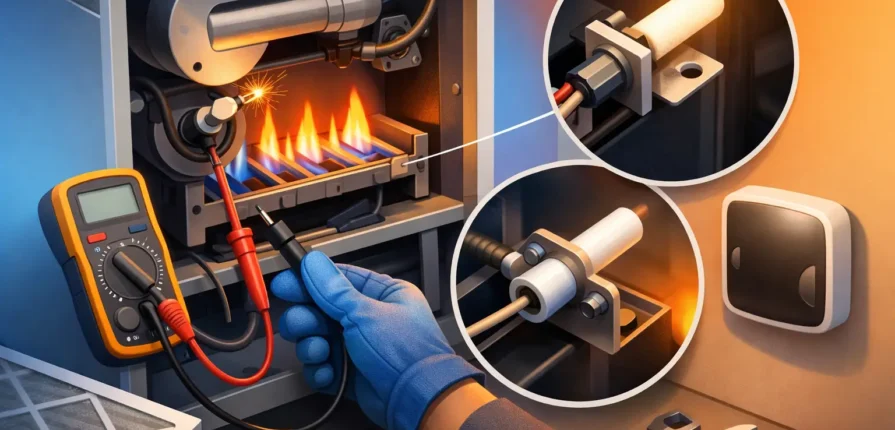
A furnace can sound like it is about to start, then shut down without producing heat. You may hear the blower run, a click from the cabinet, or several failed startup attempts. Furnace ignition problems are frustrating on a cold Ohio night, but they are also a sign that the system needs attention. Some causes are simple to check safely. Others involve gas, electricity, combustion, or safety controls and should be left to a qualified heating technician.
The key is knowing when to stop troubleshooting. Repeatedly resetting a furnace that will not ignite can make a small repair harder to diagnose and can put unnecessary strain on components. Start with the basic checks, watch what the furnace does, and call for service if it will not complete a normal heating cycle.
How a Furnace Is Supposed to Ignite
Most modern gas furnaces follow a set startup sequence. The thermostat calls for heat, the inducer motor starts, and safety switches confirm that the furnace can vent combustion gases correctly. Then the igniter heats up or sparks, the gas valve opens, and the burners light. A flame sensor verifies that a steady flame is present. Once those checks are complete, the main blower turns on and sends warm air through the home.
If any step fails, the furnace may shut itself down. That safety response is doing its job. The challenge is identifying where the sequence stopped.
Older furnaces may use a standing pilot light instead of an electronic igniter. A pilot that will not stay lit has different possible causes, including a dirty pilot opening, thermocouple issue, or gas supply problem. Do not attempt to relight a pilot if you smell gas or are unsure of the manufacturer’s lighting instructions.
Common Furnace Ignition Problems and What They Mean
A dirty flame sensor shuts the burners off
One of the most common heating repair calls starts the same way: the burners light for a few seconds, then go out. The furnace may try again two or three times before going into a lockout mode.
In many cases, the flame sensor is dirty. This small metal rod confirms that the burners are producing flame. When buildup prevents it from reading the flame properly, the control board closes the gas valve as a safety measure. A technician can clean or replace the sensor and check for the underlying causes of the buildup. It is usually a straightforward repair, but handling the part incorrectly can damage it or create a different issue.
A failed hot surface igniter never lights the burners
A hot surface igniter glows bright orange before the burners light. If you hear the furnace begin its cycle but never see a glow or flame, the igniter may be cracked, burned out, or not receiving power.
Igniters are fragile. They can fail from normal wear, power issues, airflow problems, or age. They are not a good part to handle without training because skin oils, improper installation, and the wrong replacement part can shorten their life. A technician should also confirm whether the igniter itself failed or whether a control board, wiring, or safety switch prevented it from turning on.
A dirty filter creates an airflow and safety issue
A clogged air filter does not usually stop ignition immediately, but it can contribute to overheating and limit the furnace’s ability to run normally. In severe cases, a high-limit switch shuts the burners down to protect the equipment.
Check the filter first. If it is packed with dust or visibly discolored, replace it with the correct size and type for your system. Avoid installing an overly restrictive filter just because it sounds more effective. Some furnaces need a specific filter rating to maintain proper airflow. If a clean filter does not solve the problem, there may be a blower, ductwork, or limit-switch issue that needs professional testing.
Venting or pressure switch trouble stops the cycle early
High-efficiency furnaces use intake and exhaust pipes, often made of PVC, to bring in air and vent combustion gases. Snow, leaves, animal nests, ice, or other obstructions around an exterior vent can prevent the furnace from proving safe airflow.
You can inspect accessible outdoor vent openings for obvious blockage, but do not dismantle the vent system or bypass a pressure switch. Pressure switches, condensate drains, inducer motors, and vent piping work together. A furnace that starts its inducer motor but never reaches ignition may have a restriction, drain issue, failed switch, or venting problem that requires a proper diagnosis.
Gas supply or gas valve issues need immediate care
If other gas appliances are also not working, there may be a utility or gas supply issue. Confirm that the furnace gas shutoff valve has not been accidentally turned off, but do not force a valve that is stuck or damaged.
If you smell gas, leave the building right away. Do not operate lights, switches, appliances, or your phone inside the home. Once you are safely outside, contact the gas utility or emergency services as appropriate. A gas odor is not a do-it-yourself furnace repair situation.
Electrical faults and control board problems can mimic other failures
A tripped breaker, loose wiring connection, damaged thermostat wire, or failing furnace control board can interrupt the ignition sequence. Some furnaces display diagnostic lights through a small viewing window. The flash pattern can help a technician narrow down the fault, but it is not always a final diagnosis.
Before calling, you can safely make sure the thermostat is set to Heat, the temperature setting is above the current room temperature, the furnace power switch is on, and the breaker has not tripped. If a breaker trips again after being reset once, leave it off and schedule service. Repeated trips point to an electrical problem that should not be ignored.
Safe Checks Before You Schedule Furnace Repair
A few basic checks can save time and may restore heat without a repair visit. Confirm the thermostat settings, install a clean filter if needed, check that supply vents are open, and make sure the furnace access panel is fully closed. Many furnaces will not operate with a loose door panel because the safety switch is not engaged.
For a high-efficiency unit, look at the outdoor intake and exhaust openings from a safe distance. Remove loose snow or leaves around the openings, but never insert tools or hands into the pipes. Then turn the furnace power off for a few minutes and turn it back on once. This may clear a temporary lockout after a brief power interruption.
Do not reset the furnace over and over. If it locks out again, note what you saw and heard: whether the igniter glowed, whether the burners lit briefly, whether there was a flashing error light, and whether the blower ran. Those details help a technician reach the right repair faster.
When Furnace Ignition Problems Need a Professional
Call for heating service promptly when the furnace repeatedly clicks but will not light, burners ignite and shut off, the unit makes unusual banging or grinding sounds, or the system has gone into lockout. You should also call if you see soot, notice water around the furnace, smell burning electrical components, or have a carbon monoxide alarm sounding.
Carbon monoxide concerns require immediate action. Get everyone, including pets, outside into fresh air, call emergency services if anyone has symptoms such as headache, dizziness, nausea, confusion, or chest pain, and do not reenter until it is safe to do so. Every home with fuel-burning equipment should have working carbon monoxide alarms installed according to local guidance.
A trained technician can test ignition components, gas pressure, electrical signals, safety switches, airflow, venting, and combustion. That full diagnosis matters because replacing a failed part without finding the reason it failed can lead to another breakdown later in the season.
Preventing Ignition Trouble Before Winter
Annual furnace maintenance gives a technician a chance to inspect the igniter, clean the flame sensor, test safety controls, check venting, verify temperature rise, and look for worn electrical connections. It also catches small issues before they turn into a no-heat call during the first hard freeze.
Homeowners can help between visits by changing filters on schedule, keeping the furnace area clear, making sure exterior vents stay open, and paying attention to new startup noises. A furnace does not need to stop completely to tell you it needs service.
For homeowners and property managers in the Delaware-area communities, Professional Trade Service can diagnose ignition issues, explain the repair in plain language, and help get heat restored without guesswork. When your furnace is trying to tell you something, acting early is usually safer, less stressful, and easier on the budget than waiting for the next cold night.
Recent Comments