
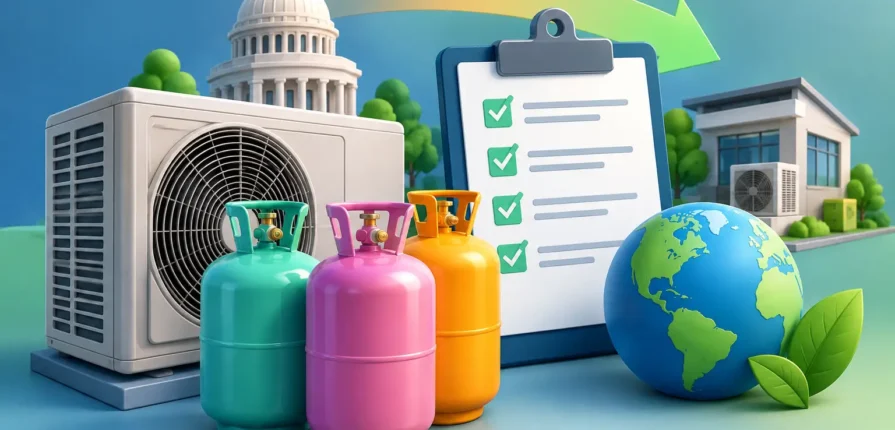
A new air conditioner may look much like the one it replaces, but what runs inside it is changing. Refrigerant regulation changes are reshaping the equipment manufacturers build, the parts technicians use, and the questions homeowners should ask before approving a major HVAC repair or replacement.
For homeowners and property managers, the main message is straightforward: you do not need to replace a working air conditioner just because it uses an older refrigerant. But if your system is aging, leaking, or facing an expensive repair, the refrigerant it uses should be part of the decision.
Why refrigerant regulations are changing
Federal rules are moving the HVAC industry away from hydrofluorocarbon refrigerants, commonly called HFCs, because of their high global warming potential. R-410A, the refrigerant found in many central air conditioners and heat pumps installed over the last two decades, is part of that transition.
New residential air conditioning and heat pump equipment is now being designed around lower-global-warming-potential refrigerants. Depending on the manufacturer and system, you may hear names such as R-454B or R-32. These refrigerants are intended for new equipment built specifically to use them.
This is not the same situation as the R-22 phaseout, although there are similarities. R-22 became costly and difficult to obtain for older systems. R-410A is still available for servicing existing equipment, but its supply, price, and long-term availability can be affected by production limits and market demand. That makes preventive maintenance and leak repair more valuable for owners of older systems.
What refrigerant regulation changes mean for existing systems
If your current AC or heat pump uses R-410A and is cooling properly, there is no rule requiring you to remove it or replace it immediately. You can continue to maintain and repair the system as long as repairs are practical and parts are available.
That said, a refrigerant leak is never something to ignore. A system that needs refrigerant added repeatedly has a leak that needs to be located and repaired. Simply adding more refrigerant may restore cooling for a short time, but it does not solve the underlying problem. It also becomes a more expensive habit as refrigerant costs rise.
When an older system has a small, repairable leak and otherwise runs well, repair may be the sensible choice. When it has a major coil leak, compressor trouble, frequent breakdowns, or poor efficiency, replacement can make more financial sense. The right answer depends on the system’s age, condition, repair cost, energy use, and how long you plan to keep the property.
A good contractor should explain those trade-offs plainly. You should not be pressured into replacement because of regulations alone, but you also deserve an honest picture of what a major repair could mean for an older refrigerant system.
New equipment will use different refrigerants
Most new central AC systems and heat pumps entering the market are transitioning to lower-GWP refrigerants. Federal requirements apply to newly manufactured equipment, while installation deadlines and transition allowances can vary by equipment category and production date. That is why two replacement quotes may list systems with different refrigerants during the changeover period.
The newer refrigerants are classified as A2L, meaning they are mildly flammable under specific conditions. That word can sound alarming, but the equipment is engineered around the refrigerant it uses. Manufacturers have added safety features, updated controls, and installation requirements to address those characteristics.
The practical takeaway is simple: the refrigerant cannot be treated as an afterthought. A new A2L system should be installed, commissioned, and serviced by trained HVAC professionals using the correct tools and procedures. Homeowners should not try to handle refrigerant, modify refrigerant lines, or use a do-it-yourself recharge kit.
Can an older R-410A system be converted?
In most cases, no. An R-410A air conditioner is not designed to be converted to R-454B or R-32 by swapping refrigerant. Compressors, metering devices, controls, labeling, service procedures, and safety requirements all matter. Mixing refrigerants or using an unapproved substitute can damage equipment, create safety issues, void warranties, and make future service much harder.
If your current system needs replacement, the dependable path is a complete, matched system designed by the manufacturer for its approved refrigerant. That includes making sure the indoor and outdoor equipment are compatible. Installing only part of a system may look like a way to save money, but mismatched equipment can reduce efficiency, shorten equipment life, and create warranty complications.
How the changes may affect repair costs
Refrigerant regulation changes do not automatically make every AC repair expensive. Many common repairs have nothing to do with refrigerant. A failed capacitor, contactor, blower motor, thermostat, drain issue, or electrical problem can often be repaired without opening the sealed refrigerant system.
Costs can change when a system has a confirmed refrigerant leak or needs a major refrigeration component. Availability and pricing for R-410A can fluctuate, and leak repairs can require diagnostic time, parts, pressure testing, evacuation, and an accurate recharge. A proper repair is more involved than adding refrigerant and hoping for the best.
For commercial property managers, planning matters even more. Multiple aging units can create budget surprises if they are all nearing the same point in their service life. A seasonal inspection can identify units with low charge, damaged coils, failing capacitors, or declining performance before they turn into a no-cooling call during a heat wave.
What to ask before approving a repair or replacement
When your AC needs refrigerant work or you are comparing replacement options, ask direct questions. What refrigerant does my current system use? Is there a confirmed leak, and where is it? Is repair likely to provide reliable service, or is this the beginning of repeated problems?
For a replacement quote, ask which refrigerant the new system uses, whether the equipment is a manufacturer-matched system, and what work is included with installation. The answer should cover electrical connections, refrigerant line evaluation, drainage, startup testing, permits when required, and warranty registration. A lower upfront price does not help if key installation work is left out.
It is also reasonable to ask for a repair-versus-replace comparison. For example, an eight-year-old system with a straightforward leak repair may have plenty of useful life left. A 15-year-old system with a leaking evaporator coil and a weak compressor is a different situation. The best decision is based on the full condition of the equipment, not one number on a quote.
Maintenance matters more during the transition
Preventive maintenance helps any air conditioner, but it is especially useful when refrigerant costs and equipment options are changing. During a professional tune-up, a technician can check operating pressures, electrical components, airflow, coil condition, drainage, and overall performance. Catching a small issue early can help prevent a major breakdown when temperatures climb.
Homeowners can help by replacing filters regularly, keeping outdoor units clear of grass and debris, and paying attention to warning signs. Weak airflow, ice on refrigerant lines, warm air from vents, rising utility bills, water around the indoor unit, or a system that runs constantly all deserve a service call.
If you are in Delaware, Ohio, or a nearby central Ohio community and your system is leaking, underperforming, or nearing replacement age, get clear answers before the next hot stretch arrives. Professional Trade Service can evaluate the equipment you have, explain your options without guesswork, and help you make a practical decision that protects your comfort and budget.
Recent Comments