
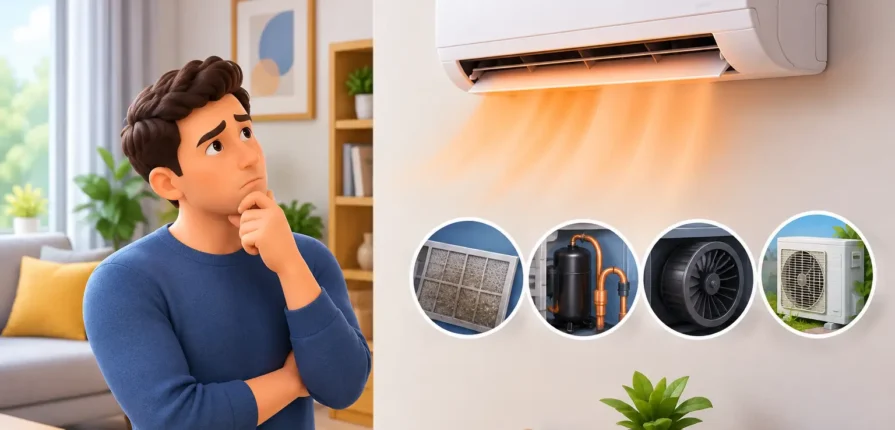
A hot Ohio afternoon is a bad time to find warm air coming from the vents. If you are searching for why AC warm air is blowing through your home, the problem may be as simple as a thermostat setting or dirty filter. It can also point to a failed part, a refrigerant issue, or an outdoor unit that is not running. A few safe checks can help you understand what is happening. After that, a qualified HVAC technician can pinpoint the repair without guesswork.
Why Is My AC Blowing Warm Air?
Your air conditioner does not create cold air. It pulls heat out of the indoor air and releases that heat outdoors. For that process to work, the thermostat, indoor blower, outdoor condenser, refrigerant system, electrical components, and airflow all have to do their jobs.
When one part fails, the blower may still push air through the vents, but it will not be cooled. That is why a system can sound like it is running while the house keeps getting warmer.
The temperature outside matters, too. On a 95-degree day, an AC system may run for long stretches to hold your chosen indoor temperature. But it should still deliver noticeably cooler air and gradually bring the temperature down. If the air feels room temperature or hot, or the home is getting warmer while the system runs, it is time to investigate.
Start With These Safe Checks
Before calling for repair, check the items that homeowners can safely inspect. These steps do not require removing panels, handling wiring, or adding refrigerant.
Check the thermostat settings
Make sure the thermostat is set to Cool, not Heat or Off. Set the desired temperature at least a few degrees below the current room temperature. If it is set correctly but the thermostat screen is blank, replace the batteries if your model uses them. A tripped breaker or other power issue may also be involved.
Look at the fan setting as well. Set it to Auto, not On. With the fan set to On, the indoor blower runs between cooling cycles and circulates unconditioned air. That air can feel warm, even if the air conditioner is cooling properly when the system is actively running.
Look at the air filter
A clogged filter restricts airflow. Restricted airflow can make your home less comfortable, raise utility costs, and contribute to a frozen indoor coil. Pull the filter out and hold it up to the light. If you cannot see light through it, replace it with the correct size and type.
Do not assume a thicker, ultra-high-efficiency filter is always better. Some systems cannot handle the added restriction. Use the filter rating recommended for your equipment, and change it on schedule, especially during heavy summer use.
Check the outdoor unit from a distance
With the thermostat calling for cooling, the outdoor condenser should usually be operating. You should hear the fan and compressor, although modern systems can be quieter than older equipment. Keep leaves, grass clippings, mulch, and stored items at least two feet away from the unit so it can release heat.
If the outdoor unit is completely silent while the indoor blower runs, do not keep resetting breakers or repeatedly turn the thermostat on and off. The problem could be a breaker, disconnect, capacitor, contactor, compressor, or another electrical component. Those repairs need professional service.
Look for ice or water where it should not be
Ice on the copper refrigerant line, indoor equipment, or outdoor unit is a warning sign. So is water around the furnace or air handler. Turn the cooling setting off and set the fan to Auto. A frozen coil needs time to thaw, but the underlying cause still needs to be found. Running an AC with ice on the coil can lead to more damage.
Common Reasons an AC Starts Blowing Warm
The outdoor condenser is not removing heat
The outside unit has one job that cannot be skipped: releasing the heat collected inside your home. When it is not running correctly, the indoor blower may continue moving air, but the cooling cycle stops doing its work.
A weak capacitor is a common cause during hot weather. This part helps the motor and compressor start. A damaged contactor, failed fan motor, electrical issue, or worn compressor can produce similar symptoms. These are not good do-it-yourself repairs. Capacitors and electrical components can hold a dangerous charge even after power is shut off.
Low refrigerant is affecting the cooling cycle
Refrigerant moves heat between the indoor and outdoor portions of the system. If the level is low, the system is usually leaking. Refrigerant is not a fuel that gets used up under normal operation.
Low refrigerant can cause weak cooling, longer run times, ice buildup, hissing sounds, and higher energy bills. Simply adding refrigerant without finding the leak is a temporary fix at best. A proper repair involves diagnosing the leak, repairing it when practical, and charging the system to the manufacturer’s specifications.
Airflow is restricted
A dirty filter is only one possible airflow problem. Closed or blocked supply vents, a dirty evaporator coil, a blower problem, damaged ductwork, or an undersized return can all limit the air moving through the system.
Keep supply and return vents open and clear of furniture, rugs, or boxes. Closing many vents to force more air into one room often makes matters worse. It changes the airflow balance the system was designed to use and can put unnecessary strain on equipment.
The evaporator coil is frozen or dirty
The evaporator coil sits inside near the blower and absorbs heat from your indoor air. If it is coated with dirt or frozen, it cannot transfer heat efficiently. The vents may blow warm air, or airflow may become noticeably weak.
A frozen coil can be caused by restricted airflow, low refrigerant, a blower issue, or a combination of problems. Once the ice is gone, the system might appear to work for a while. That does not mean the issue is fixed. If it freezes again, schedule a diagnostic visit before the problem damages the compressor.
The system is too small, aging, or failing under heavy demand
Not every warm-house complaint is a sudden breakdown. An older AC may still run but lack the capacity to keep up during extreme heat. Poor attic insulation, air leaks, sun-facing windows, added living space, or changes to the home can also increase the cooling load.
That said, a system that previously kept the home comfortable should not suddenly struggle without a reason. A professional can measure temperature split, airflow, electrical performance, refrigerant pressures, and overall system condition to separate a repairable issue from an equipment capacity problem.
When to Call for AC Repair Right Away
Call for service promptly if the AC is blowing warm air and you notice a burning smell, buzzing from the outdoor unit, repeated breaker trips, ice on the refrigerant line, water around indoor equipment, or no airflow at all. Shut the system off if you smell burning or see signs of an electrical problem.
It is also worth calling when the house is becoming unsafe for a young child, older adult, pet, or anyone with health concerns. Fast action can prevent a small failure from turning into a compressor replacement or complete system breakdown.
For homeowners in Sunbury, Lewis Center, Powell, and nearby central Ohio communities, Professional Trade Service can diagnose the cause of warm AC air, explain the repair plainly, and help you make a practical decision for your home. The goal is not to sell work you do not need. It is to get your cooling back on safely and correctly.
A Little Maintenance Prevents Many Warm-Air Calls
Seasonal maintenance cannot prevent every failure, but it catches many of the issues that cause poor cooling. During a proper tune-up, a technician can inspect electrical connections, test capacitors, clean components as needed, check drainage, verify airflow, and spot worn parts before a heat wave exposes them.
In the meantime, change filters regularly, keep the outdoor unit clear, and pay attention when cooling performance changes. An AC that takes longer to cool or starts running constantly is giving you useful information. Addressing that early is usually easier on your comfort and your budget than waiting for the first truly hot day.
Recent Comments