
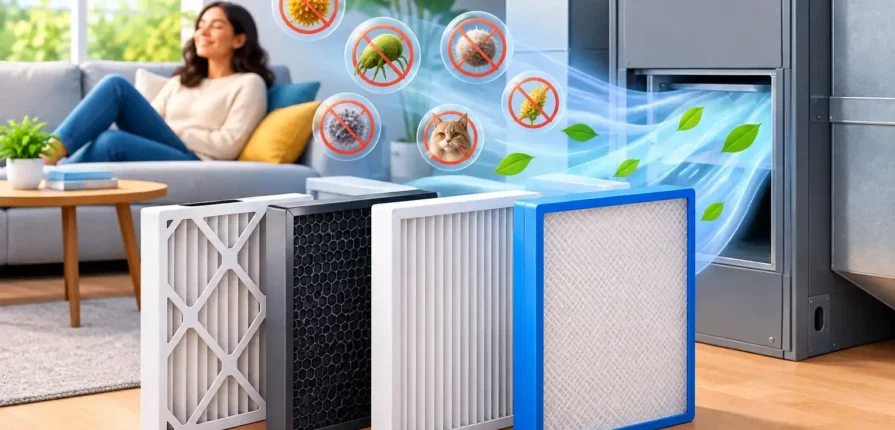
A furnace filter is not a cure for allergies, but it can make a noticeable difference when your home is closed up for an Ohio winter. The best furnace filters for allergies capture more of the particles that trigger sneezing, congestion, itchy eyes, and asthma symptoms without putting unnecessary strain on your heating system.
That last part matters. A filter that is too restrictive can reduce airflow, make a furnace work harder, and contribute to comfort or equipment problems. The goal is not simply to buy the highest-rated filter on the shelf. It is to choose the strongest filter your specific HVAC system can handle and replace it on schedule.
What Allergens Can a Furnace Filter Catch?
Your return-air filter catches particles before they travel through the furnace and ductwork. A quality pleated filter can help reduce airborne dust, pollen, pet dander, mold spores, and some fine debris. These are common troublemakers for allergy sufferers, particularly during spring and fall pollen seasons or when windows stay shut for weeks at a time.
Filters do not solve every indoor air problem. They cannot remove allergens already settled into carpet, furniture, bedding, or vents. They also do not address a damp basement, a leaking duct, or a clogged condensate drain that may encourage mold growth. Still, the right filter is a practical first line of defense because your HVAC system moves air throughout the home every day.
Best Furnace Filters for Allergies: Start With MERV
MERV stands for Minimum Efficiency Reporting Value. It is the rating used to describe how effectively an air filter captures particles of different sizes. In general, a higher MERV number catches smaller particles, but higher is not automatically better for every furnace.
For most homes with allergy concerns, a pleated MERV 11 filter is a strong starting point. It captures a meaningful amount of pollen, pet dander, mold spores, and finer dust while remaining a reasonable fit for many residential systems. If your furnace is designed for it, a MERV 13 filter can offer better filtration of smaller airborne particles.
A basic fiberglass filter, often rated around MERV 1 to 4, mainly protects the equipment from large dust and debris. It does very little for allergy control. A standard pleated MERV 8 filter is better than fiberglass for household dust and larger pollen particles, but it may not be enough for a family dealing with pets, seasonal allergies, or asthma.
The right choice depends on your equipment, ductwork, filter size, and blower capacity. A technician can confirm what your system can safely use instead of leaving you to guess based on the marketing claims on a filter package.
Why MERV 13 Is Not Always the Right Answer
MERV 13 filters are often recommended for improved indoor air quality, and for good reason. They catch finer particles than MERV 8 or 11 options. But if your furnace has a narrow one-inch filter slot, weak airflow, dirty ducts, or a blower not designed for that resistance, installing a denser filter can create problems.
Restricted airflow may lead to uneven heating, longer run times, higher energy bills, or overheating that causes the furnace to shut down. In a worst-case situation, it can add wear to components that were already struggling.
A four-inch or five-inch media cabinet gives a filter much more surface area than a one-inch filter. That often allows the system to use higher-efficiency filtration with less pressure drop. If allergies are a major concern in your household, upgrading the filter cabinet may be a smarter long-term move than forcing a restrictive one-inch filter into an older system.
Pleated Filters Beat Cheap Fiberglass Filters
For allergy relief, choose a quality pleated filter rather than a flat fiberglass model. Pleated media has more surface area, which helps it capture particles while allowing air to move through the filter more evenly.
Look for a filter that fits tightly in the slot. Even a good MERV 11 filter cannot do its job if air slips around the edges. Check the size printed on your existing filter, but measure the actual opening if you have had fit problems before. Nominal filter sizes and true dimensions are not always identical.
Avoid washable electrostatic filters unless you are committed to cleaning and drying them properly. Their performance can vary, and a dirty reusable filter can quickly become a source of restricted airflow. For most busy homeowners, a disposable pleated filter changed on schedule is the more reliable option.
How Often Should You Change an Allergy Filter?
Do not rely only on the “lasts up to 90 days” label. Filter life depends on how much air your system moves and what is happening in the home. Pets, remodeling dust, a fireplace, frequent cooking, and nearby construction can all load a filter faster.
For a one-inch MERV 11 or MERV 13 filter, check it every 30 days and expect to change it about every 30 to 60 days. A deeper four-inch or five-inch media filter may last six to 12 months, but it should still be inspected regularly. If the filter looks gray and packed with debris, replace it. Do not wait for the calendar.
During high-pollen periods or when allergy symptoms flare indoors, check sooner. A clean filter supports cleaner air and keeps your furnace from fighting for airflow.
Other Steps That Make Filters Work Better
A furnace filter works best as part of a basic indoor air quality plan. Start by keeping return vents open and clear of furniture, rugs, or storage boxes. Closed or blocked returns can reduce airflow and make filtration less effective.
Vacuum regularly with a sealed, high-efficiency vacuum, especially in homes with shedding pets. Wash bedding in hot water, control indoor humidity, and repair water leaks quickly. In central Ohio, basements and crawl spaces deserve attention because excess moisture can support mold growth and musty odors.
If someone in the home has serious allergies or asthma, a portable room air cleaner with a true HEPA filter can help in bedrooms and other high-use spaces. This is different from placing a HEPA filter in a typical furnace. Most residential HVAC systems are not built to handle a true HEPA filter without specialized equipment and design changes.
An HVAC inspection is also worthwhile if you notice dust blowing from vents, weak airflow, rooms that never stay comfortable, or a furnace that cycles on and off too often. The filter may be part of the issue, but it may not be the whole story.
Signs Your Filter Choice Is Hurting Furnace Performance
Pay attention after changing to a higher-MERV filter. If your furnace suddenly sounds louder, airflow at the registers feels weaker, some rooms heat unevenly, or the system starts shutting down unexpectedly, the filter could be too restrictive for the setup.
A dirty filter can cause many of the same symptoms. Replace it first if it is overdue, then see whether performance improves. If problems continue, do not keep experimenting with filter ratings while the furnace struggles. A professional diagnosis can identify whether the issue is airflow, a blower problem, duct leakage, a dirty coil, or a furnace safety control doing its job.
Professional Trade Service helps homeowners make practical filtration choices during furnace maintenance and repair visits. The right recommendation should protect both your family’s comfort and the equipment you depend on during cold weather.
A good filter will not make every allergy disappear, but the right MERV rating, proper fit, and timely replacement can make your home feel noticeably cleaner. If your furnace cannot maintain steady airflow with the filter you need, that is a reason to have the system checked before the next cold snap turns a small issue into a no-heat call.
Recent Comments