
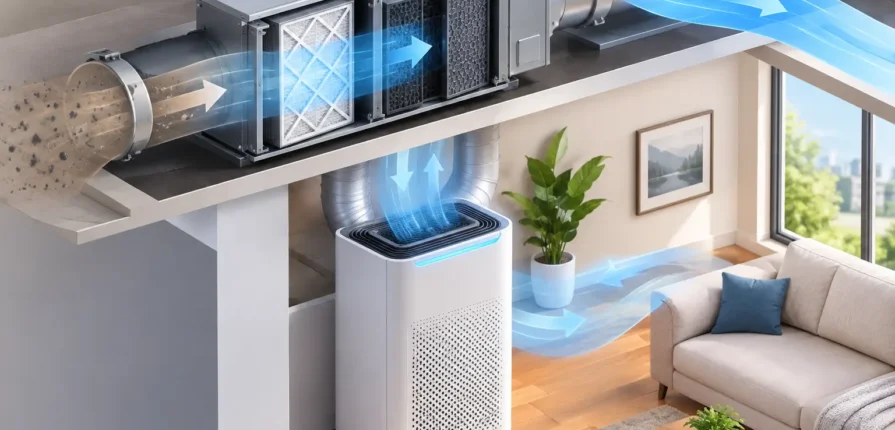
Your HVAC system moves a lot more than heated or cooled air. It can also move dust, pet dander, pollen, cooking particles, and other airborne irritants through every room connected to the ductwork. An air purifier with HVAC system can help improve whole-home air quality, but only when it is properly selected, installed, and maintained.
For many central Ohio homeowners, the question comes up after a long allergy season, a renovation project, a house full of pets, or a recurring complaint that one family member is always sneezing. The right answer is not always a high-priced add-on. It depends on what is in your air, how your system is built, and whether your existing filter and equipment are doing their jobs.
How an Air Purifier With HVAC System Works
A whole-home air purifier is installed in or near your HVAC ductwork, usually at the return side of the system. As air cycles through your furnace or air handler, the purifier captures or treats contaminants before conditioned air is sent back into the house.
This is different from a portable room purifier. A portable unit can be useful in a bedroom, nursery, or office, but it only handles the air in that room. A properly sized HVAC air purifier works through the home’s central air system. That can be a practical solution for homes where dust, allergens, or pet hair show up everywhere, not just in one space.
There are several types of whole-home products. Media air cleaners use thick, high-efficiency filters to trap particles. Electronic air cleaners use charged plates to collect particles and require regular cleaning. Some systems include ultraviolet lights designed to address biological growth near indoor coils. Each option has a place, but none should be treated as a cure-all.
Start With the Filter You Already Have
Before adding equipment, look at the basics. A standard one-inch furnace filter is often intended to protect the equipment more than it is intended to clean household air. It may catch larger dust and debris while allowing smaller particles to continue circulating.
A higher-efficiency filter can make a noticeable difference, especially when it has an appropriate MERV rating. MERV is a filter efficiency scale. In general, higher ratings capture smaller particles, but a higher number is not automatically better for every system.
A filter that is too restrictive can reduce airflow. That can lead to longer run times, uneven heating or cooling, added strain on the blower, frozen AC coils, or furnace performance problems. Older systems and undersized return ducts are especially likely to have trouble with an overly dense filter.
This is where a professional inspection matters. A technician can check static pressure, duct condition, blower performance, filter rack size, and the overall health of the equipment. Sometimes the best improvement is a properly fitted media cabinet and a quality filter changed on schedule, not a complicated purification device.
What Whole-Home Purifiers Can Help Reduce
A well-designed setup can reduce airborne particles such as dust, pollen, pet dander, lint, mold spores, and some smoke particles. This can help make a home feel cleaner and may be useful for families dealing with seasonal allergies or pets that shed heavily.
It is also helpful to keep expectations realistic. Air cleaning does not remove every contaminant from every surface. It will not fix a damp basement, active mold growth, a leaking roof, heavy duct contamination, or a gas appliance problem. If there is a moisture source, odor source, or safety concern, that issue needs to be found and corrected first.
For example, if your home smells musty whenever the air conditioner runs, an air purifier may mask the issue without solving it. The real cause could be a dirty evaporator coil, a blocked condensate drain, duct leakage, excess indoor humidity, or biological growth in another area of the home.
When an HVAC Air Purifier Is Worth Considering
Whole-home purification is often a good fit when the home has a specific, ongoing air-quality concern. Homes with multiple pets, family members sensitive to pollen, frequent dust buildup, or indoor smoke exposure may benefit from better filtration and air cleaning.
It can also make sense after remodeling. Drywall dust, sawdust, and construction debris can find their way into return vents and ductwork. Changing filters more often during the project is essential, and a system evaluation afterward can help determine whether additional cleaning or filtration is needed.
Property managers may also find whole-building filtration useful in smaller commercial spaces, rental homes, or offices where occupant comfort and maintenance concerns need to be handled quickly. The right choice still depends on the size of the system, the building’s use, and the condition of the ductwork.
On the other hand, a purifier may not be the first dollar to spend if the furnace is overdue for maintenance, the AC is not cooling properly, or rooms have major airflow problems. Comfort and air quality start with a system that is operating correctly.
Be Careful With Big Air-Quality Claims
Some air-cleaning products make broad claims about odors, viruses, bacteria, and indoor pollutants. Ask direct questions before approving an installation. What does the product actually remove or treat? Does it produce ozone or other byproducts? What maintenance does it require? Will it affect system airflow?
Avoid products that intentionally generate ozone for occupied homes. Ozone can irritate the lungs, and it is not a substitute for proper filtration, ventilation, cleaning, or source control.
UV equipment can be useful in certain applications, particularly around cooling coils where moisture can support growth. But UV lights do not capture dust, pet hair, or pollen. They also need bulb replacement on the manufacturer’s schedule. If someone presents a UV light as a complete whole-home air-cleaning solution, ask for a clearer explanation of what it will and will not do.
Installation Details That Make a Real Difference
The best air purifier can still disappoint if it is installed in the wrong location or paired with poor airflow. Your return ductwork, filter cabinet, equipment size, and blower capacity all affect results.
A quality installation should include a check of the existing filter setup and enough access for future service. If a filter is difficult to reach, it is more likely to be ignored. If an electronic cleaner has collection plates that are never washed, it will not perform as intended. Maintenance has to be realistic for the homeowner or property manager.
Duct leakage also matters. Return-side leaks can pull dusty attic, crawlspace, garage, or basement air into the system before it reaches the purifier. Supply-side leaks waste conditioned air and can contribute to comfort problems. Sealing and repairing damaged ducts may provide more value than adding another device.
At Professional Trade Service, our technicians look at the whole system rather than treating an air-quality complaint as a one-part fix. That includes equipment condition, airflow, filtration, ductwork, humidity, and the concerns you are actually noticing at home.
Keep the System Maintained
An HVAC air purifier is not install-and-forget equipment. Media filters need replacement, electronic cells need cleaning, and UV bulbs need scheduled replacement. The exact interval depends on the product, household conditions, pets, construction activity, and how often the HVAC system runs.
Check your filter monthly, even if the label says it can last longer. A filter may need changing sooner during spring pollen, wildfire smoke events, or periods of heavy heating and cooling use. Write the replacement date on the frame so there is no guesswork later.
Regular furnace and AC maintenance supports better indoor air, too. A clean blower, properly draining coil, secure duct connections, and correct airflow help your filtration equipment do its job without putting unnecessary strain on the system.
If the air in your home feels dusty, stuffy, or irritating, start with a professional evaluation instead of buying the first purifier you see. A practical recommendation based on your HVAC system and your home’s actual conditions will give you a better chance of cleaner air, reliable comfort, and fewer wasted dollars.
Recent Comments